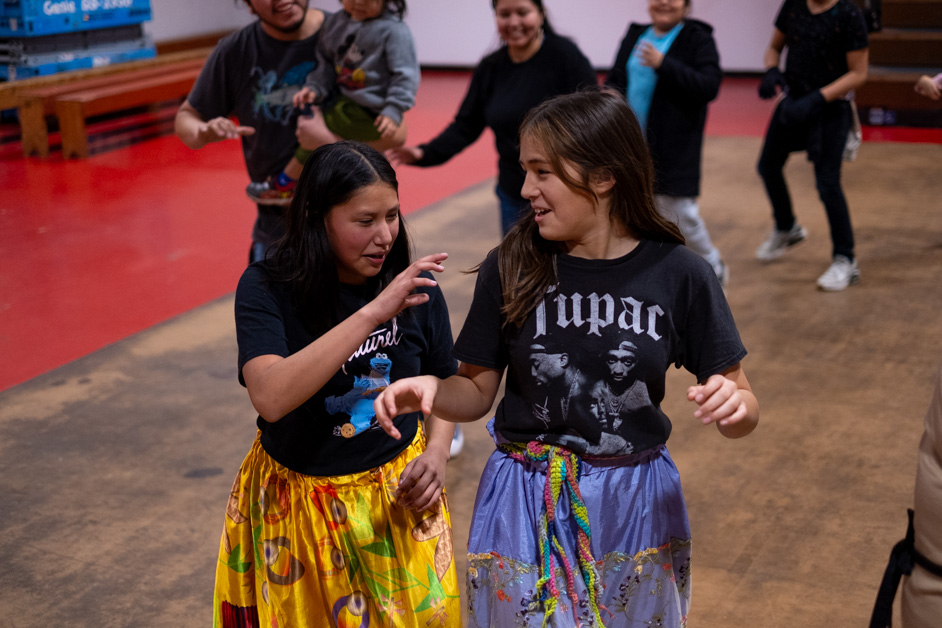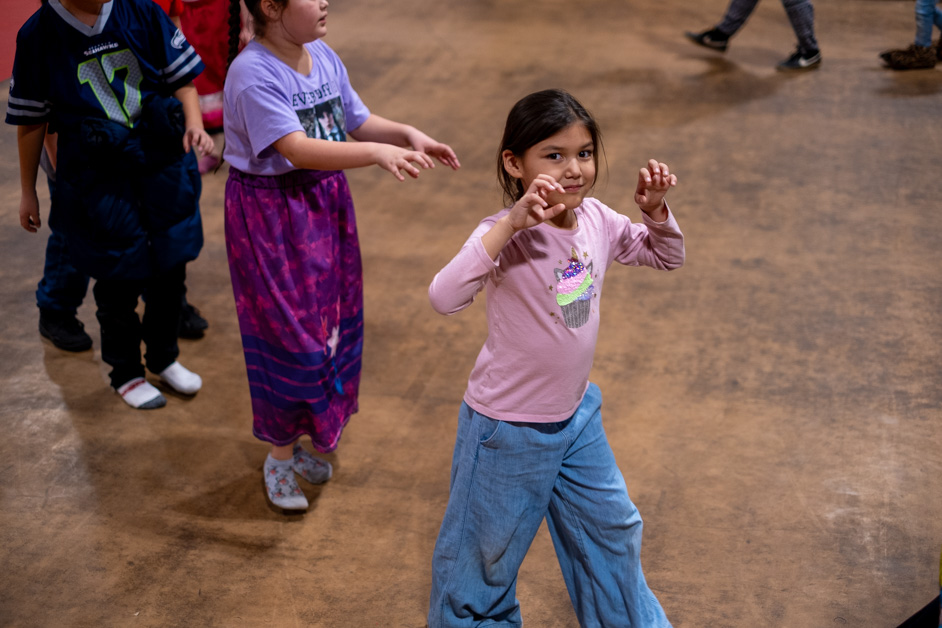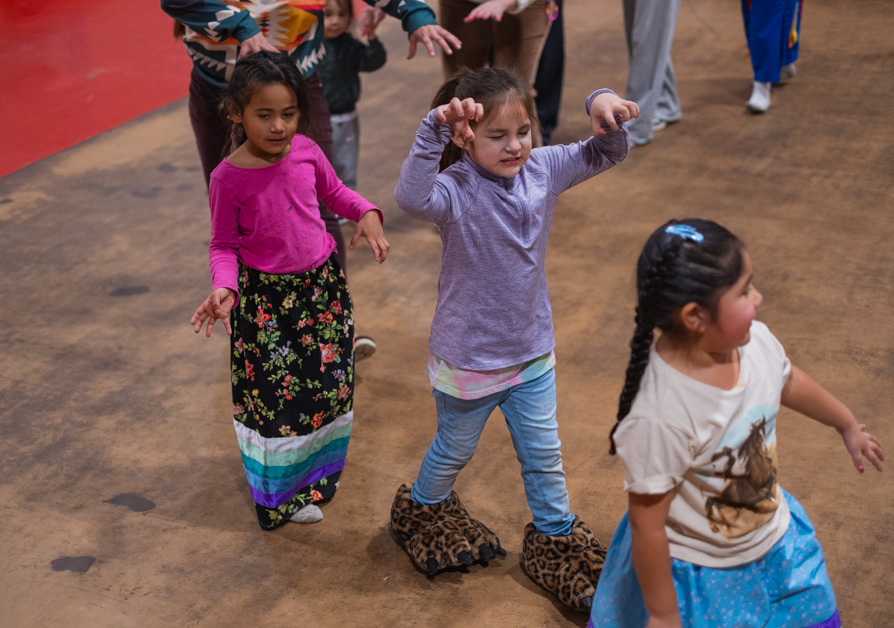
MISSION — Within the communal space of the Mission Longhouse, each step carried meaning as children moved across the floor, learning variations of powwow dances that told stories older than the room itself, connecting past and future generations in motion.
The Confederated Tribes of the Umatilla Indian Reservation (CTUIR) hosted Community Culture Night on Jan. 14 through its Family Engagement Program, a weekly Wednesday event designed to strengthen cultural identity, language, history, traditional crafting skills and the value of showing up for one another.
The evening focused on powwow social dancing.
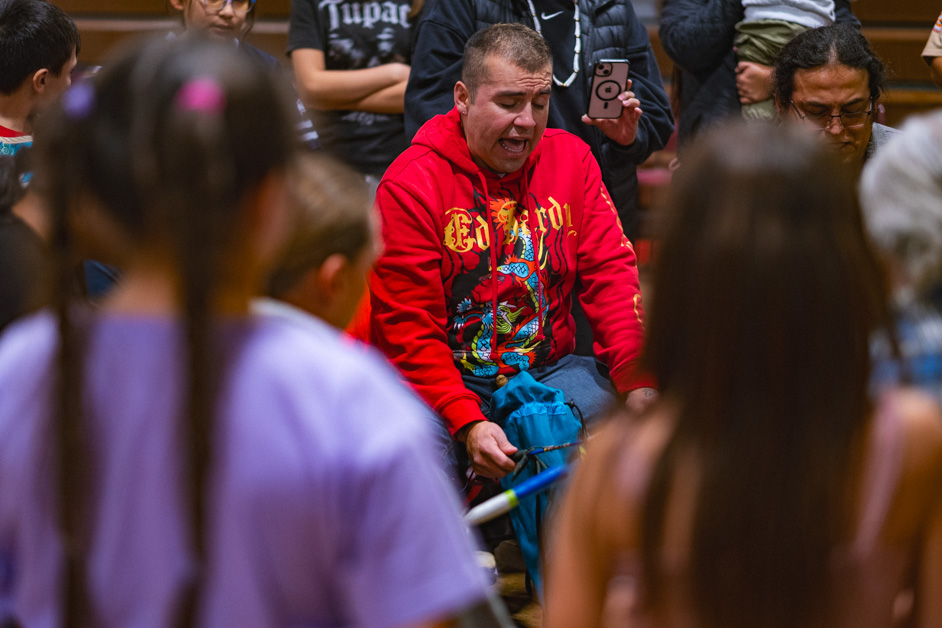
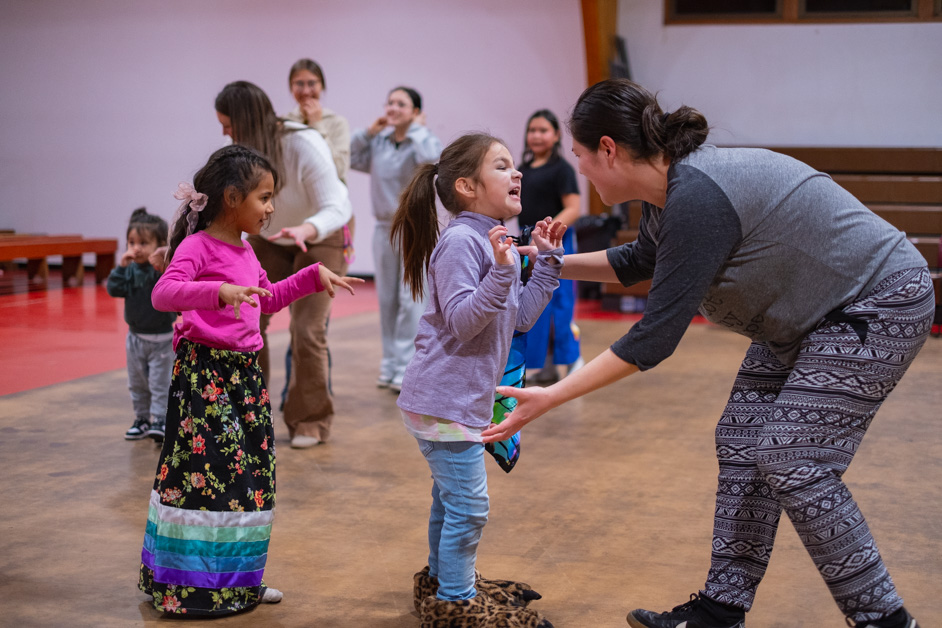
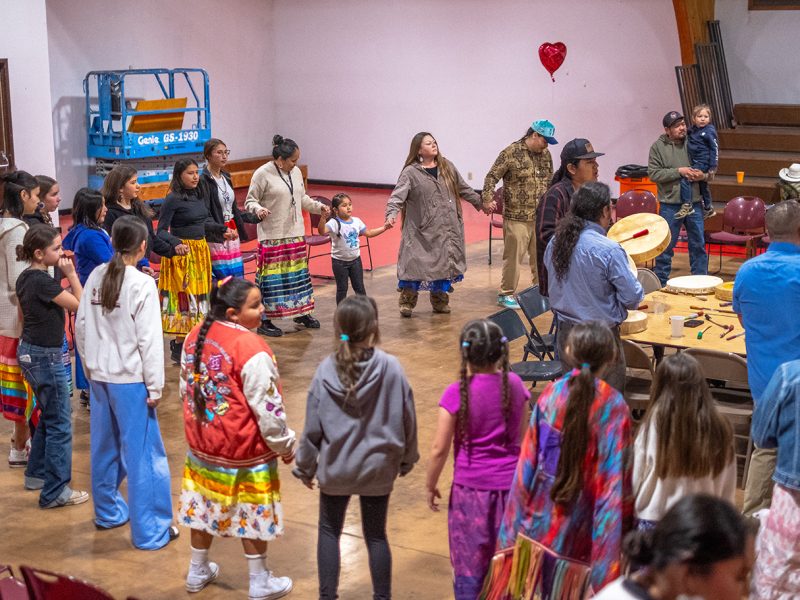
Drums set a steady pace while singers filled the Longhouse with song and rhythm. Elders and parents gathered nearby, offering guidance as children learned different steps, including bear, fancy feet and more.
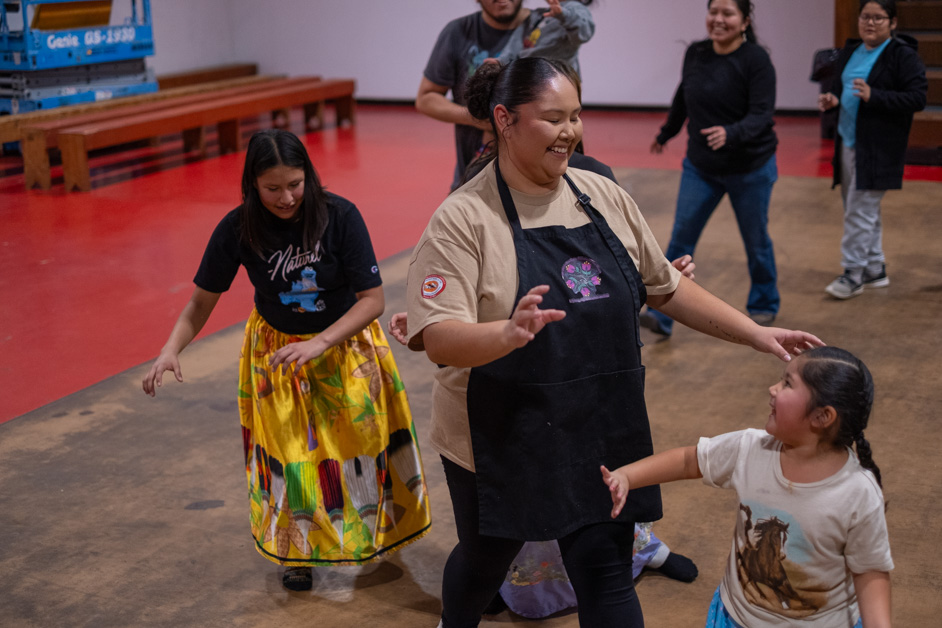
Children followed experienced dancers, adjusting their movements and finding their own rhythm in the communal space.
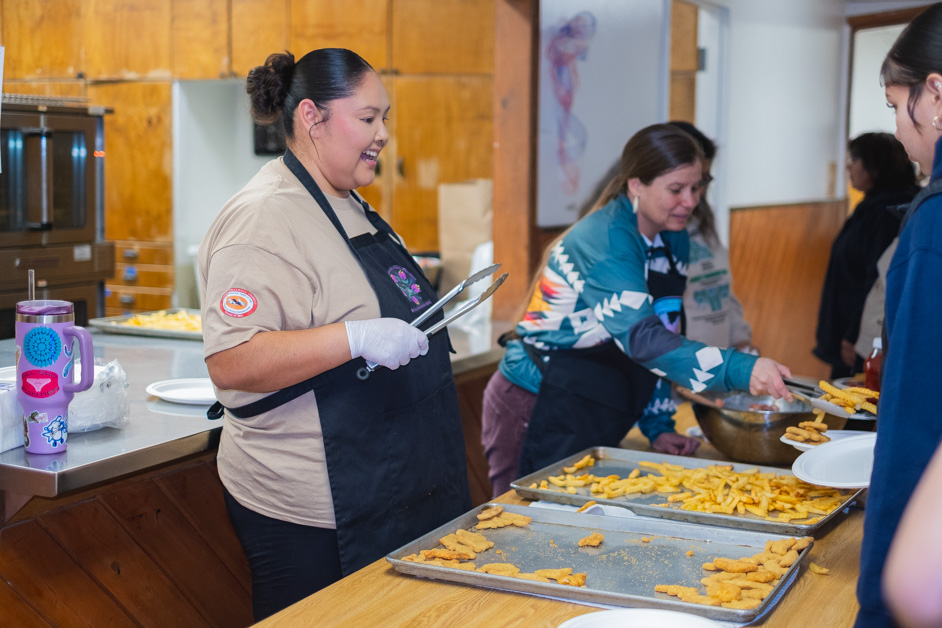
“Having the elders here makes all the difference,” Keeyana Mata, Family Engagement specialist for the CTUIR, said. “We want families to come as a unit. We provide dinner so the kids have a safe place to learn their powwow dances.”
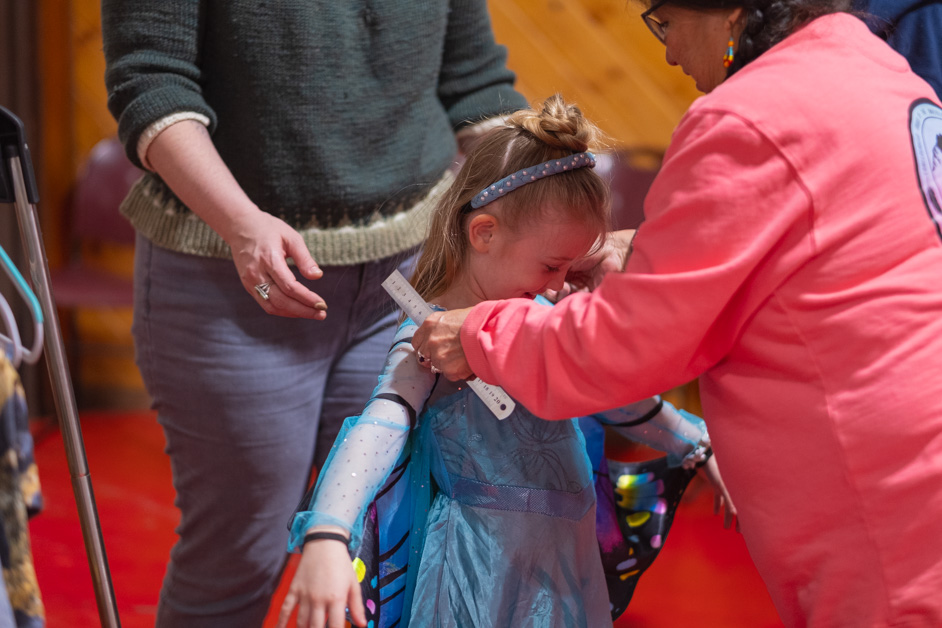
As children practiced their steps, they also had access to a small but growing closet of regalia — shawls, wing dresses, shell dresses, bear-claw feet, ribbon shirts and more — giving them a chance to see how movement and regalia work together.
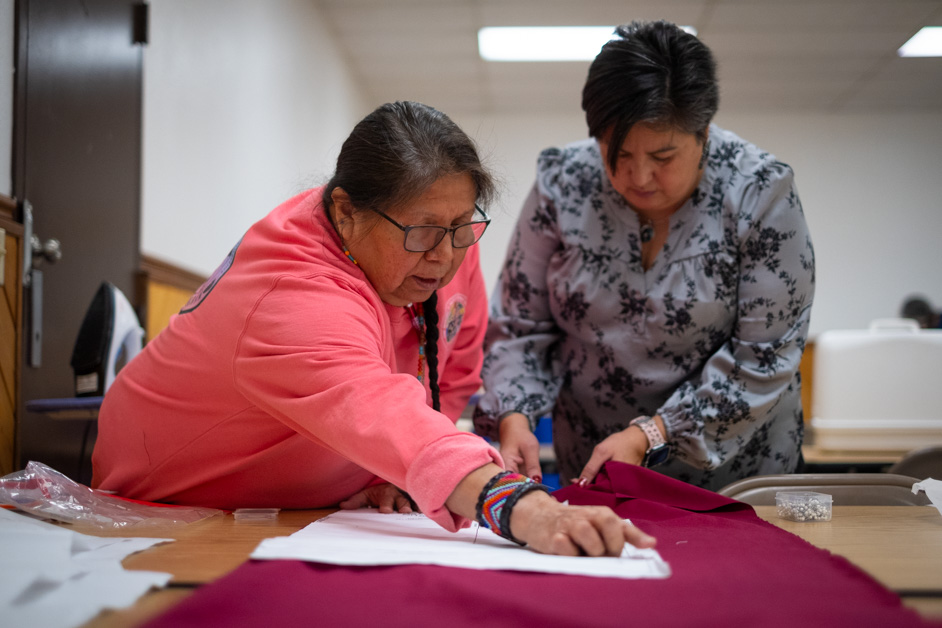
In a quieter corner, a group of women spread long bolts of fabric across tables. They measured, ironed and stitched vibrant materials, shaping the first forms of colorful dresses. Each project could take weeks to complete, a labor of love and a wearable expression of heritage, culture, care and creativity.
Vivian DeMary, one of the seamstresses and organizers who started Culture Night, said the program began when she noticed many tribal children had not received hands-on instruction in traditional skills.
“This is a different generation, and a lot of the tradition had not been passed down,” she said. “The first year, we made 53 pairs of moccasins. After that, everyone had to make their own. That’s how we got everyone learning to create their own wing dresses, regalia, moccasins and for the boys, breastplates and feather work. I don’t necessarily teach them anymore. Now they’re teaching each other.”
DeMary said many traditional arts and cultural practices were lost over generations due to forced assimilation. “A lot of that was taken away from our tribal elders — language, dress, traditions, it was a form of cultural genocide. Now, we are bringing it back.”
She recalled learning from elders and by attending powwows across the Northwest for more than a decade, studying regalia and asking questions about construction and design.
“When I came here [Mission Longhouse], I started sharing that knowledge. Many kids didn’t even have moccasins. They were dancing in their street clothes, and that broke my heart,” she said.
Now, she expressed, youth are learning to sew their own regalia, inspired by what other children create.
“It’s just bringing back our culture and our tradition so we don’t lose it,” she said. “If you lose your language and your culture, then you’re lost. That’s what we’re about. We’re a very traditional tribe.”
By night’s end, generations held hands and danced around the drummers. Some children learned to roar like bears and swipe at the air with imaginary claws. The Longhouse buzzed with sound and motion, a community united in rhythm, in song, and in the simple act of passing tradition from one generation to the next.