CTUIR families learn, share traditions at Latit Latit excursion
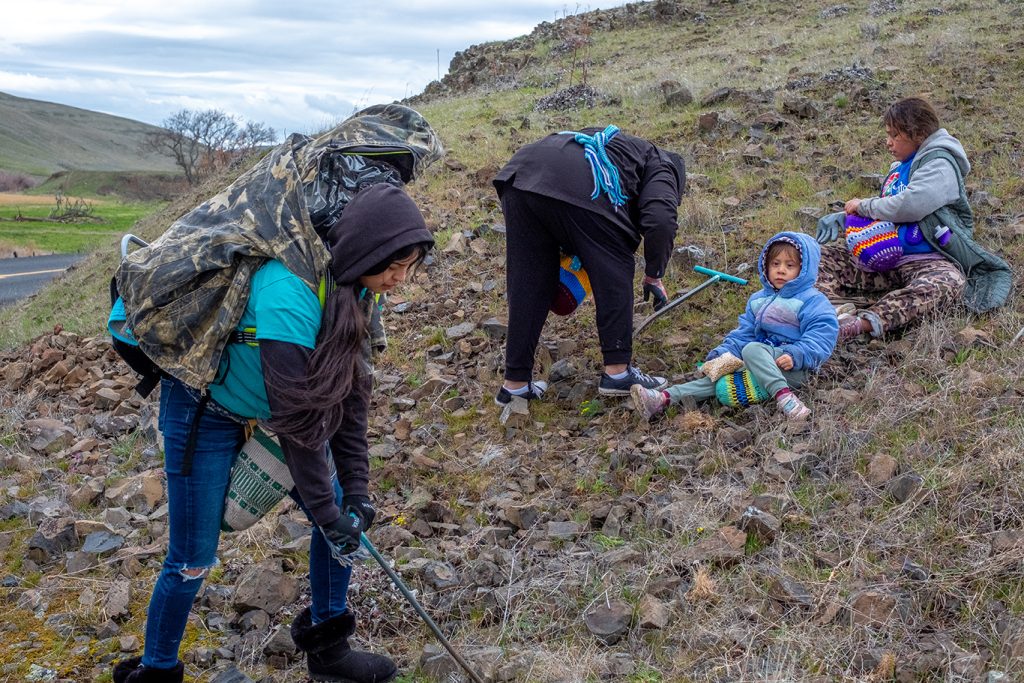
PILOT ROCK — Family, friends and elders hiked the rocky hills of Eastern Oregon on March 14, digging for Latit Latit during the Confederated Tribes of the Umatilla Indian Reservation’s (CTUIR) annual Latit Latit Gathering Excursion.
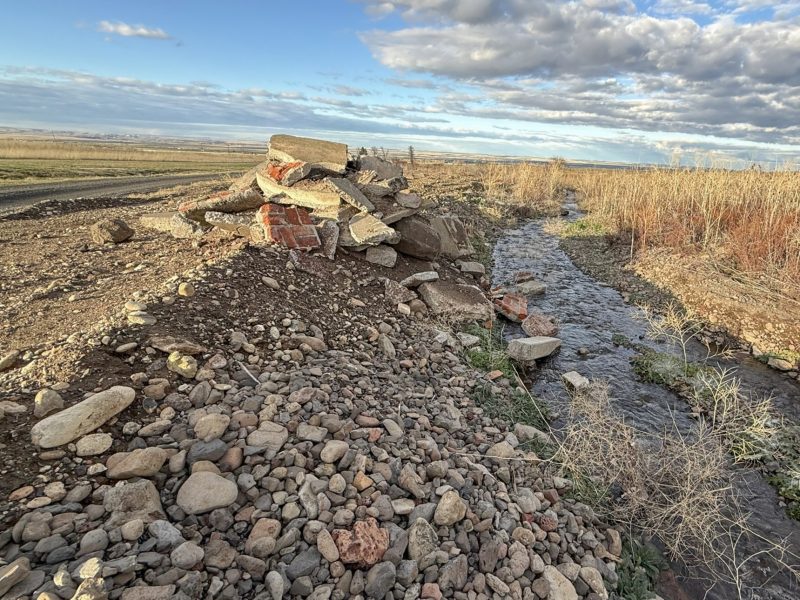
The harvest, led by the CTUIR Family Engagement Program and Department of Natural Resources’ Cultural Resource Protection Program, guided participants through the hills between Pilot Rock and Heppner to harvest the First Food and continue a tradition passed down through generations.
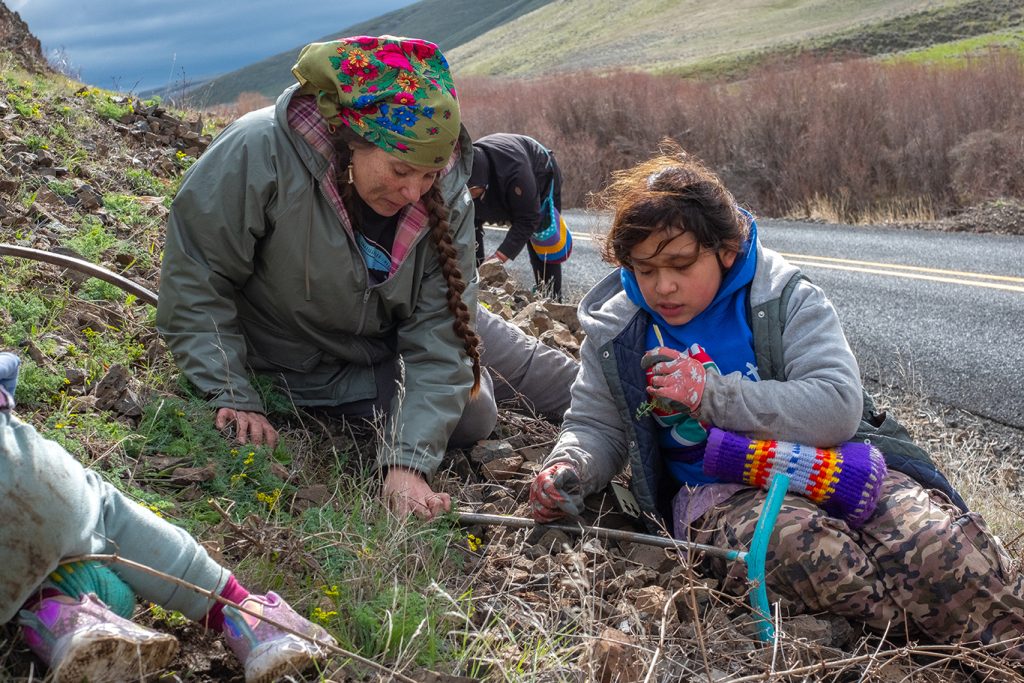
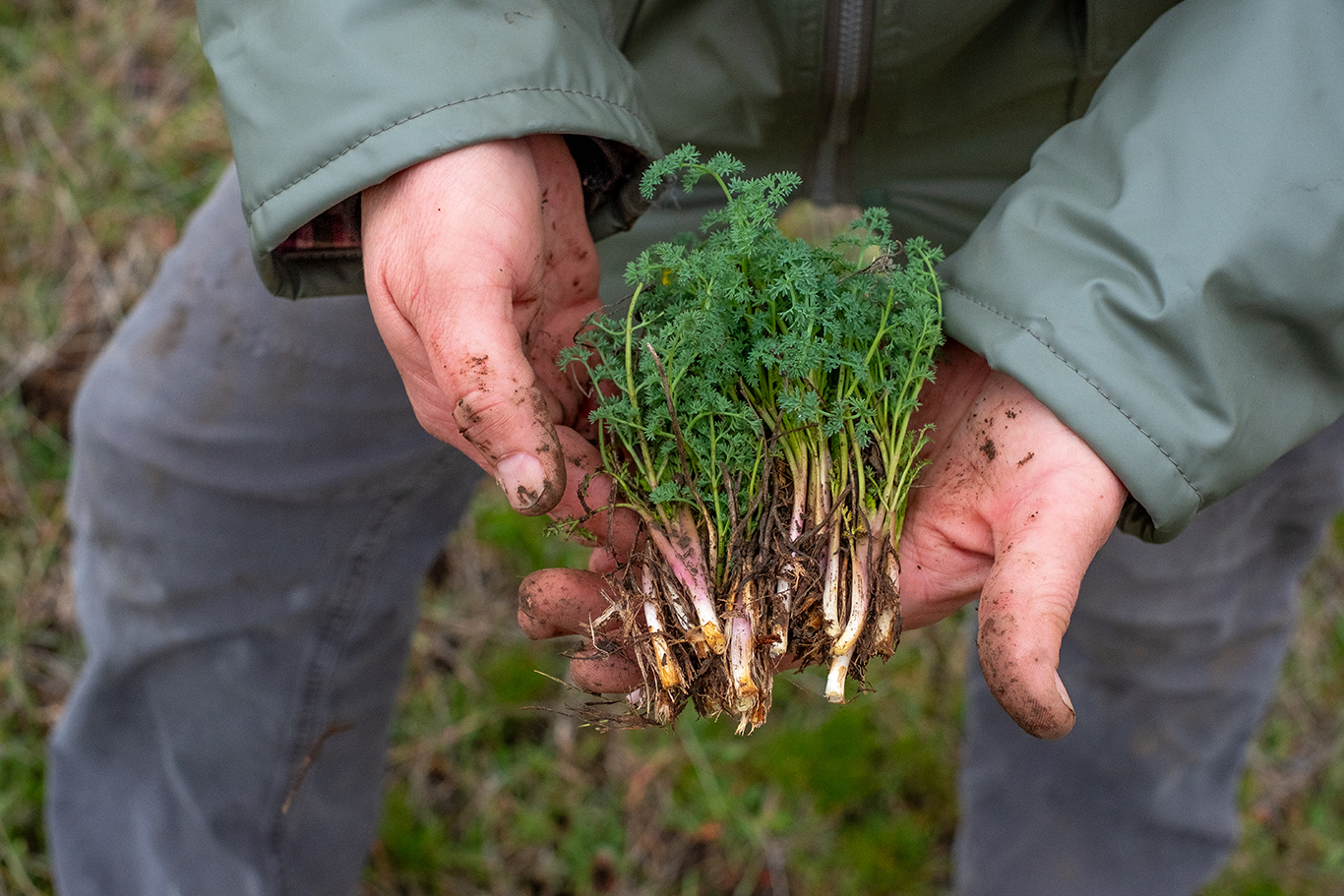
Latit Latit, also known as Indian celery or wild celery, is a traditional early spring First Food harvested by Columbia River Plateau tribes. Gatherers use metal rods called kupin (in Nimiipuu – Tùkes) to harvest the tender stalks from the hillsides, typically in late February or early March, often followed by a celebratory feast.
Dionne Bronson, Family Engagement Program manager, said Latit Latit is important to the CTUIR because it is a sacred food.
Once part of DNR’s educational outreach, the trips now fall under Family Engagement and help youth and families learn about First Foods, she added.
“The goal of our program is to support families in unity and identity,” Bronson said. “To be unified, we need to do things together, especially to learn these lifeways. We follow a seasonal round to show our families what foods are available throughout the year and where to gather them.”
Community and traditional connections
About a dozen people met that morning at the Family Engagement facility before setting out for the excursion. Gray skies, chilly rain and cold winds did little to dampen spirits as gatherers bundled up and climbed the hillsides.
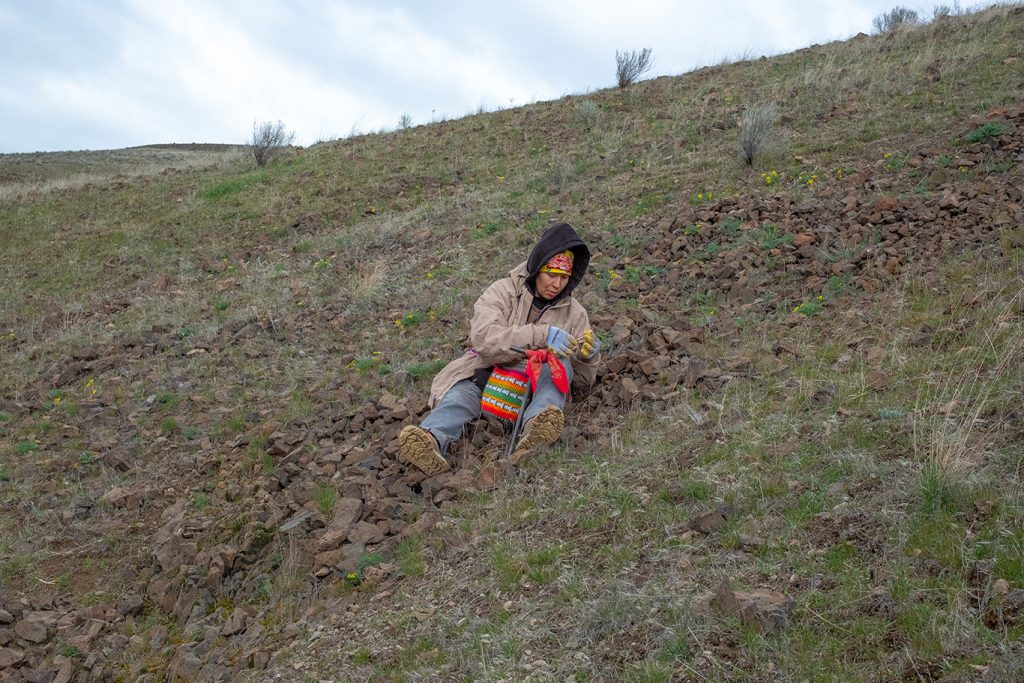
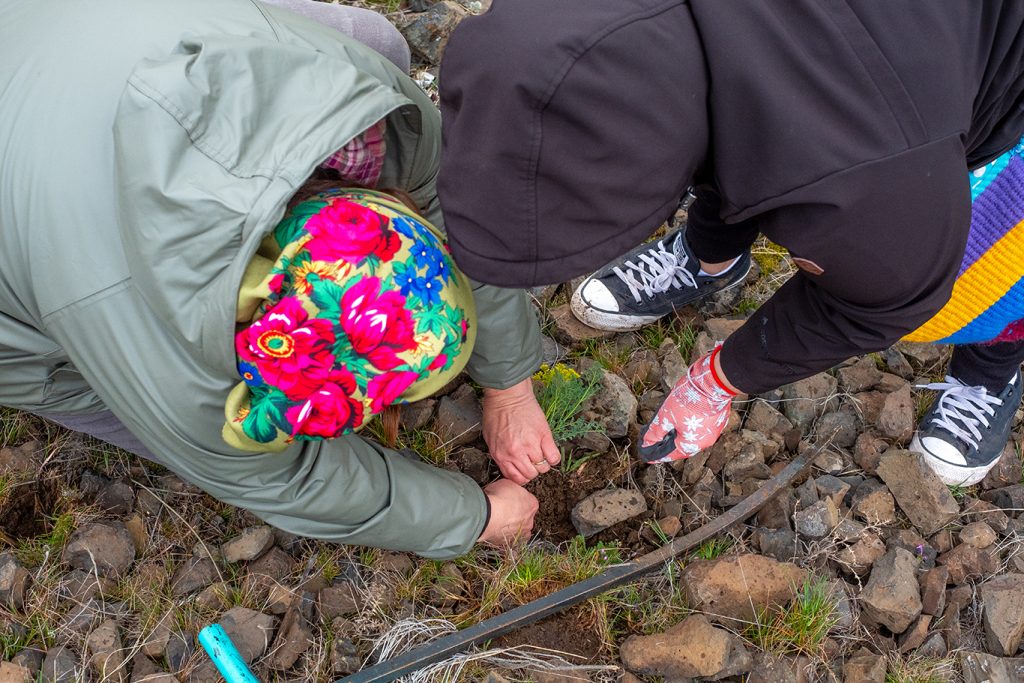
Before gathering, participants offered a prayer and a song, then scaled the hillsides equipped with gloves, hand warmers and woven harvest bags to collect the plants.
As gatherers climbed, they watched for clusters of yellow, webbed umbels poking through the soil — the Latit Latit. Bronson showed the children which umbels were ready to harvest by the height of the stalk. She also showed them how to use their kupin.
“And when we’re digging, we’re gonna push down and then we’re gonna wiggle, wiggle,” she said, gently working the kupin into the dirt. “We’re gonna wiggle that kupin in there to get down into the soil beneath the roots, then pull back, pull back and pull up that root.”
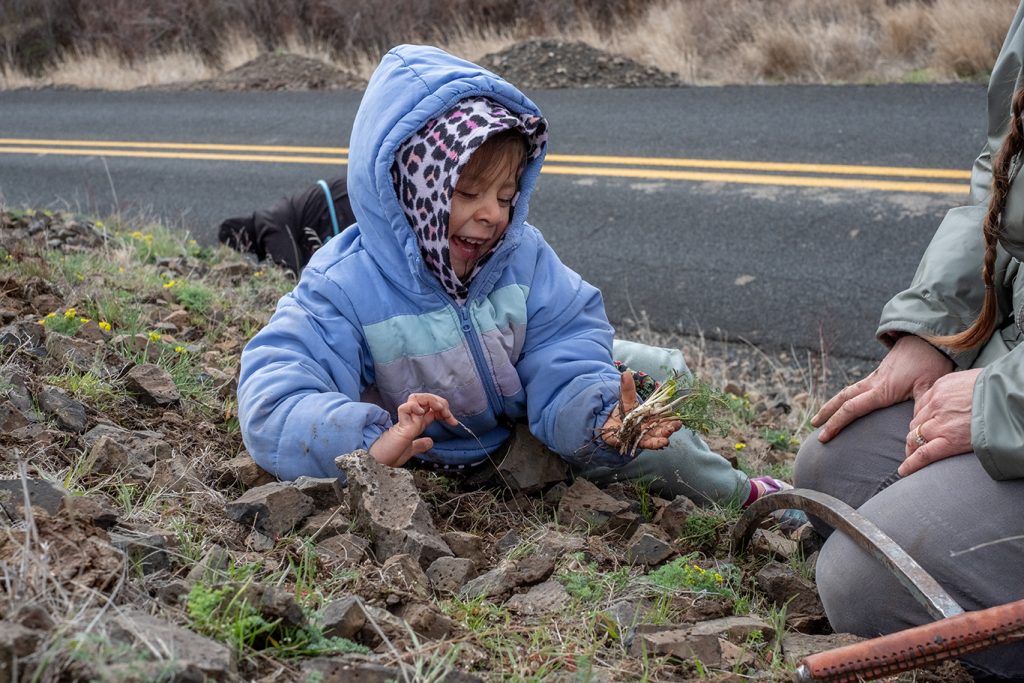
After pulling the Latit Latit from the ground, she brushed off the dirt and bit into the celery while noting its crisp texture, sharp taste and slightly peppery flavor, particularly when young, along with an earthy, herbal aroma.
At the top of the hill, CTUIR member DeArcie Abraham, who gathered with her 7-year-old son Messiah Abraham, said she looked for watersheds with rocky soil.
“The root under the rocks will make its way up through the rocks to reach the sun,” she said. “When you move a rock, you can see they’re actually really long and really big. The watershed also helps nourish them so they grow large.”
She said the excursion connects her with her family and allows them to connect with community members as they learn from one another.
“I really look forward to connecting with my community instead of going on my own,” Abraham said. “We get to come here and have a safe space to gather together.”
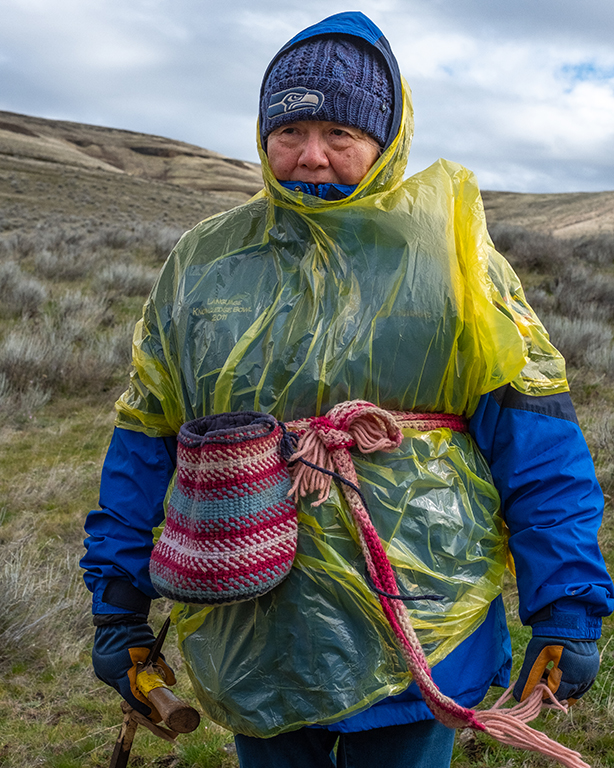
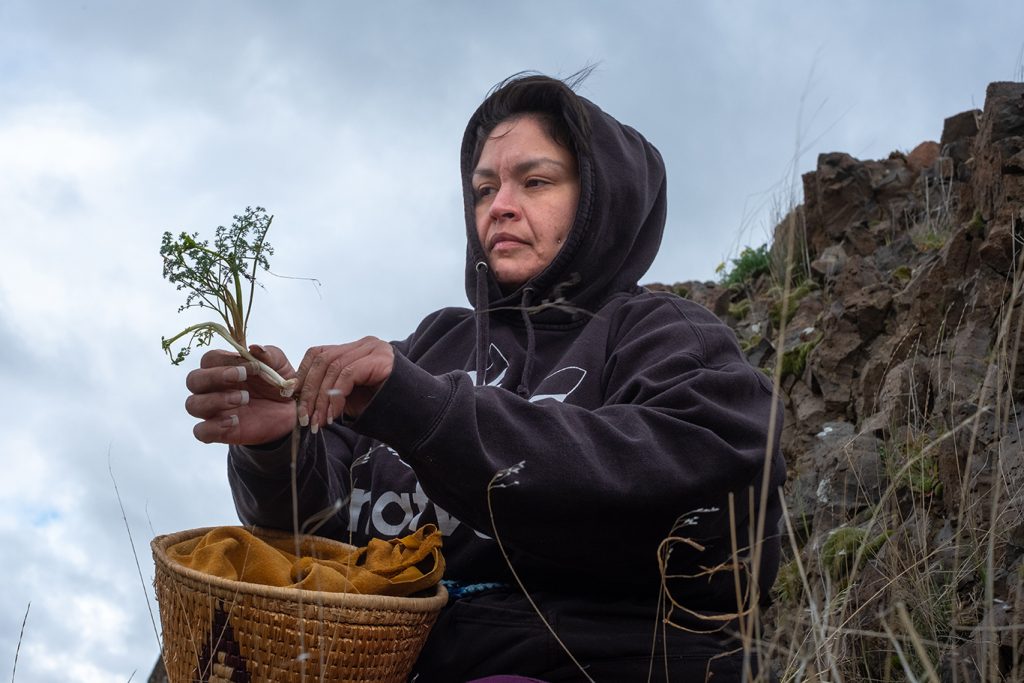
Across the hills, generations joined to teach, learn and harvest Latit Latit. Elders and youth spent the day passing on knowledge, gathering the plants and engaging with the environment.
CTUIR member Sienna Pacheco, 21, dug for Latit Latit with her 11-month-old child, Kh’mari Pacheco, strapped in a baby backpack. She said she tries to be more involved because she doesn’t see many people her age participating.
“I try to encourage people my age to get into our First Foods, go to root digging and reconnect with what our ancestors taught us,” she said.
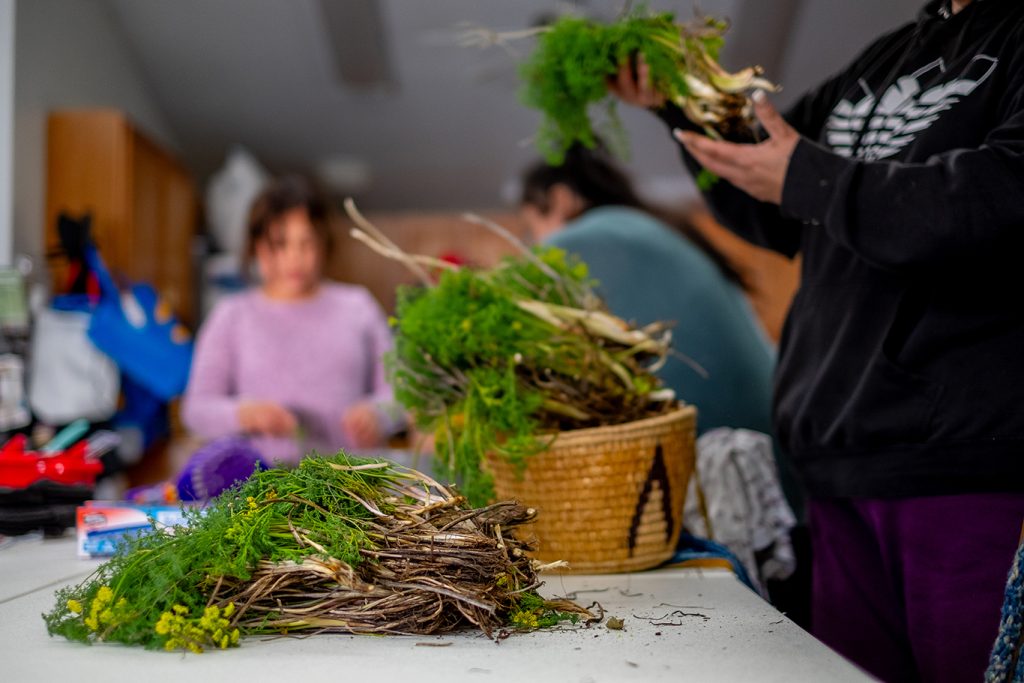
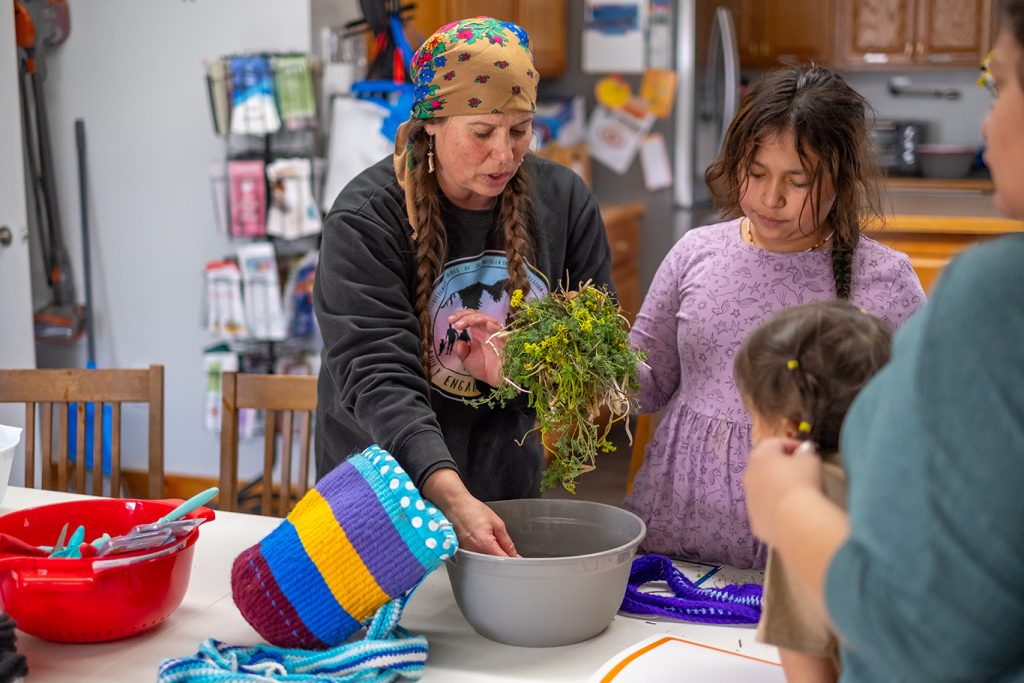
The sun peeked through gray skies as the group gathered for lunch. Afterward, everyone returned to the Family Engagement facility for the excursion’s second half, where families learned how to wash, clean and process the Latit Latit.
The plants were first dipped in water to scrub off the dirt, then placed on a towel to dry before being sealed in resealable bags.
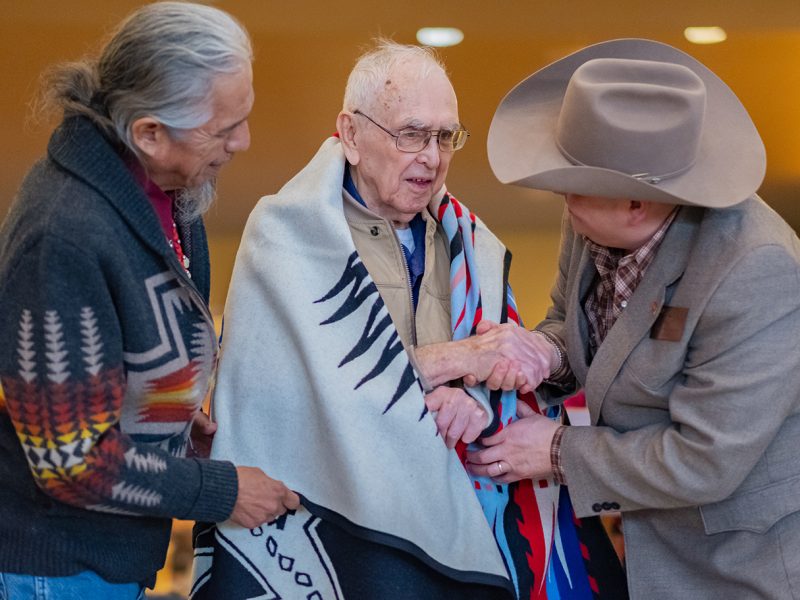
Elder Umatilla Master Speaker Mildred Quaempts said she remembered learning from her grandmother and aunt. Her aunt, she said, was strict when she was growing up. As soon as her aunt entered the house, she knew she had work to do, Quaempts said. Whether it was gathering, picking berries or apples or traveling to harvest strawberries, raspberries and beans, they were always busy, she said, helping her aunt can food, peel it, prepare it for drying and tend to other tasks.
Quaempts said her grandmother had a small house, but she organized everything carefully. Canvas and produce were stored and covered, wired and sealed with mud and ash. The children were not allowed to handle it directly, but they learned by watching.
“That’s how you learned,” Quaempts said. “Like any other elder, a lot of teaching was done by showing, not just telling. You had to pay attention. You’ve got to take care of your people, take care of the land and take care of the food every year, not just during certain times. Our elders used to go out as much as they could to gather food sustainably for their livelihood, to live.”