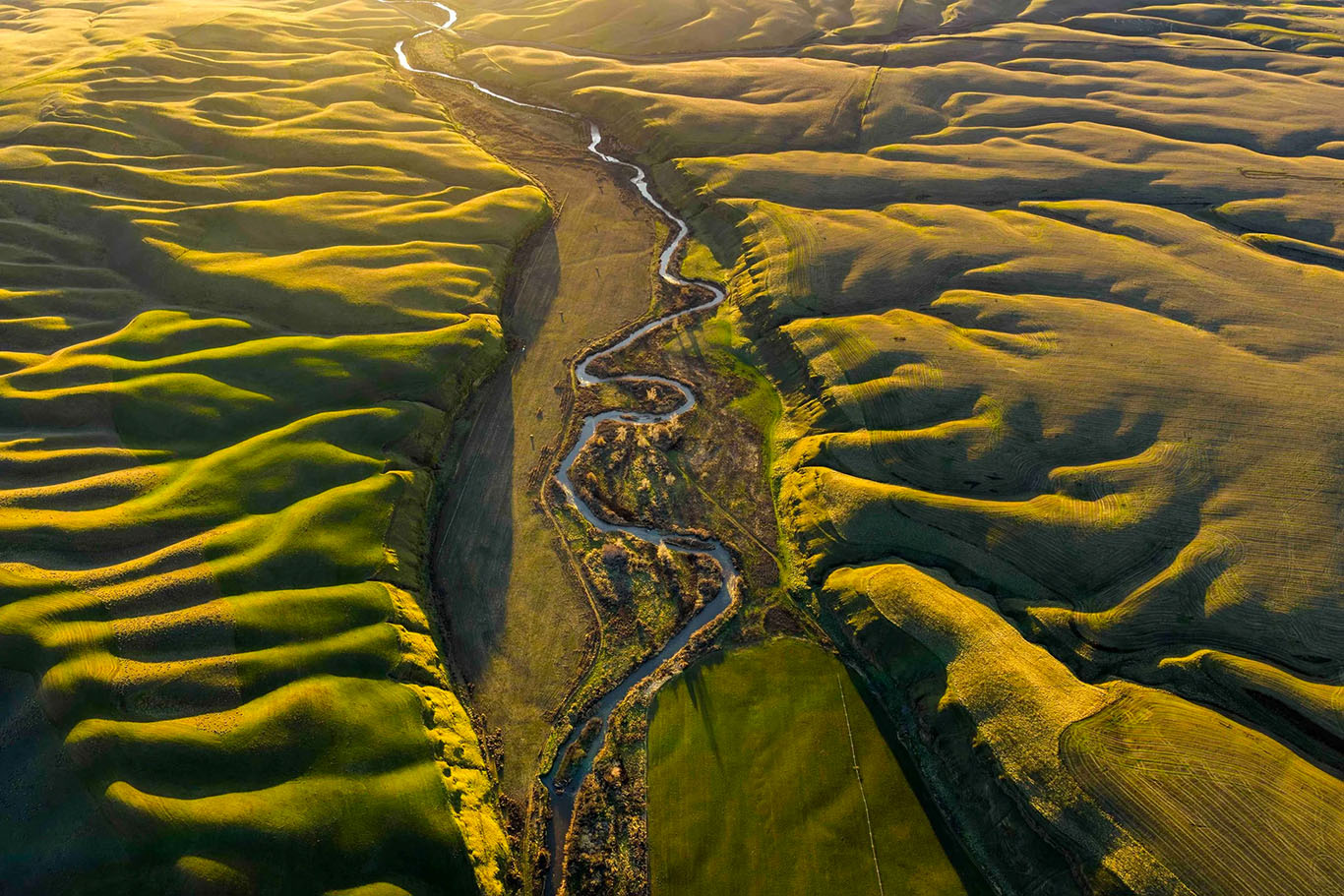
MISSION — More than 100 miles of historic salmon and steelhead habitat could eventually reopen under a $1 million federal investment to restore fish passage at the McKay Creek Reservoir Dam in the Umatilla River Basin.
The Oregon Department of Fish and Wildlife (ODFW) announced the project on March 5 to lay the groundwork for reconnecting fish to their upstream habitat. The funding is part of more than $100 million in federal spending directed to 54 community projects across Oregon.
U.S. Sens. Jeff Merkley and Ron Wyden helped secure funding to support an alternatives analysis and engineering design for potential fish passage solutions at the dam on McKay Creek, a tributary of the Umatilla River.
According to ODFW, the dam ranks as the fourth-highest priority barrier on its statewide fish passage list.
The project follows years of collaboration among the ODFW, the Confederated Tribes of the Umatilla Indian Reservation (CTUIR), the Bureau of Reclamation and other federal partners with support from Oregon’s congressional delegation.
CTUIR Fisheries Program Manager Jerimiah Bonifer said restoring passage to this upstream habitat would see almost immediate benefits.
“The Upper McKay Basin, above the reservoir, contains about 24% of the suitable habitat within the Umatilla Basin,” he said.
The McKay Creek Reservoir Dam, built in 1927, blocks access to more than 100 miles of upstream habitat for native migratory fish, including about 25% of suitable steelhead spawning and rearing habitat in the Umatilla Basin.
Historically, the McKay Creek drainage supported Chinook salmon, Pacific lamprey and bull trout, and it still provides some of the coldest water in the basin, according to the ODFW. Reconnecting that habitat could improve conditions for those species.
Bonifer said the criteria for getting mid-Columbia steelhead de-listed as a threatened species include geographic distribution and abundance, which the project could contribute to within the Umatilla Basin.
The collaboration between the CTUIR and ODFW has led to a way to jump-start the restoration of fish passage beyond the lower 6 miles of McKay Creek.
“Restoring First Foods to the landscape is a top priority for the Department of Natural Resources and the Fisheries Program,” Bonifer said. “This is a key effort in being able to do that, restore these First Foods to places where they’ve been removed.”
Steps to reconnect fish with the McKay Basin habitat include radio-telemetry studies, which use radio waves to track outplanted steelhead, and spawning ground surveys showing the fish are using the lower 6 miles of McKay Creek.
From there, Bonifer said they will assess the feasibility of providing passage or developing alternative methods, such as a fish ladder.
“This would be a tremendous benefit to the tribal community, restoring our First Foods to the landscapes where they’ve been missing, and reestablishing that connection is of the utmost importance to the Department of Natural Resources and the tribal government,” he said. “We are here to serve the tribal community, and one of the ways that we best do that is to ensure that they can exercise their treaty rights.”
Restoring Native plants, fish and ecosystem
The Blue Mountain Land Trust (BMLT) is also working on a restoration project guided by the CTUIR’s First Foods mission and River Vision, culminating in the Túuši Wána Conservation and Restoration Easement, which permanently protects 438 acres along the Touchet River.
The project reconnects the river to its floodplain by reversing channelization and revitalizing habitat that once ran over a broad floodplain prior to upstream erosion. As a conservation easement, the floodplain’s environmental values are protected long-term.
Restoration plans include lowering parts of the floodplain and carving new side channels, giving the river more space to wind and slow its flow. Slower waters benefit juvenile migratory fish, which rely on sheltered waters and food sources in the side channels during winter.
“This 450-acre floodplain conservation easement along a 3-mile-long stretch of the mainstem Touchet River will allow the CTUIR the opportunity to reconnect the floodplain to the river and add much-needed instream diversity, which will benefit winter rearing habitat for juvenile salmonids,” DNR Resources Project Leader Jerry Middel said.
Part of the project includes reintroducing native plants and removing invasive species. It also calls for planting more than 40,000 native trees and shrubs and 17,000 pounds of native seeds. Later plantings would include culturally important and wildlife-sustaining berry species sourced from CTUIR’s plant nursery.
As the plants take root, wildlife is expected to follow, creating a diverse ecosystem ranging from bald eagles to amphibians. Anton Chino, DNR Habitat Conservation Project leader, said a moose had already been spotted in the floodplains.