MISSION — Kindergartners from the Pendleton Early Learning Center (PELC) dove into a “fishtastic” adventure during the Salmon Field Trip, learning about the different fish species and the importance of releasing them back into the river.
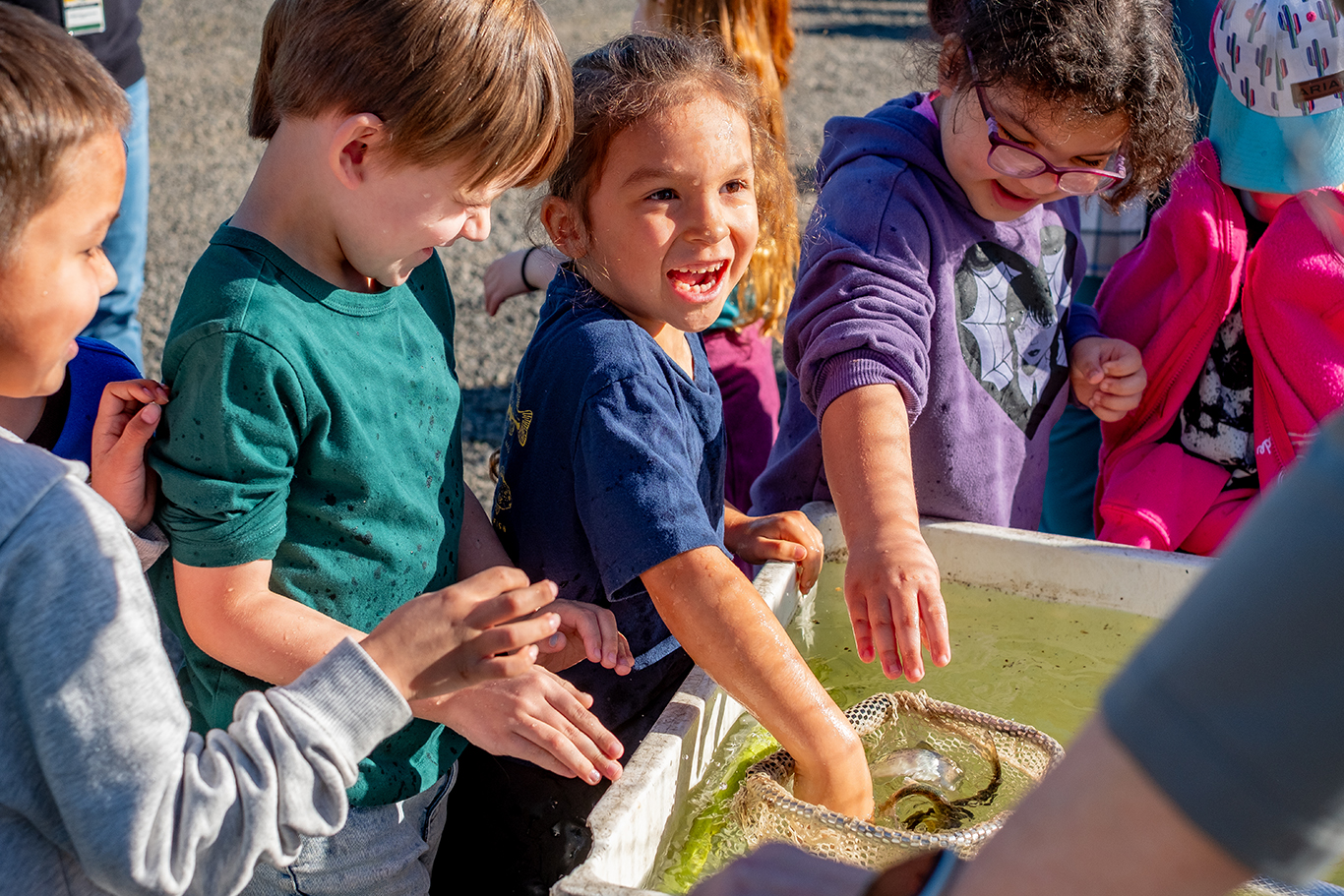
Nearly 100 students toured the Pendleton Acclimation Facility in Mission on April 7, where they saw thousands of salmon and put on gloves to hold a Pacific Lamprey.
Shawndine Jones, a heritage language teacher at the PELC, said the field trip gives kindergartners a chance to connect classroom lessons with real-world experience.
“We have kindergartners here to see the salmon and the lamprey, and they are learning about the salmon life cycle, the lamprey life cycle and the importance of salmon to the tribes here,” Jones said.
The visit included nine kindergarten classes, along with a small group of students from the Dual Language Immersion Program, accompanied by Master Umatilla Speaker Mildred Quaempts.
Jones said the partnership began in 2015 with the opening of the early learning center, formerly Hawthorne School, as lessons on animals and life cycles expanded to include salmon. Working with language and cultural leaders, students also learn Native terms for salmon and regional waterways such as the Umatilla and Columbia rivers.
“We want to spread awareness about salmon and lamprey and their importance,” Jones said. “If we start that learning in kindergarten, hopefully they grow up wanting to help and protect salmon in the future.”
Jones described the experience as “fun” and left a strong impression on students.
“You can see it on their faces, how much they’re enjoying it,” Jones said. “They really care about the salmon and lamprey, and they’ll probably keep talking about this even when they get to elementary school. It’s a memorable experience for them.”
At the field site, children gathered along the dock at the salmon ponds, watching salmon dart through the water. Some students scattered feed across the surface and watched the ripples spread as fish swirled below.
Fisheries staff answered questions and explained how salmon are raised and released into local rivers, along with the role lamprey play in the life cycle. CTUIR lamprey technicians pulled out the lamprey, giving each child an opportunity to hold the slippery eel.
Jen Krajcik, artificial production supervisor of the Department of Natural Resources, said the program raises and releases hundreds of thousands of fish each year. She noted that the process begins in the fall, when crews collect returning coho salmon at Three Mile Falls Dam on the Umatilla River.
“There are about 250,000 of each, so roughly 500,000 total,” Krajcik said. “We spawn them in October and early November, then take the eggs to Gnat Creek Fish Hatchery, which is run by the Oregon Department of Fish and Wildlife. Once the eggs develop to the ‘eyed’ stage, they can be moved.”
From there, the fish are transferred to Cascade Fish Hatchery in the Columbia River Gorge, where they are raised until they reach smolt size, she added.
“We bring them back in early March, about 15 fish per pound and acclimate them here in Pendleton for about six weeks,” Krajcik said. “Then we release them in mid-April, usually at dusk and they head out to the ocean.”
After one to two years in the ocean, the fish return to continue the cycle.
“It’s important to get the word out about what we’re doing,” Krajcik said. “The reason there are coho or Chinook in the Umatilla Basin and the Umatilla River is because of the work that we do. Without this program, there wouldn’t be a coho program or fishery.”
Public outreach helps connect the program to the fishing opportunities people enjoy today, she added.
“It’s nice to be here and say, ‘This is why there’s a fishery,’” Krajcik said. “If you enjoy fishing, this is why.”