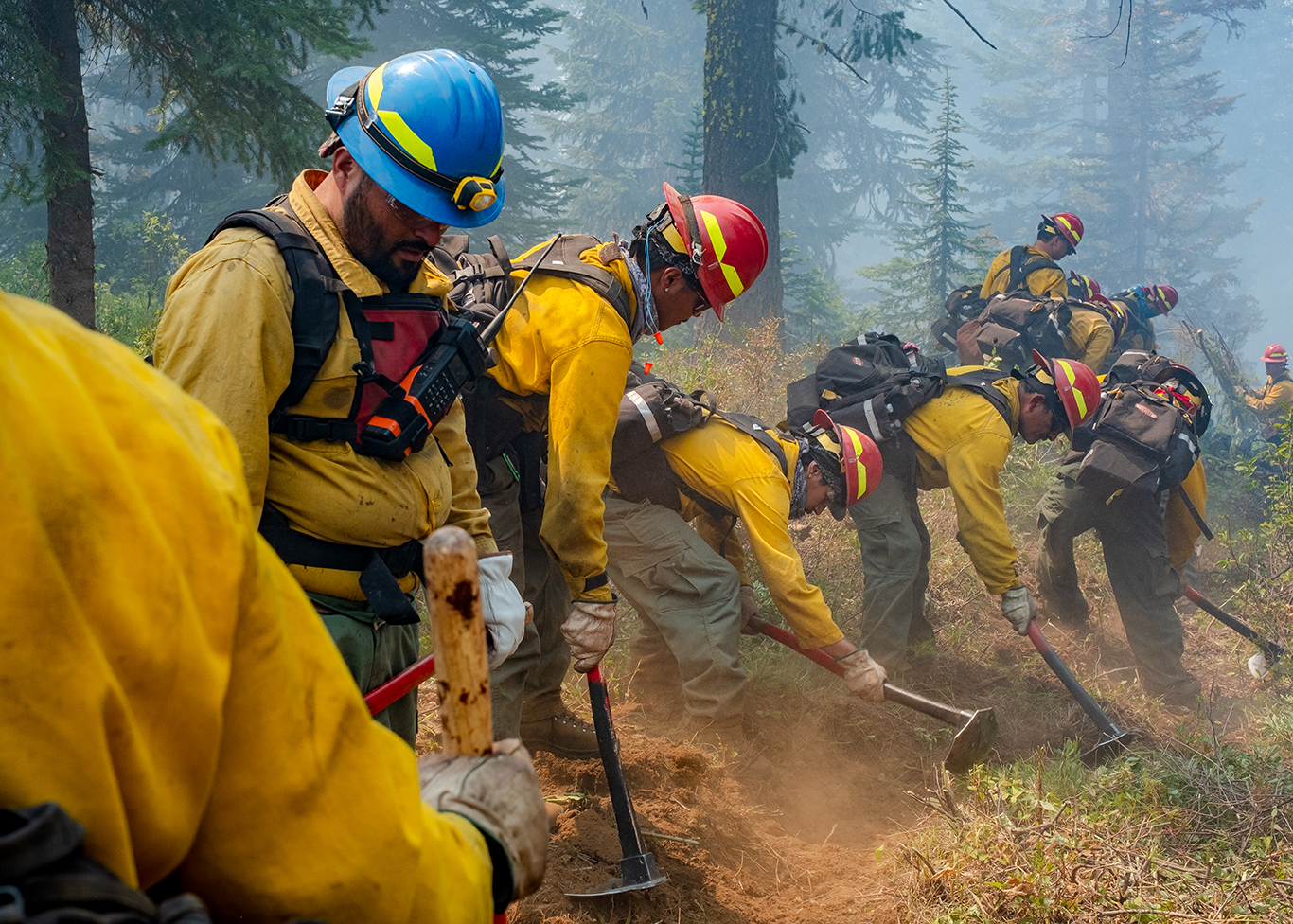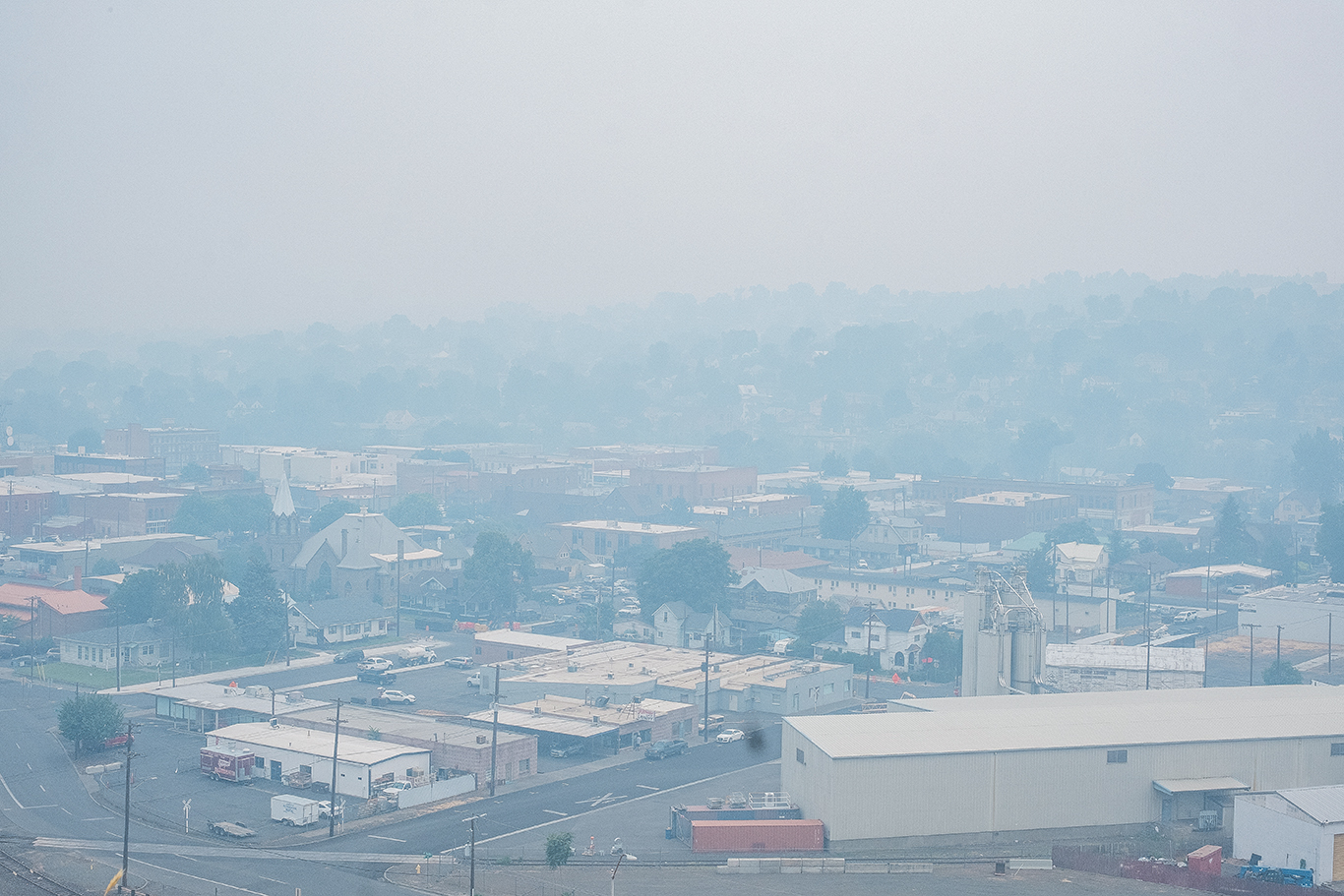
MISSION — For residents across the Umatilla Indian Reservation (UIR), wildfire season has arrived not only with flames stretching across the landscape, but with smoke-filled skies, evacuation alerts and road closures.
Smoke from the Hagen, Horseridge and Paradise wildfires moved across the region, contributing to worsening air quality as the Air Quality Index (AQI) reached the “Unhealthy” range of 150 to 200.
Amid the growing fire threat across Umatilla County, the Confederated Tribes of the Umatilla Indian Reservation (CTUIR) Board of Trustees (BOT) declared a state of emergency July 22, citing “imminent fire danger” from the Hagen Fire near the eastern boundary of the UIR along Bingham Road, as well as a public health emergency caused by persistent poor air quality.
The declaration stated that local resources had reached capacity and could not manage additional fire threats, prompting the CTUIR to seek state and federal assistance.
The declaration activated the tribe’s Emergency Management Plan, which included daily coordination with the Oregon Department of Human Services, Umatilla County Public Health, the American Red Cross and Umatilla County Emergency Management.
CTUIR Emergency Management officials said firefighting operations remained under the direction of local, state and federal agencies, while tribal officials focused on supporting residents and coordinating resources.
Health impact
According to the Centers for Disease Control and Prevention, wildfire smoke is a mixture of gases and fine particles released when trees, plants, buildings and other materials burn. The particles can travel deep into the lungs and affect people’s health, sometimes within hours of exposure.
Smoke exposure can cause coughing, trouble breathing, wheezing, asthma attacks, stinging eyes, scratchy throats, runny noses, irritated sinuses, headaches, fatigue, chest pain and a rapid heartbeat.
Health officials advised residents to reduce time outdoors during periods of unhealthy air quality, especially older adults, children and people with respiratory or heart conditions, who face greater risks from smoke exposure.
It takes a community
As smoke from regional wildfires worsened air quality, the Nixyáawii Governance Center (NGC) closed its building after officials monitored local smoke levels and determined additional precautions were needed.
Amid the challenging conditions, the community came together to support one another.
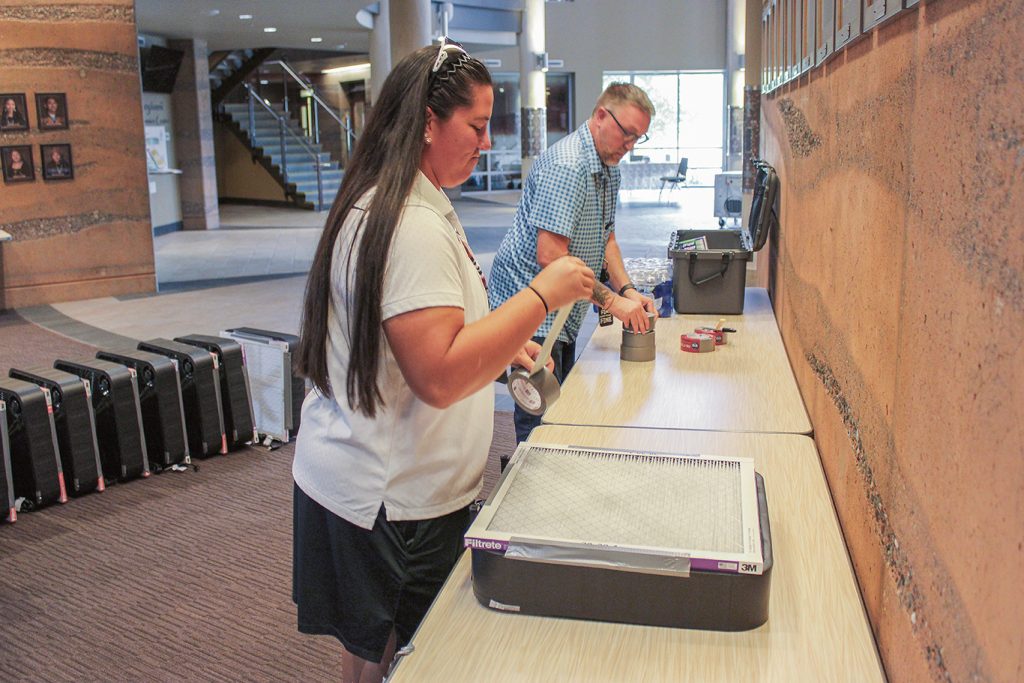
In response to the worsening air quality, the CTUIR Environmental Health & Safety Program distributed 70 home smoke filter kits July 24 in the NGC lobby, providing residents with tools to improve indoor air quality.
Each kit included a digital indoor air quality monitor, a Smoke Matters home sealing kit with materials to help limit smoke infiltration, an N95 mask, a microfiber cleaning cloth, AQI information and QR codes linking to instructional videos on creating a cleaner indoor environment and using the kit effectively.
Households were limited to one kit each, and supplies were available on a first-come, first-served basis while quantities lasted.
The Yellowhawk Tribal Health Center (Yellowhawk) also maintained a distribution list and contacted individuals already enrolled in its programs to help coordinate kit deliveries.
For residents unable to reach the NGC because of health concerns, transportation barriers or the risk of being unable to return home from the Bingham area, tribal staff helped arrange delivery of smoke filter kits when possible.
The effort extended beyond smoke protection, as community members and local businesses also supported firefighters working across the region.
In addition, Mission Market hosted a firefighter donation drop-off in support of crews responding to the Paradise, Horse Ridge, Hagen and Ninemile fires.
Community members were able to bring donations to the market at 46493 Mission Road.
Requested donations included bottled water, electrolyte drinks, individually wrapped snacks and other supplies to help firefighters stay hydrated and supported during extended wildfire response efforts.
Each donation helped provide firefighters with essential supplies to stay fueled and hydrated while responding to wildfire incidents.
Emergency evacuations
As wildfire conditions intensified, emergency response efforts expanded with evacuation assistance and shelter available for residents at Sunridge Middle School, Blue Mountain Community College and the Pendleton Round-Up Grounds.
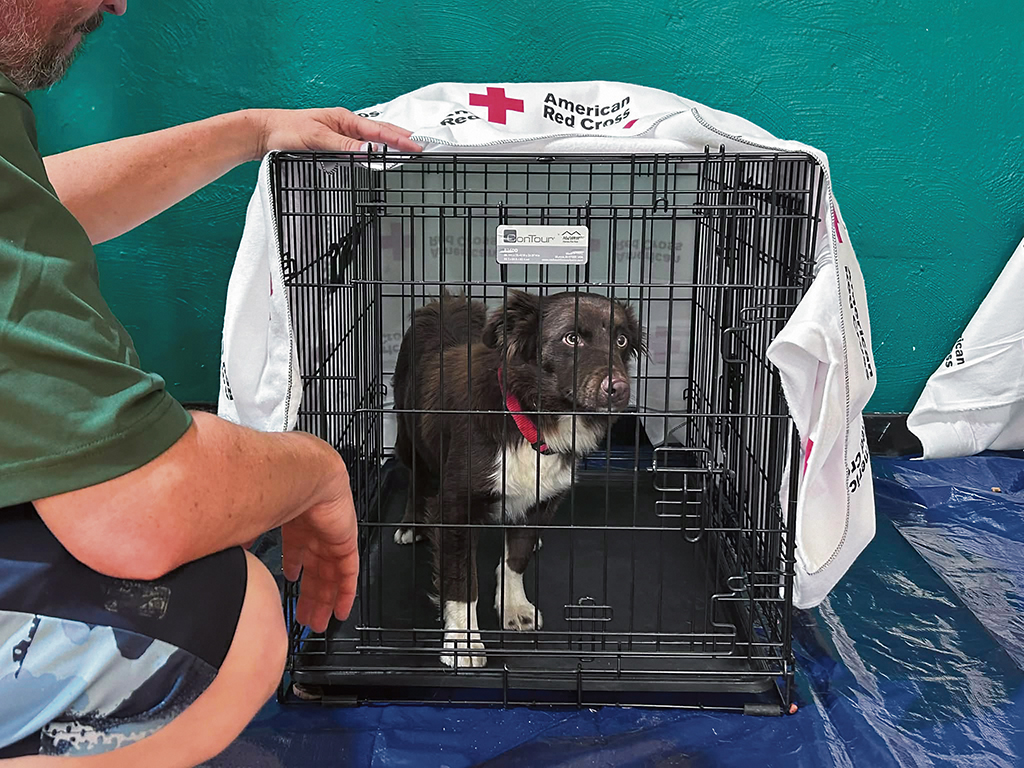
The Oregon Red Cross opened a shelter for fire evacuees and their pets at Sunridge Middle School, located at 700 SW Runnion Ave. in Pendleton.
Rebecca Davenport, shelter supervisor of the Oregon Red Cross, said the shelter accommodated cats, dogs, turtles, guinea pigs, hamsters and other small pets, but it could not house larger animals such as horses or cattle.
Among those sheltering at Sunridge Middle School was Kyrie Phillips, who evacuated with family from their home on Hagen Road near Bingham Creek at mile post 22. The group included five adults, two children, eight dogs and two cats.
Phillips said they heard sirens before deputies stopped and handed over a yellow Level 2 evacuation notice.
“It was chaotic,” Phillips said. “But I kept my cool.”
Phillips said it took several trips back and forth to bring every member of the household to safety at Sunridge Middle School, including the family’s eight dogs — Seven, Kilo, Oliver, Blue, Lady, Bob, Twinkie and Bossy — and two cats, Falcon and Split.
To support evacuees with pets, the CTUIR and the Pendleton Animal Welfare Shelter provided supplies including food, bowls, leashes, tarps, pee pads, cleanup materials, dog waste bags and disinfectant wipes.
Red Cross officials reminded residents that pets could not be dropped off at the shelter on their own. Those staying at the shelter were required to register and remain responsible for their pets’ daily care, including feeding, watering, walking and cleanup.
Mystie Haynie, Public Health Operations supervisor for Yellowhawk, reported that the Evacuation Services Task Force contacted 23 of 30 households located within the Level 3 evacuation area along the Bingham Road/Highway 204 corridor during the Hagen Fire response. Of those contacted, 11 households had evacuated to hotels or stayed with family or friends, while 12 reported sheltering in place with evacuation plans.
Seven households could not be reached, and 14 were determined ineligible for Disaster Case Family Services assistance, Haynie added.
Kila Solomon, Public Health Emergency Preparedness (PHEP) coordinator for Yellowhawk, reported that the PHEP Task Force has distributed 14 air purifiers, 42 replacement filters and 23 box fans to help improve indoor air quality since the wildfire smoke response began.
“Public Health staff have focused on supporting homebound patients through wellness calls, medication deliveries, home visits, indoor air quality checks and coordination with Tribal, local, and state partners,” Solomon said. “The PHEP Task Force will continue providing resources and support to help protect the health and safety of the community throughout the wildfire smoke emergency.”
CTUIR Incident Command System
The CTUIR also activated its Incident Command System to coordinate the tribal response to the Hagen Fire and help ensure essential services continued during the emergency.
The system is based on the National Incident Management System and aligned with Federal Emergency Management Agency (FEMA) Community Lifelines, providing a framework for responding to emergencies such as wildfires, severe weather, hazardous materials incidents and public health emergencies.
While Northwest Incident Management Team 7 and the Oregon State Fire Marshal’s Office managed wildfire suppression efforts, CTUIR’s emergency management structure focused on coordinating resources and supporting community needs.
The tribe identified three primary priorities during the emergency: protecting life safety, stabilizing community lifelines and conserving property and the environment.
The response structure was organized into seven functional divisions responsible for areas including safety and security, food and shelter, health and medical services, transportation and infrastructure, emergency response, finance and administrative support.
According to CTUIR, the Incident Command System allowed tribal departments and partner agencies to work within one coordinated structure, helping direct resources where they were needed most while supporting residents affected by the fire.
As wildfire season continues, the response across the region has highlighted the importance of preparation, communication and community support during rapidly changing emergencies.