CTUIR Family Violence Services hosts Tribal State and Federal Summit
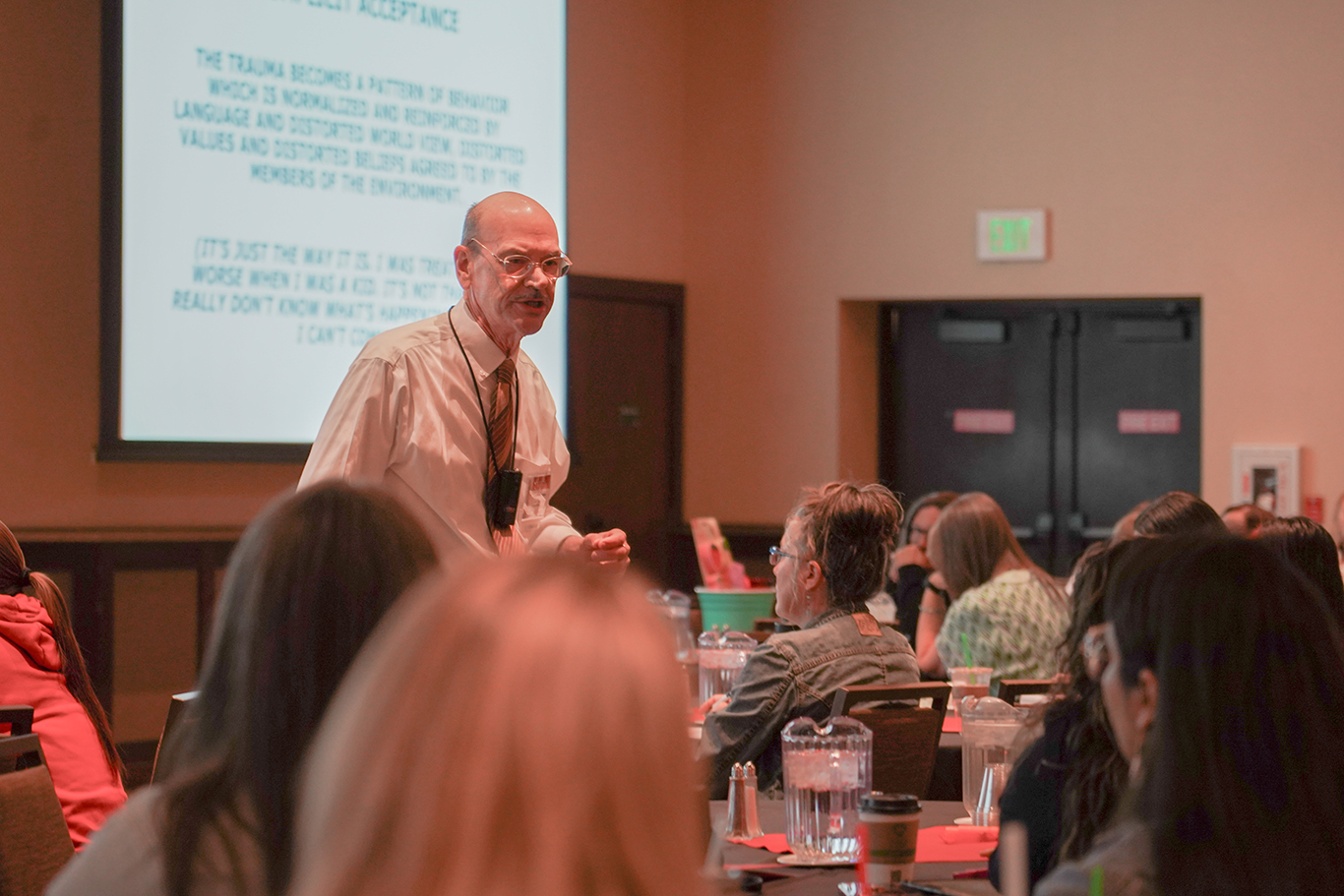
MISSION — The Confederated Tribes of the Umatilla Indian Reservation (CTUIR) Family Violence Services (FVS) program hosted its biannual Tribal State and Federal Summit July 7-9 at Wildhorse Resort and Casino (WRC), shaping the behavior and culture surrounding domestic violence.
The summit invited speakers on an international scale to discuss topics surrounding complicit behaviors in family trauma, coercive control within families, the intersection of brain injury and domestic violence and others.
FVS Manager Desireé Coyote said this summit came about due to the work systems like FVS have been doing for the past four, five years, after having always addressed domestic violence, sexual assault, elder abuse and stalking.
“The last five years were cases that really impacted our families, our children and our survivors of domestic violence,” Coyote said. “This year’s summit had a focus on moving beyond policy and assisting our community members in a meaningful way that benefits our community members – not a systems-based lens.
Coyote said there needs to be more meaningful ways to help the community, not to punish it.
“The victim didn’t commit a crime, the offender committed crimes. The system, and sometimes community members, will always blame the mom, who they believe is not doing anything to protect the kids, but she really is,” Coyote said.
She added that systems don’t take the time to sit and figure the piece out, hence the summit looking at how systems can help the families they’re trying to serve.
The summit emphasized a focus on reflecting on current procedures within systems and determining if they still fit the mold of the community being served.
“In my 20-plus years of addressing violence within the home, the existing templates have not worked, especially when data still shows the overrepresentation of populations within jail, detentions, prison and additionally diabetes, suicide, alcohol or drug use,” Coyote said.
Coyote added that when systems don’t factor in coercion, brain injuries or negative system-experience and their lasting harm, victims will continue to state that instances aren’t worth reporting as the systems don’t believe the experience.
“Our tribal professionals often created, based on Oregon or USA, existing templates such as types of professionals and policy and procedures. Unfortunately, that may include ‘how we do the work,’ Check the box for intake, check the box for solutions. This practice, as experience shows, has not worked,” she said.
Coyote said this practice, as her experience shows, has not worked. This year’s theme, Moving Beyond Policy: Shaping Behavior and Culture, focused not only on the need to move, but also solutions to work from the heart and not from checking a box.
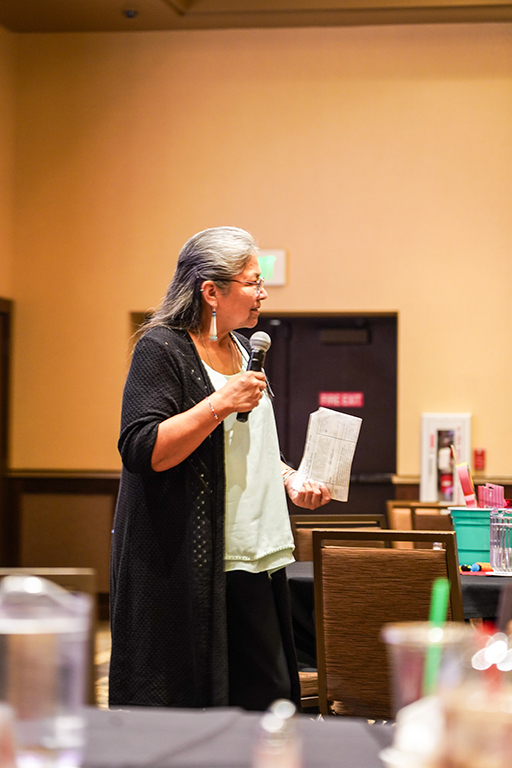
The summit’s keynote speaker, Marisa Miakoda Cummings, reminded attendees that they used to socialize with strong protocols and etiquette for day-to-day life to exist with limited contact.
“(Cummings) presented a reminder for the Indigenous and provided a tribally-specific lens for the non-Indigenous. This keynote was crucial for setting the foundation for this year’s summit as the work we do to address domestic and sexual violence is handled by both tribal and non-tribal staff,” Coyote said.
Other speakers included Jordyn Battle and Arianna Sessoms, speaking about supporting survivors of domestic violence, sexual assault and stalking in the workplace; Shannon Sivell, Alexxis Robinson-Woods and Libby Villa, who focused on what the Crime Victim and Survivor Services Division’s (CVSSD) commitment to collaboration, equity and meaningful engagement; and Dr. Rebecca Campbell, who spoke about the neurobiology of trauma.
Coyote said she’s been a part of the CVSSD for 15 years.
“It’s looking at how their grantees — usually law enforcement, prosecution and community-based advocacy — we learned back in 2010 to 2012 that services to communities of color, specifically tribal nations, were not being provided in that equal way,” she said. “Awareness was really lacking in regard to nonprofits providing services to survivors at tribal nations, so (Sivell, Robinson-Woods and Villa) talked about the overall work that we’ve done for the last 15 years to get to where we’re at now.”
The second day of the conference began with Dr. Emma Katz, who presented virtually from her home in the United Kingdom while she spoke about responding to coercive control within families. Molly Washington and Shanna Knight presented on behalf of the Native American Program of Legal Aid Services of Oregon (NAPOLS), and Russha Montag Knauer analyzed the intersection of brain injury and domestic violence.
“(Knauer) gave a basic outline of what brain trauma is and how it impacts people, and then she brought in domestic violence and sexual assault, how we respond under the trauma that occurs to us and how the body truly protects itself, including our mind, body and soul,” Coyote said.
Speaking about coercive control at the start of the day, Katz delved into the defining components: motivation, context and impact.
“ A coercive controller’s motivation is to maintain control and dominance over a partner, an ex-partner or a family member’s life to punish for non-compliance — this is what drives the perpetrator’s actions,” Katz said. “ The perpetrator is motivated by their deeply held and harmful drive to obtain control over other people in their family and maintain that control indefinitely for as long as they want it.”
Katz said the context of a perpetrator’s behavior lies in a power imbalance between them and their current or ex-partner and their family, creating a need for dominating the relationship and the family and accumulating more power. Regarding impact, Katz told summit attendees that it results in the victim-survivors having to make harmful changes to their lives and behaviors in order to avoid punishment from the perpetrator.
At the start of the third and final day of the conference, Robert Ransom provided fraud-awareness training to attendees, and Duane Bowers followed with a session about complicit behaviors in family trauma. Finally, Gheisha-Ly Rosario Díaz, Sharwline Nicholson and Melissa Hope Johnson spoke about creating a survivor-centered practice that promotes child safety and encourages accountability while strengthening family preservation efforts.
The sessions were followed with a performance by dancer Kellen Trenal in the Rivers Event Center as he performed “According to Coyote.”
“We learned about Kellen and his performance from our allies at Whitman College. We also looked at his prior work at various venues and believe this would be a great opportunity for Summit attendees, an excellent remembrance for Indigenous and an excellent learning experience for the non-Indigenous,” Coyote said.
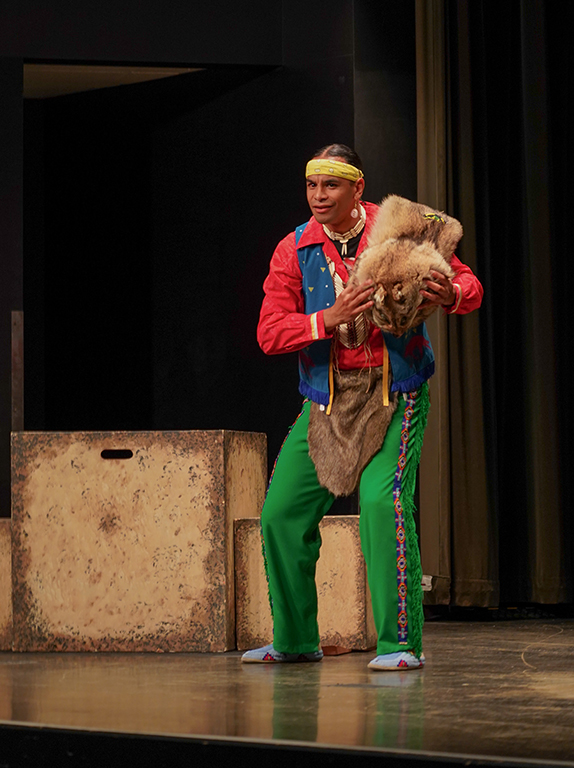
She added that Trenal’s storytelling was engaging and lighthearted, giving insight to nuances of old ways and told the Creation story.
“It was a sigh of relief and a bit of humor compared to the heavy topics from the summit, his ending was quite fitting with Marisa Cummings’ beginning,” Coyote said.
Coyote said the array of topics was important for the health and well-being of community members, containing topics system professionals should know, practice and be held accountable to as someone who touches the life of someone in their community through their work.
“For Family Violence Services, when we walk the community members through the paths they are on, the professionals and the community members usually involved include community-based advocates, system-based advocates, law enforcement, prosecution, courts, mental health, child welfare and judges,” Coyote said. “This entire summit was built to enhance systems knowledge and practice for the benefit of those we serve.”