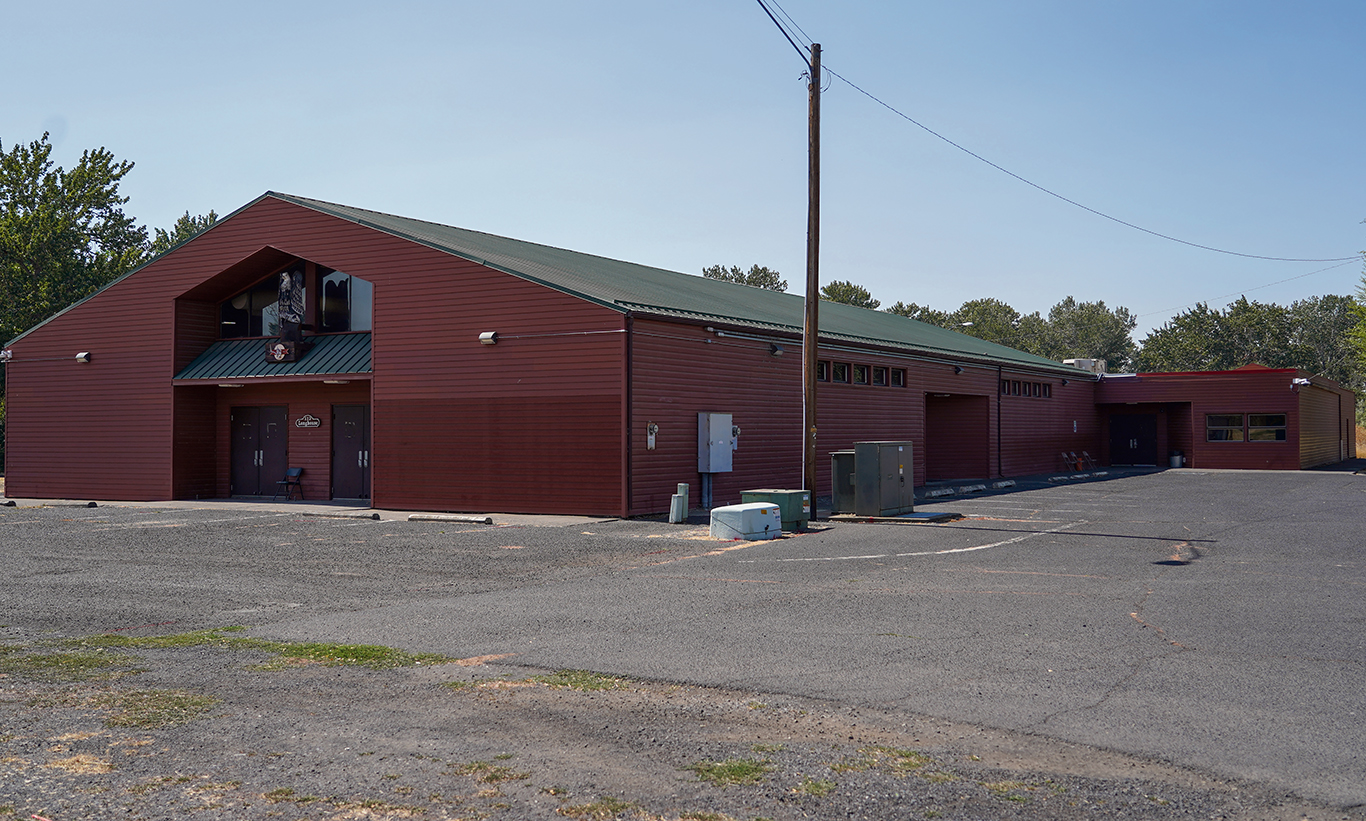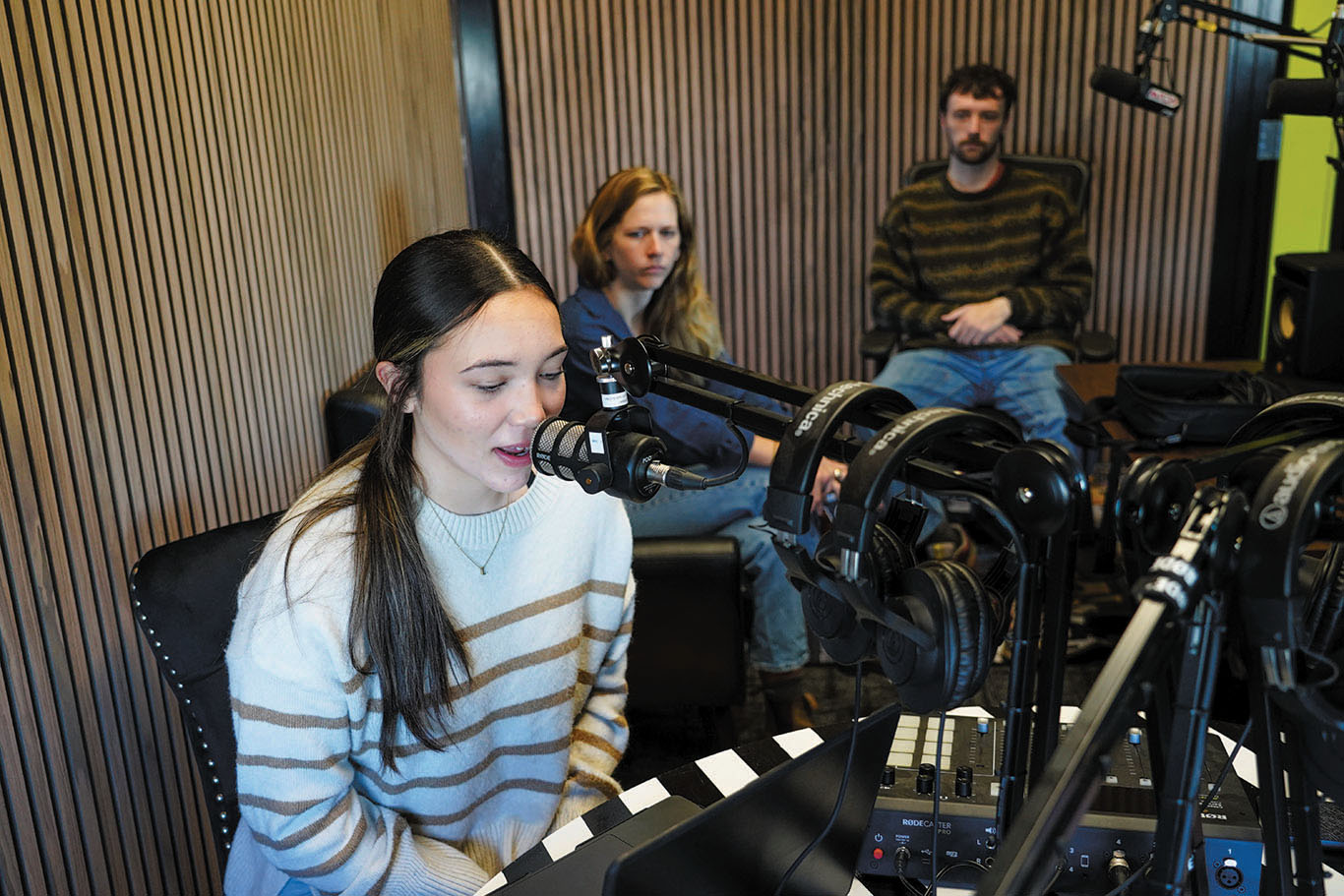
MISSION — A group of prospective young journalists spent the week learning the ins and outs of audio journalism through the Youth Voices program at Nixyáawii Governance Center.
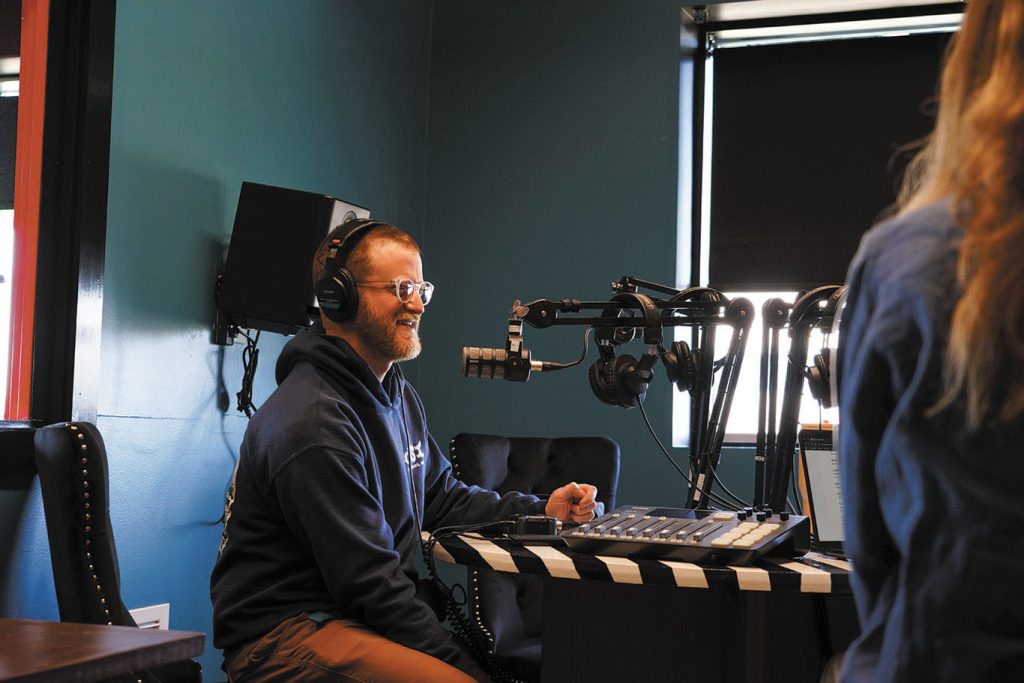
On March 24, a small group of students, ranging from middle school to a college freshman, met with Youth Voices instructors Mike Green, Madeline Jorden, and Owen Preece, who hail from the nonprofit Montana Media Lab at the University of Montana School of Journalism.
“We show up at the beginning of the week and introduce kids to audio-journalism, and a lot of times we’re working from zero and bringing them up to 100 by the end of the week, or as best as we can,” Green said.
Jorden said she got involved with the program as a grad student at the University of Montana.
“The program is just about taking audio journalism into schools around Montana and the region and teaching kids about audio journalism and how to create a radio story,” Jorden said.
While the program is typically Montana-based, it has recently branched out further as groups have reached out to take part. Confederated Tribes of the Umatilla Indian Reservation (CTUIR) Director of Communications Kaeleen McGuire reached out to the Montana Media Lab in the Fall of 2025.
“Our partnership with the Montana Media Lab was a great first step, and what a team they have,” McGuire said. “Invested in every community they are a part of, and shared so much knowledge with the group, even in the short time they were here. We are very thankful and I hope we can continue to build on the partnership.”
McGuire said she was thankful for the successful inaugural venture into the project.
“The teens involved were sharp, I am proud of how they contributed their time and energy to the project and it is so exciting to hear their ideas for the future,” McGuire said, “As we continue to revamp KCUW, we will continue to focus on opportunities for our young people to share their voices.”
Green explained that the program begins the week with playing some stories to lay out an example, inviting reporters via Zoom to talk about their jobs and then helping them develop an idea of what a news story is.
Students Harley Schofield, an eighth grader and Lainey Surber, a freshman at Pendleton High School, found the opportunity through a Facebook flyer.
“I think it’s cool that people get to do this and they’re hosting it for people my age,” Schofield said.
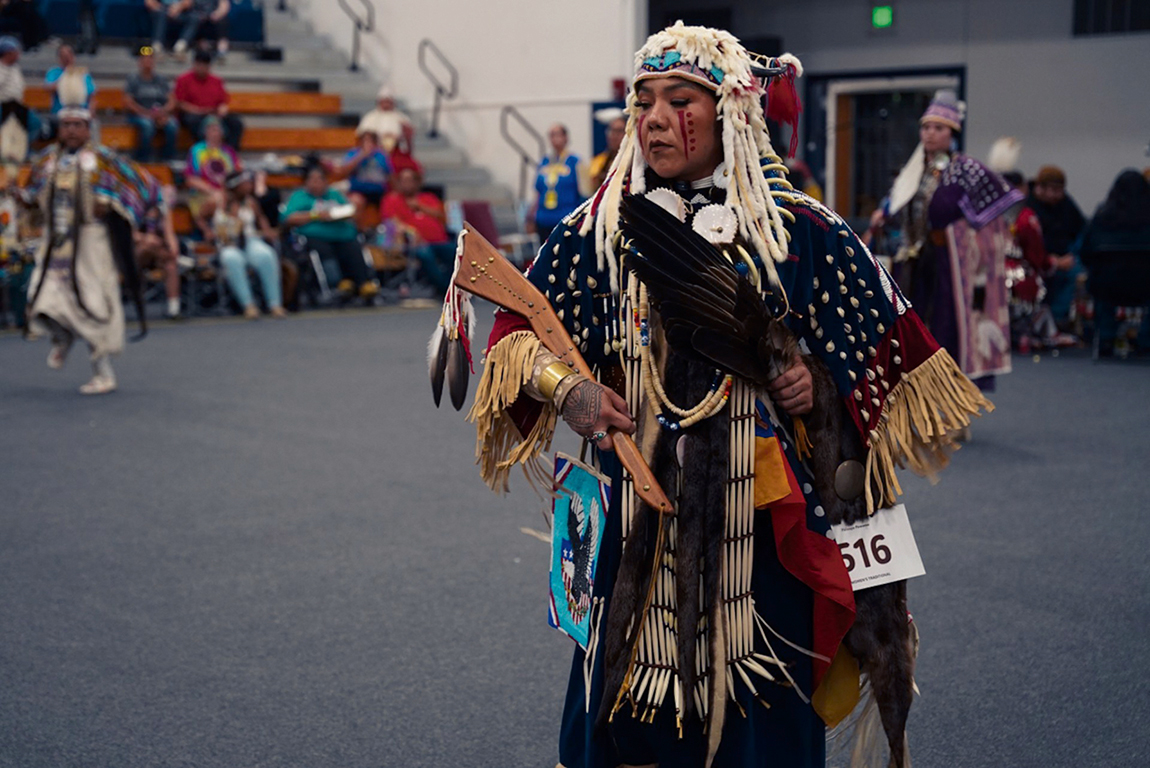
Over the course of the week, the students ventured into the world of journalism through the Basketball Against Alcohol & Drugs (BAAD) Tournament — interviewing, transcribing and editing recordings for their final project.
“We had heard about the BAAD Tournament before we got here and thought it was something
that the kids might be interested in doing,” Jorden said. “And one of our students had played in the tournament earlier this week. So, I think they had a pretty good sense of what the program is, what the tournament’s all about and why it’s important.”
The core of the students’ coverage revolved around the tournament’s movement: the effects of drug and alcohol abuse in the community, as well as the history of the BAAD Tournament itself.
Interest in journalism
The week was a good opportunity to pursue piqued interests for the students, introducing them to the different facets of journalism.
“I just like how you can meet new people and talk about situations and help with it,” Schofield said. “Like with the one we’re doing about the BAAD Tournament, that’s what I like to do. Just learning how to talk to people without being nervous or weirded out by it.”
Surber said the part of the Youth Voices program that interested her the most was being able to make a difference with what she was creating, even if it was a small difference.
Surber also said her view of journalists had changed over the course of the week, after spending some time in their shoes.
“I’ve always seen journalists as kind of annoying,” she said,” because that’s what they’re framed as in movies, but I really found out a lot of the deeper meanings of journalism and how much it can help the community. Just how much fun it would be, to be able to write and talk and be able to help in any way you can.”
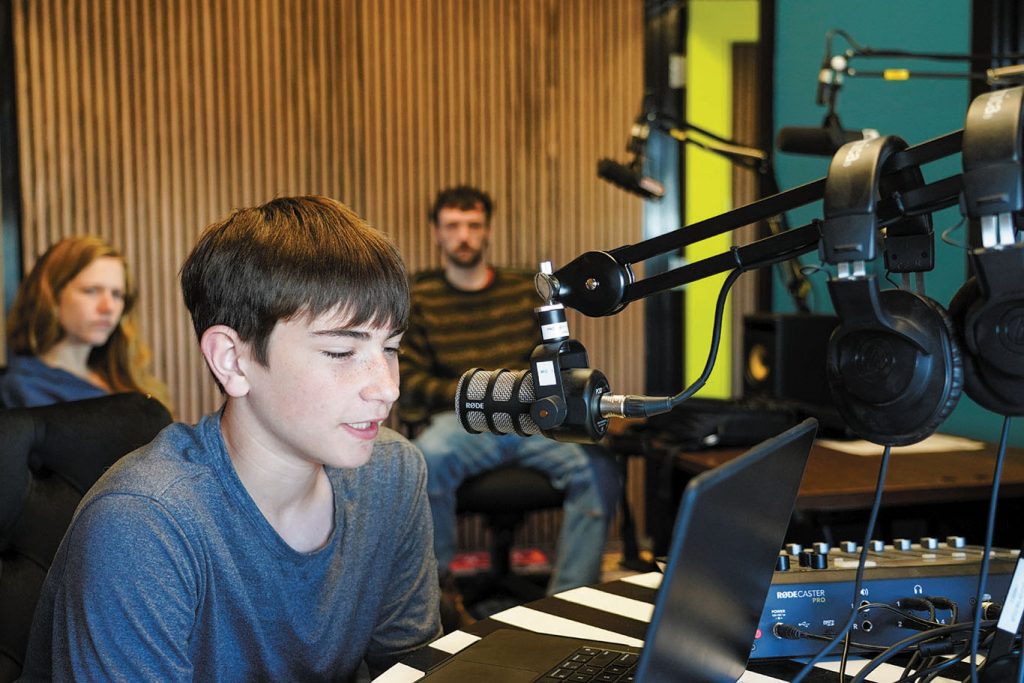
After holding interviews at the BAAD Tournament and making calls to community members, the students recorded voice-overs at KCUW to prepare the final version of the audiojournalism enterprise.
“I think one of the gifts of using audio for something like this, is that it’s not a format that a lot of people, especially kids, are introduced to,” Owen Preece said, “and it’s not necessarily what they always think of when they think of journalism at first.”
Preece said, in that way, it’s almost like starting from scratch — representing yourself and members of the community in an authentic way.
“We get to talk about the differences between audio and photos, or a written story,” he continued, “How you can hear inflection in people’s voices and feel like you’re sitting across from them. So, I think in that way, it’s easier to talk about audio and introduce people to journalism through that, because it’s, in a lot of ways, I find it to be more relatable.”
The impact of introducing journalism
One of the core benefits iterated by the instructors was exposure to the field and learning how to get their voices out there and find what they’re interested in, in both the community and prospective career fields.
“At least in my experience as a kid, you don’t get a whole lot of exposure to what jobs actually are in a lot of ways,” Jorden said. “So, I think just giving them a little preview of ‘This is what journalism is and how it works’ can be helpful in either piquing their interest in something that they might be interested in studying down the road or not.”
Jorden added that it was a benefit to also get to tell a story told by kids from a community for that community.
Green emphasized the way kids are seeing everything through social media that is happening outside of their community, this kind of local journalism empowers them to speak up and recognize the good things that are going on around them.
Preece hopes the impact on the students is that they internalize some of what they’ve learned as not only a potential career path, but also as a way of seeing the stories unfolding around them.
“As a journalist doing that process, you learn a lot more about your community and can participate more actively. So, regardless of where they go from here, if they’re interested in pursuing more journalism, then great,” Preece said. “But if not, hopefully they’ve gotten something from that experience and can carry it on with whatever they do.”
When asked whether the Youth Voices program had piqued their interest in pursuing careers in journalism, Schofield said probably later on, and Surber was deeply interested.
“Before this week, I just wanted to try this just to see if I would like it or not, and I love it. So I think I definitely will be,” Surber said.