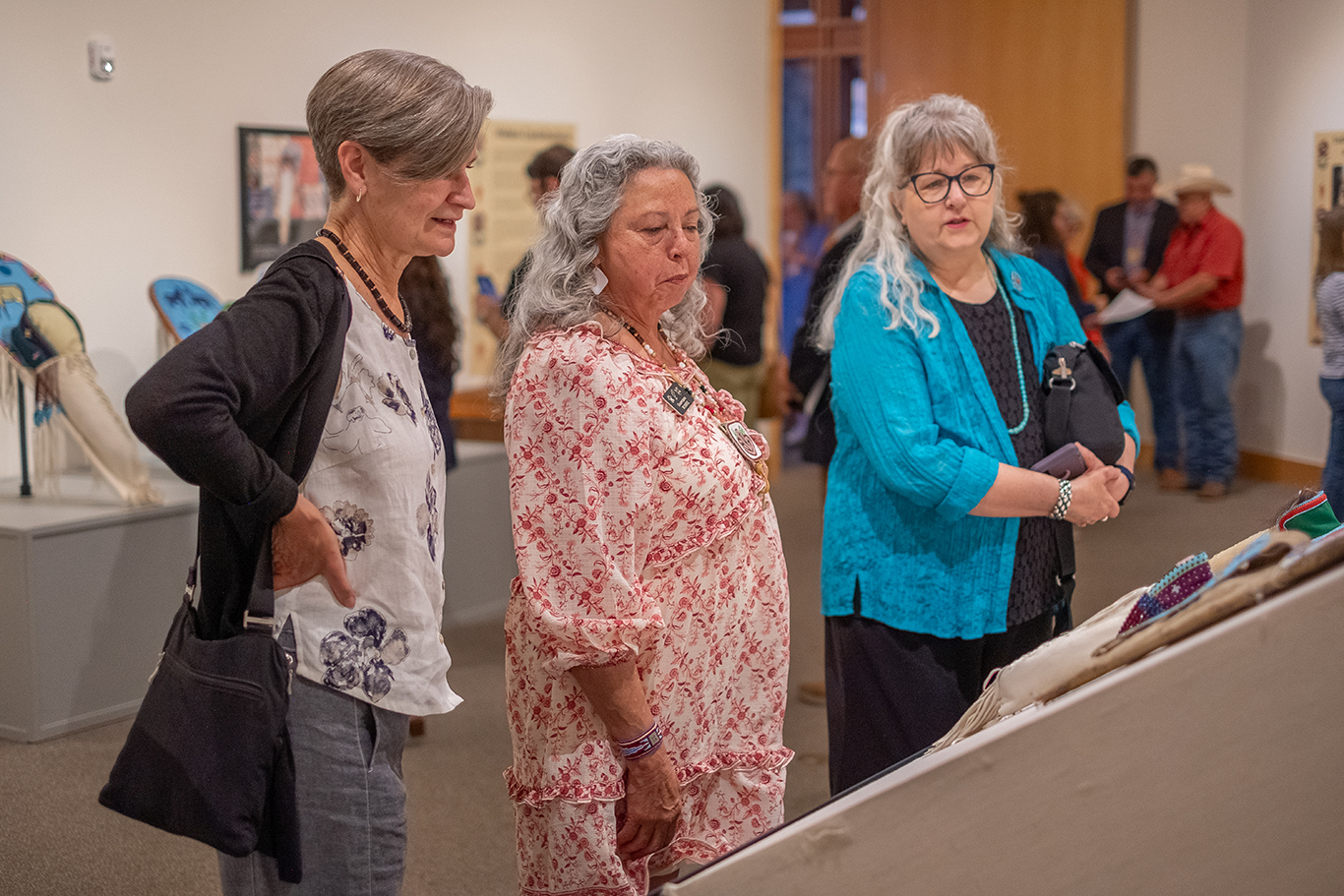
MISSION — Tamástslikt Cultural Institute (Tamástslikt) hosted a preview on June 4 of “Tíkaaš – The Precious Art of Cradleboards,” the first exhibit drawn from the Columbia Plateau Tribes portion of the Fred L. Mitchell collection, which was acquired in March.
The exhibit, which opened to the public on June 5, features intricately beaded cradleboards alongside prints depicting early 20th-century Plateau Native American families and children using the cradleboards.
Organizers invited a select group of guests to the preview event, highlighting the cultural and historical significance of the collection as it returns to public view.
Tamástslikt Director Bobbie Conner said that periodically, she went to the house where Mitchell kept the pieces he had acquired over the years and knew his cradleboard collection was magnificent. The relationship between Mitchell and TCI started in 2016.
“The ornate, highly ceremonial cradleboards are indicative of how precious infants are to our culture,” Conner said. “There was a very high infant mortality rate. You can visit our cemeteries and see that on the reservation.”
Conner said circumstances such as horseback riding or wagon accidents, influenza, tuberculosis and other illnesses had significant impacts during the past 175 years, bringing forward the idea that infants are the future.
“We envelop them in not only safety and security, but express how precious they are in these art forms like cradleboards — the everyday ones and the ceremonial ones,” she said. “It’s a way of, I think, projecting that we are a hopeful people, that we intend to be here forever.”
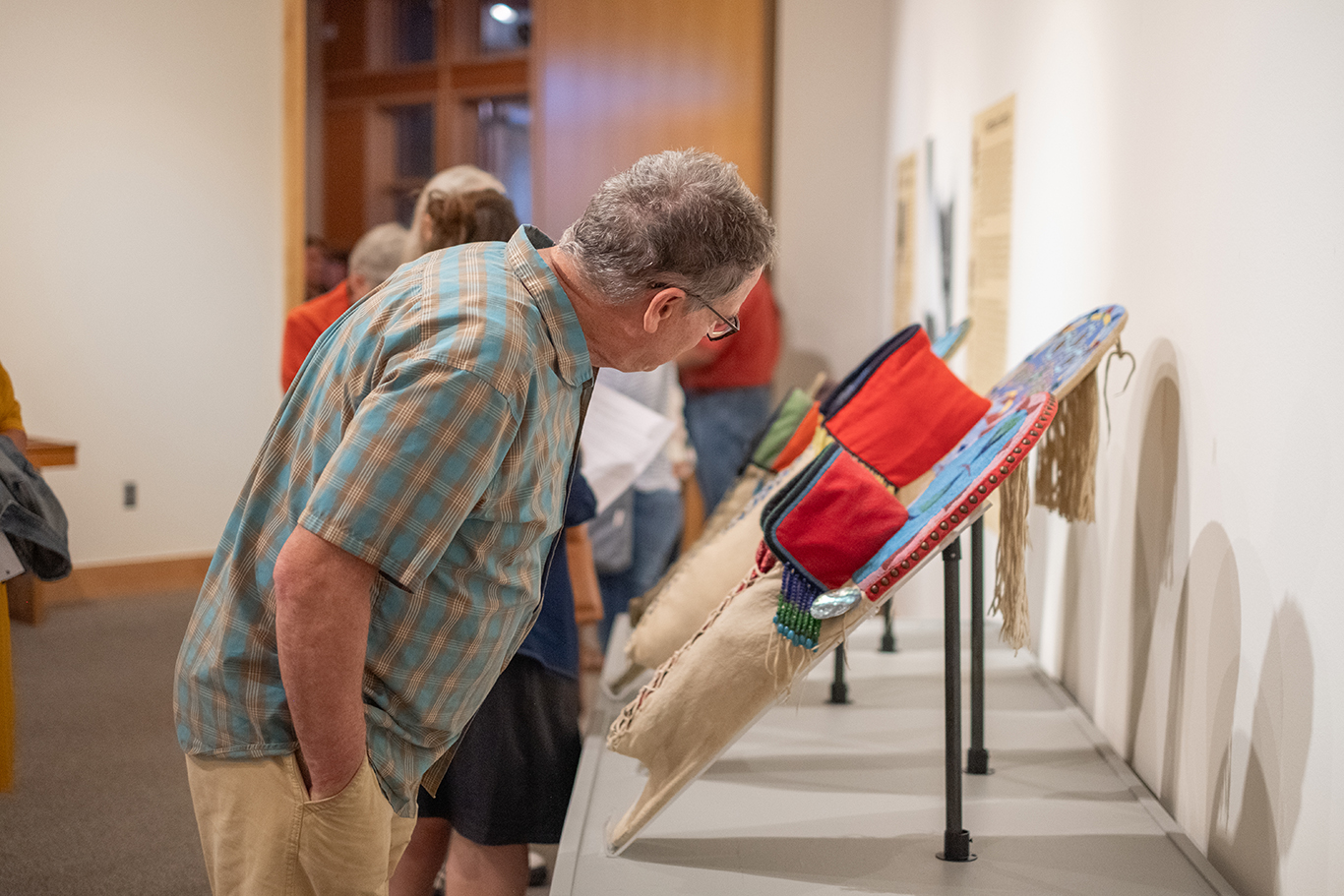
Tamástslikt Assistant Director of Operations Randall Melton said Mitchell’s collection was unlike anything he’s seen, considering the number of Plateau-style beaded cradleboards.
“Think of them as an extension of the person that made them, and to treat them with that kind of care and respect,” Melton said. “Thinking of it as ‘coming home’ and also a new beginning for us, it goes with the way tribal people think — we always think back to look forward.”
“Coming home” was at the core of guest-curator Rebecca Dobkins’ opening comments prior to the exhibit’s opening. Dobkins is the curator of Native American Art at the Hallie Ford Museum in Salem as well as an emeritus professor of anthropology at Willamette University.
“In a sense, all of the children that are represented and the relationships around those cradleboards symbolically come home,” Dobkins said.
Dobkins said the collection was an exquisite elevation of the universal human need to take care of infants.
“We, as creatures on Earth, produce the most vulnerable offspring of any other creature, and we have the responsibilities, in whatever communities we’re a part of, to protect those children and bring them into the world in, hopefully, a loving and sacred way,” Dobkins said. “And these cradleboards do it in such a magnificent way.”
This marks the fourth temporary exhibit at Tamástslikt to showcase Mitchell’s collection and the first presented since its acquisition in March. Previously, Mitchell’s collection had been on loan for displays including “100 Horses” in 2023, “Extraordinary Elk” in 2024 and “Pride in Patriotism” in 2025.
The display included cradleboards from Mitchell’s collection, along with three pieces by Maynard Lavadour made in the 1980s and 1990s — two of which were within the Tamástslikt collection. The third, a miniature cradleboard for dolls, is on loan from the Maryhill Museum of Art.
Melton said the rest of the cradleboards span from the early 1900s to the 1940s.
Dobkins said, at the turn of the 20th century, Pendleton was experiencing the height of portrait photography and Native American families were getting their portraits taken, a baby central in the photograph in a cradleboard or a child standing next to it.
“That early-1900s period, in terms of Indigenous history in North America, was one of the hardest periods for Native people,” Dobkins said. “The epidemics of the 1800s, the removal to reservations, the struggle that people had, and it’s at this very moment when Plateau beadwork reaches its effervescence.”
Dobkins described this period as a “nadir” of population, referring to the lowest point in the fortune of a person or organization.
“Looking at these cradleboards made me think how much faith and hope, even at this moment. The makers of those cradleboards have — the mothers and caregivers and grandmothers who took care of those children, the siblings who took care of those babies — they had a hope and a faith that this would happen,” Dobkins said.
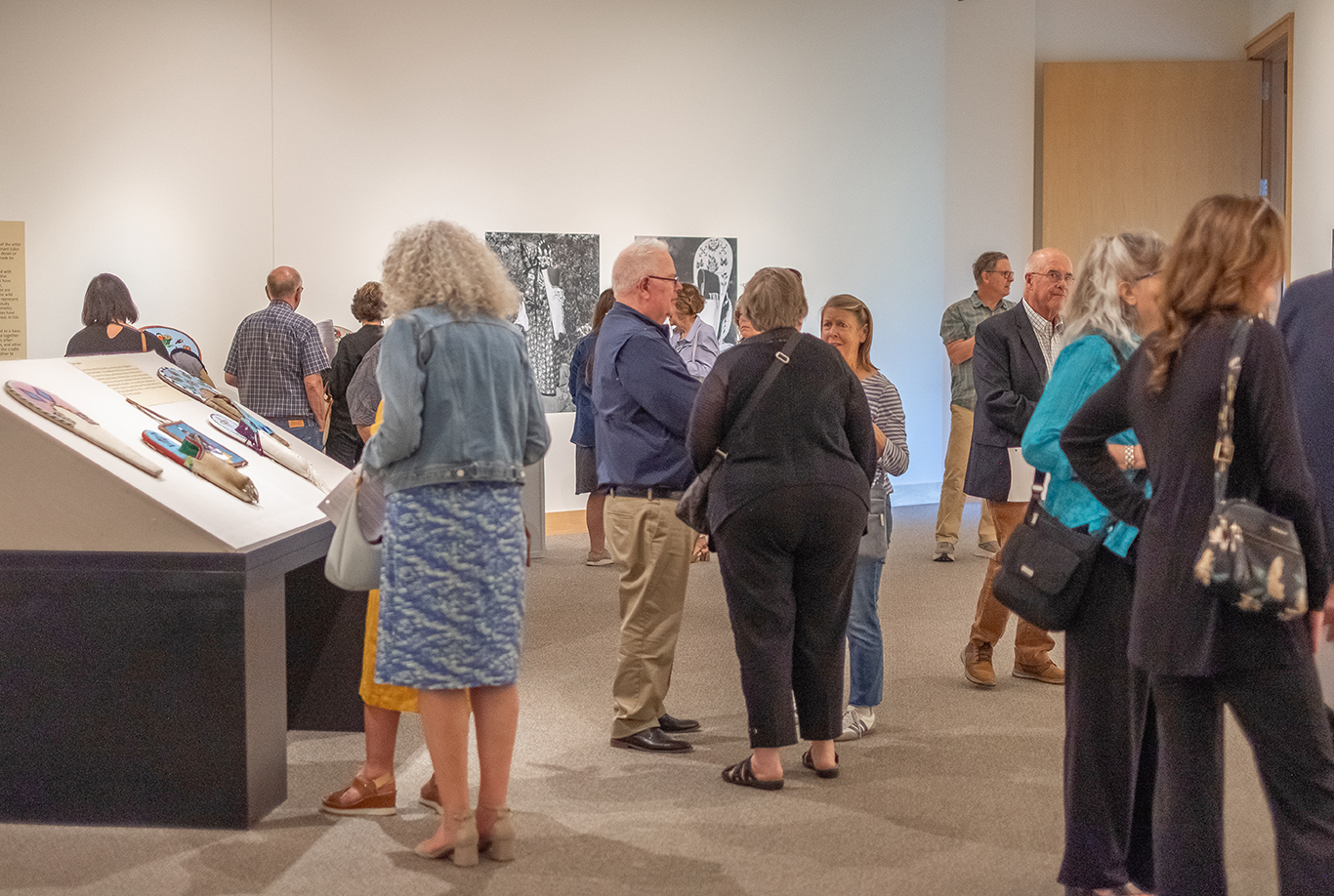
There are several options for further exhibits stemming from the Plateau portion of Mitchell’s collection, said Melton, ranging from basketry to stone tools.
“There are endless options with this collection. Even things that we’ve already had on display could also be part of a different display,” he said.
Conner and Melton said they hope the exhibit can be an educational experience for people unaware of the importance and purpose of cradleboards, also noting similarities between them and contemporary baby carriers or safety seats.
“I think that modern culture has safety seats by law, and we have seat belts that we didn’t have before. I often think about the innovations our people had thousands of years ago to keep us safe, whether it was the kinds of saddles we made or the way they trained horses or the way we took care of infants,” Conner said. “And I’m really proud of our culture for having the capacity and the wherewithal to innovate in all of the ways we have, before safety seats were invented.”
Conner said many people have an unreasonable comprehension regarding how cradleboards are used, believing that they imagine it as a form of imprisonment when they see a baby bound in a cradleboard, wrapped and swaddled.
“Babies come from the womb, where they are nestled in a small space, where they are safe and can sway or move in the fluid there,” Conner said. “When they’re in a cradleboard, that same sense of security is there, and the swaddling and nesting in the encasement or enclosure that’s attached to the backboard keeps them safe, because you can continue to work while they are fully engaged.”
When considering the process of putting a cradleboard together in that time period, Melton said it was something to think about, when today a baby carrier is readily available at stores.
“These really show the care and time people put into making these things precious for a baby that was on the way or already here,” Melton said.