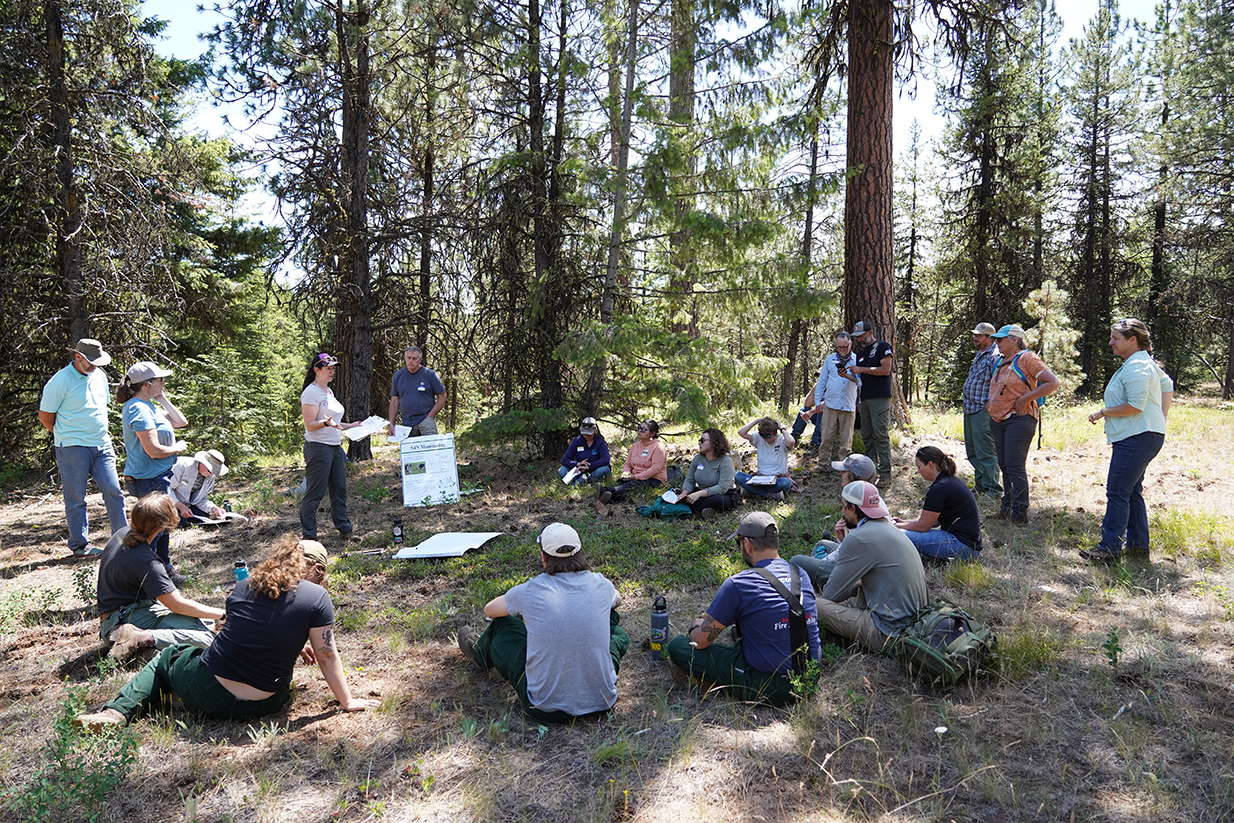
Northern Blues Forest Collaborative hosts field tour in Umatilla National Forest
UKIAH — Within portions of the 1.4 million acres of the Umatilla National Forest just south of Indian Lake, the 54 North Restoration Project is in development, with the intent to promote restoration in the forest, and through that support wildlife, watersheds and First Foods.
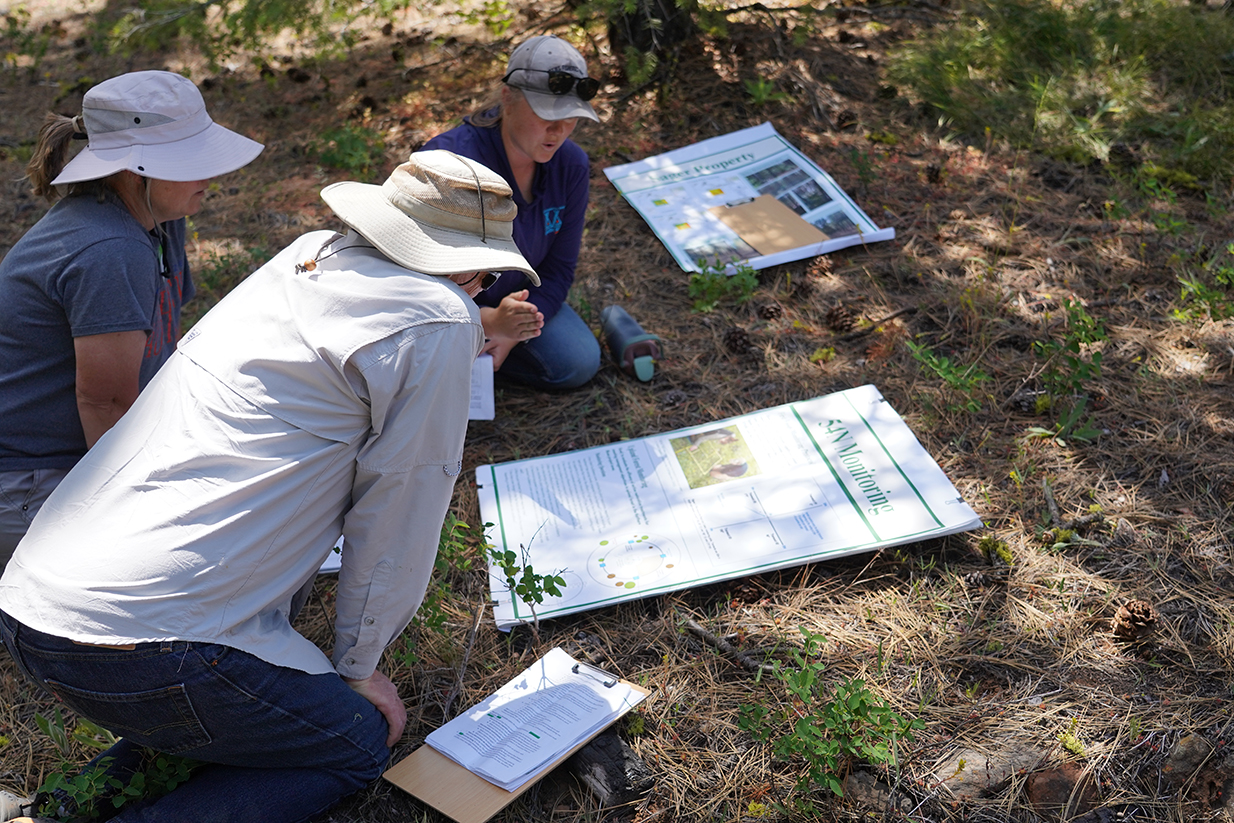
The field tour, planned by the Northern Blues Restoration Partnership, which includes the Northern Blues Forest Collaborative, invited cultural resources professionals from local entities to learn how the 54 North Restoration Project intends to preserve the forest and discuss amongst each other the best strategies to do so.
Attendees ranged from employees from the Confederated Tribes of the Umatilla Indian Reservation (CTUIR), Confederated Tribes of the Warm Springs Reservation and the Nez Perce Tribe, as well as government employees who work in natural resource fields and Forest Service workers
“ The Northern Blues Forest Collaborative really helps to work with the two national forests and dig into projects like this and help public and partners understand the work that’s happening on the two national forests and to ask questions and to really just understand that kind of work,” Umatilla National Forest Acting Vegetation Management Staff Officer Amber Ingoglia said. “ It’s a partnership that supports cross-boundary wildfire risk reduction work, forest restoration work, and really just coordinating our treatments across the landscape.”
Ingoglia said the area would be ideal for restoration work, noting some older pines among younger trees growing beneath, which could become ladder-fuel. Ladder fuels are routes fire can take to rise to upper parts of trees, using lower shrubs as a pathway.
“ So definitely a reason to do some work out here, and the other big part, the reason why we are asking the Umatilla Tribe to be here with us and help us with this project is that they’d submitted a Tribal Forest Protection Act (TFPA) letter to us, and they were interested in working in this area as well in kind of collaboration with the forest,” Ingoglia said.
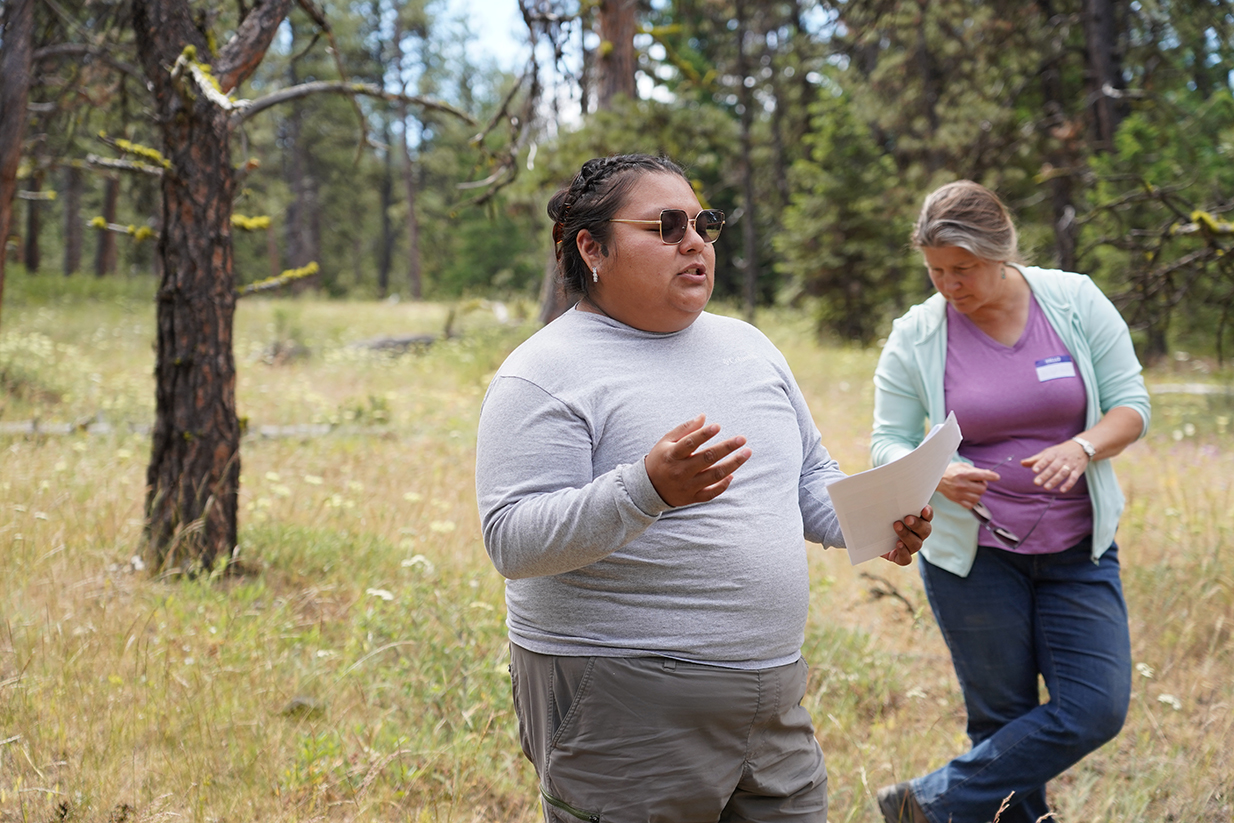
During the field tour, Rosa Arellanes, a CTUIR First Foods botanist from the Department of Natural Resources, explained the significance of plant life in the area, pointing out how it can benefit from controlled fires and restoration projects.
Arellanes said the four touchstones focused on when working on restoration efforts to ensure current and future management activities align with protecting and enhancing First Foods are soil stability, hydrological function, landscape pattern and biotic integrity.
“Soil stability includes the physical, chemical, and biological components, the hydrological function includes the water capture, storage, release and quality. The landscape pattern will include the patch size and extent arrangement and connectivity and then lastly, we have the biotic integrity, which shows the composition, structure, species interaction and First Foods,” she said.
Arellanes said burning in the Blue Mountains used to be common and that the Blue Mountains were called so because settlers would see the sky filled with smoke from burns and change their routes.
“What most people are not taught in early education is that our tribes had land management before it was called land management, so our culture allowed us to work with neighboring tribes and divide areas for specific tribes to gather,” Arellanes said.
She added that, as a tribe, they had gained a specific knowledge over the centuries of the relationship between fire and huckleberries, one of the traditional First Foods.
Arellanes said some things she learned regarding growing patterns for huckleberries included the aspect or direction of sunlight, the fact that north and east plots have better berry production than their counterparts and they prefer partial shade and a slight slope.
What most people are not taught in early education is that our tribes had land management before it was called land management, so our culture allowed us to work with neighboring tribes and divide areas for specific tribes to gather.
In addition to huckleberries, Arellanes also spoke about other plant life in the area that benefits from controlled burning, such as glacier lilies or spring beauty. Plants like these have been found to grow in size or increase seed production after fires.
“So, fires are really beneficial for us,” Arellanes said. “ While these projects are close to home, the knowledge of the Blue Mountains and fire have been suppressed for a long time, and fire being reintroduced and having partners helps us aid the importance of what we hold so important as tribal people having these First Foods.”
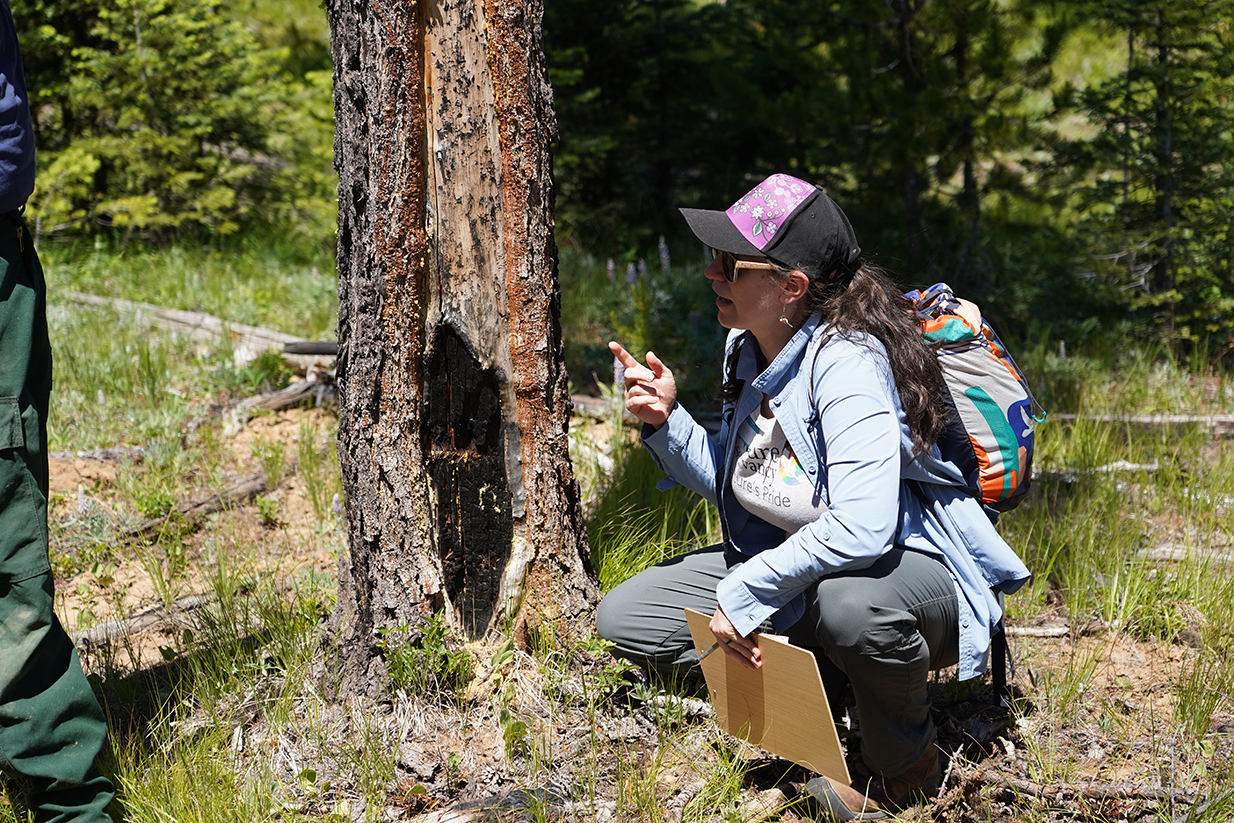
In addition to Arellanes’ discussion about First Foods, other talking points were covered that focused on fuel management and wildfire risk reduction. Afterward, guests dove into discussion about the effectiveness of previous treatments, such as thinning, burning and/or replanting.
Different methods were discussed regarding wildfire reduction and deterring bark beetles by clearing out condensed areas of Lodgepole Pines. Methods include mechanical thinning through using chainsaws and crews, mastication, which is a mechanical process using chipping or grinding, and then commercially harvesting the trees with larger diameters.
The final stop of the tour included additional discussions where attendees got the opportunity to voice opinions, questions and concerns about the monitoring goals for the project, as well as picture what success would look like for the project regarding the status of First Foods, wildfire reduction and forest health.