Tribal leaders and police work session focuses on ID updates, outreach and community safety.
MISSION — Amid reports that U.S. Immigration and Customs Enforcement (ICE) has refused to accept tribal identification, the Confederated Tribes of the Umatilla Indian Reservation (CTUIR) are developing a protocol to help tribal members deal with the federal agency.
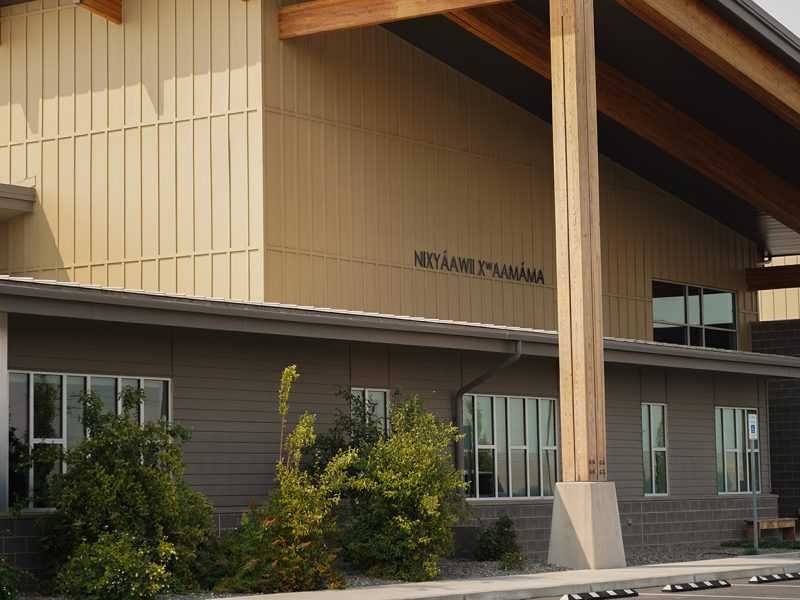
The CTUIR Board of Trustees (BOT) and the Umatilla Tribal Police Department (UTPD) met Jan. 9 at the Nixyaawii Governance Center for a work session focused on protecting Tribal members during potential interactions with ICE agents by addressing tribal identification, internal readiness and public messaging.
CTUIR Executive Director J.D. Tovey said the Tribe is responding to ongoing questions and concerns about ICE interactions. He said leaders must carefully plan how to address ICE-related rumors without amplifying misinformation.
Rumors of ICE agents being spotted on the reservation, on social media and in nearby Pendleton have raised concern among some tribal members.
“We had a lot of people coming and going, and that stirred rumors throughout the community,” Tovey said.
UTPD Chief Tim Addelman said the department has not encountered ICE agents and has no indication the agency plans to operate on the reservation. He said UTPD works closely with the U.S. Marshals Service, the Bureau of Alcohol, Tobacco, Firearms and Explosives and the FBI. The department has previously communicated with Homeland Security, he noted, but reports of ICE activity on the reservation were misinformation.
“Even though there has been no interaction or communication with ICE, it still doesn’t change the facts of what’s happening in the United States at this time, and people who look like us are being harassed,” Trustee Corinne Sams said.
Safety, community trust drive Tribal ID update efforts
Madam Chair Kathryn Brigham raised concerns about outdated tribal identification cards, noting that some members, including fishermen along the Columbia River, still carry IDs that could be easily damaged. She added that while some members already have current IDs, others may need help obtaining replacements.
Sams proposed providing free tribal IDs to all enrolled members during a six-month window and launching a no-cost outreach program to assist members.
“We might want to allocate some funding so they have the opportunity to come in, get a new ID, and carry it with them,” Sams said.
Tovey raised concerns about possible ICE encounters outside business hours. He noted that the Nixyaawii Governance Center operates from 7:30 a.m. to 4 p.m., Monday through Friday, and questioned whether the Tribe needs a 24-hour call line or staff on site if a member is detained.
In addition, Sams emphasized that CTUIR should prepare public messaging and ensure internal readiness, including possibly having a lawyer available or on call. While CTUIR attorneys do not have much immigration law experience, CTUIR attorney Brent Leonard said the Tribe could look into getting legal help from someone who does.
CTUIR Communications Director Kaeleen McGuire said the tribe is also working with other jurisdictions to ensure children are safe. She noted that many families are mixed and that one parent could be an immigrant, so all those considerations matter.
“We want to protect our families, our tribal members and all children, whether or not they are enrolled Tribal members,” McGuire said.
In the meantime, CTUIR Communications is developing public messaging and outreach strategies while coordinating with the UTPD to establish a dispatch line for any Tribal member who encounters ICE.
The CTUIR is also strengthening internal readiness, improving after-hours coordination with enrollment staff, and providing faster assistance to members while protecting tribal citizenship and collective rights.
“We always try to be ready for something, even if we don’t know exactly what we’re preparing for,” Trustee Toby Patrick said. “We can go home, talk to our families, and let them know where we stand as a community, not just as a Tribe. In the end, it all means the same thing because we as a community and a Tribe are standing together, and that should mean something.”
ICE quota and detainment data
CTUIR planning comes as ICE ramps up nationwide enforcement, raising concerns for Native American and immigrant communities.
On the same day of the CTUIR work session, CBS News reported, ICE detained four members of the Oglala Sioux Tribe in Minneapolis. Three were transferred to an ICE facility at Fort Snelling, ABC News reported.
In another incident, Indian Country Today reported in December 2025, actress Elaine Miles, a member of the CTUIR, was stopped by ICE officers on Nov. 3 while walking to a bus stop in Redmond, Washington. Although federal agencies are required to recognize tribal identification because of the nation-to-nation relationship between federally recognized tribes and the United States, Miles said the officers demanded another form of identification. She said she handed over her passport before the officers accepted her identification and allowed her to leave.
On May 30, 2025, The Associated Press reported that White House deputy chief of staff Stephen Miller told Fox News the administration was aiming for 3,000 daily ICE arrests, a target he said could rise further.
(An earlier version of this article contained a typo. The phrase “and other immigrant communities” was updated to “and immigrant communities.”)