Opinion | Brian Fullen, CTUIR Department of Environmental Health and Safety
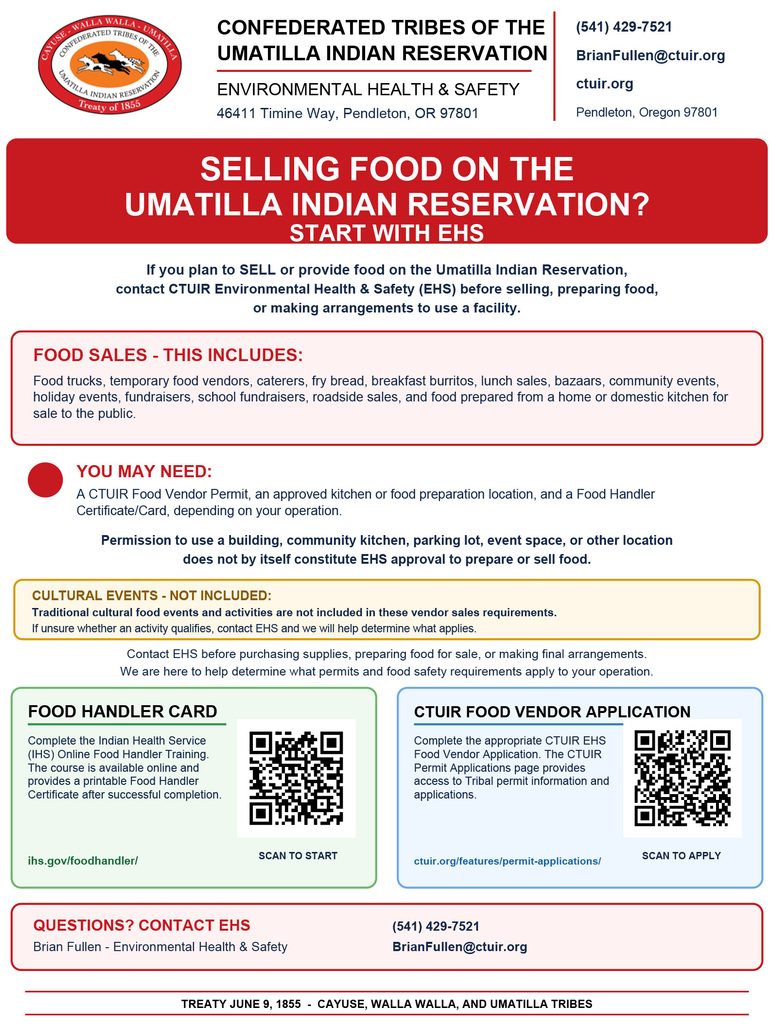
This is a reminder that any person or business planning to sell or serve food on the Reservation needs to contact EHS first and complete the required vendor and food permitting process before being approved to operate at a CTUIR facility, parking lot,
event, or other location on the Umatilla Indian Reservation.
Cultural services involving food preparation are normally an area where EHS is hands-off. However, we encourage food handler cards to promote food safety, and a quick call to EHS is always helpful if you have questions about which requirements apply.
As the community grows and more events and food sales are taking place, we are seeing vendors come to EHS after they have already been told they can use a facility, kitchen, parking lot, or participate in an event. This can create problems if additional food safety, kitchen, food handler, or permitting requirements still need to be met, or if the proposed kitchen cannot be used for that
purpose. In some cases, vendors have already made plans, purchased supplies, or started preparing or selling food.
The process needs to start with EHS. Please refer the vendor to the EHS application CTUIR-Planning Permit Applications, Forms & Fees and provide the required information. EHS will review the proposed food operation, determine what requirements apply, and coordinate with other departments when needed.
This applies to food trucks, temporary vendors, caterers, breakfast and lunch vendors, bazaars, breakfast burrito sales, community events, and other individuals or businesses selling or providing food. Fundraisers and nonprofit activities may have different requirements or fees, but they should still contact EHS before the event.
Please do not promise or approve the use of a community kitchen, building, parking lot, or other facility for a food vendor before the EHS portion of the process has been addressed. Facility managers and departments determine whether their property is available for use. EHS determines the food safety and permitting requirements for the vendor.
For example, the Nixyáawii Community School kitchen is primarily for preparing and serving school meals to students. It is not available as a commercial or community kitchen for outside vendors, public or school fundraisers, public food sales, teaching activities, or private food preparation. Permission to use the school or another Tribal facility does not constitute EHS approval to prepare or sell food.
The same applies to other Tribal and community kitchens. CTUIR employee break rooms are for employee use and are not approved for outside individuals or vendors to prepare food for sale. This includes insurance and liability concerns. A kitchen’s availability does not automatically mean it is approved for vendor food preparation.
Getting EHS involved at the beginning helps prevent confusion and last-minute problems for vendors, facilities, and departments. We can let vendors know what is required before they make commitments, purchase supplies, or begin preparing food.
If you wish to authorize a vendor to sell food at a site that you manage on the Reservation, please direct them to EHS first so we can help them with permitting and food handling safety.
Thank you for helping us keep the process consistent throughout the CTUIR departments and facilities.