TROY — In the Blue Mountains, biologists, tribal partners and volunteers work side by side to test and monitor bighorn sheep, aiming to protect the animals and stop a bacterium from spreading through the herd.
Between Feb. 24–26, the Oregon and Washington Departments of Fish and Wildlife, Idaho Fish and Game, the Confederated Tribes of the Umatilla Indian Reservation (CTUIR) and the Nez Perce Tribe worked together to protect and sustain bighorn sheep populations.
Their work also seeks to honor cultural traditions and restore ecological balance.
The teams spend long hours monitoring herds, capturing and testing animals for Movi, a bacterium scientifically known as Mycoplasma ovipneumoniae. Movi causes severe pneumonia and mass die-offs in wild sheep, mountain goats and muskoxen. It is often carried by domestic sheep and goats, which appear healthy, and spreads through nose-to-nose contact or respiratory droplets.
Carrie Kyle, district wildlife biologist for the Washington Department of Fish and Wildlife (WDFW), said the project is a collaborative effort between the three states and tribes.
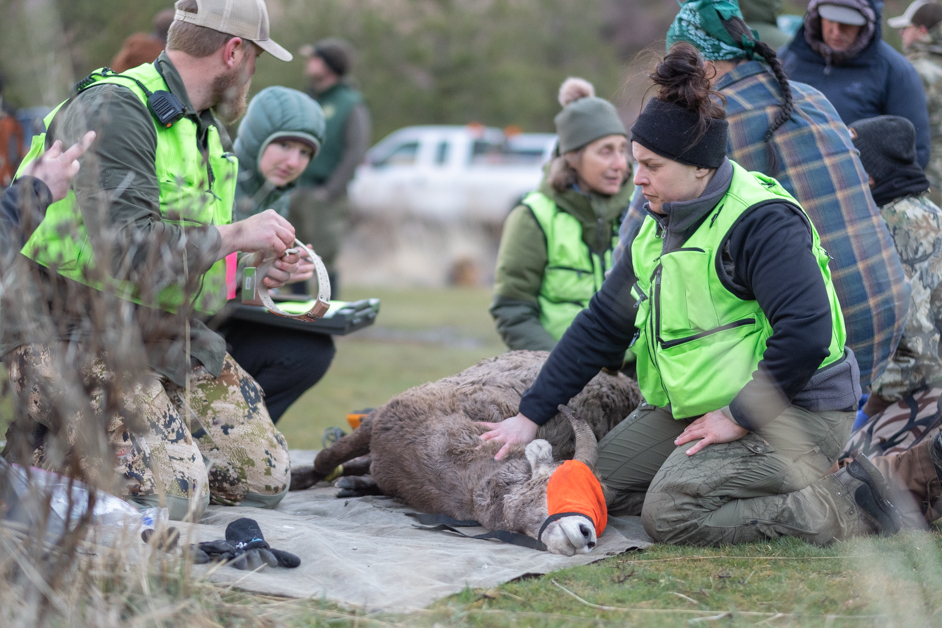
“The greater Hells Canyon population of bighorn sheep is largely intermixed,” she said. “The animals move back and forth between states, breeding and forming a single, large meta-population. In Washington, we manage three smaller herds, but we coordinate closely with Idaho and Oregon along the state line to protect the population as a whole.”
The morning of Feb. 25, the agencies met at the Wenaha Wildlife Area, where the Oregon Department of Fish and Wildlife (ODFW) maintains a small field office in Troy, for a briefing led by Don Whittaker, Ungulate Species coordinator for ODFW, before heading into the field to begin testing, tagging and monitoring the sheep.
Whittaker said the project marks a historic collaboration.
“For the first time in the 30-year history of this initiative, we have representation from all five agencies,” he said. “The state of Oregon, the state of Idaho, the state of Washington, the Confederated Tribes of the Umatilla Indian Reservation and the Nez Perce Tribe are finally working together on the same project.”
Members were assigned specific tasks, including data collection, blood draws, temperature checks and pregnancy testing.
Afterward, the teams drove through the area, scouting a suitable location before setting up a medical campsite along the Grande Ronde River.
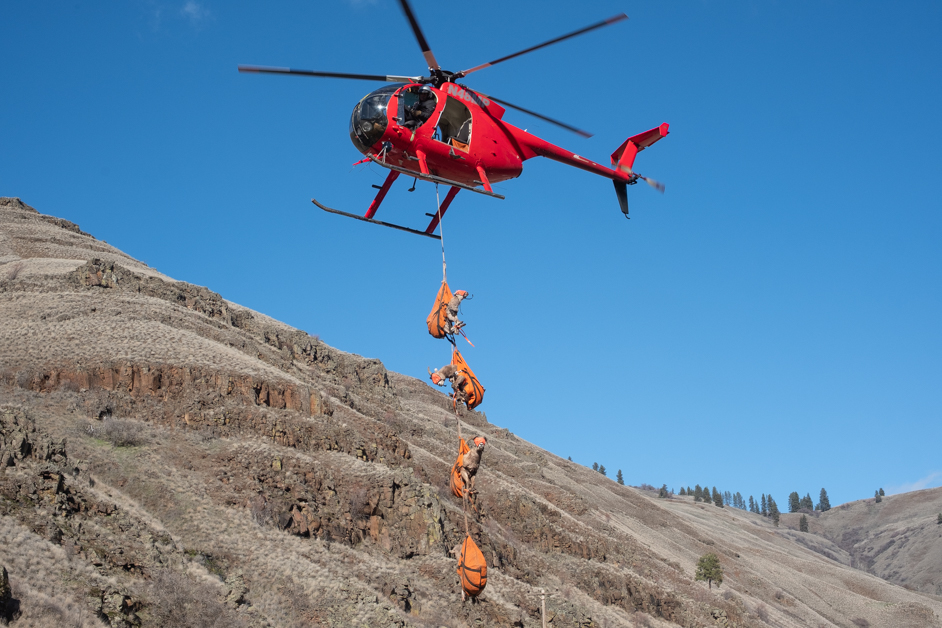
As part of the mission, a helicopter crew air-lifted one to five bighorn sheep at a time from remote mountain slopes to the ground teams.
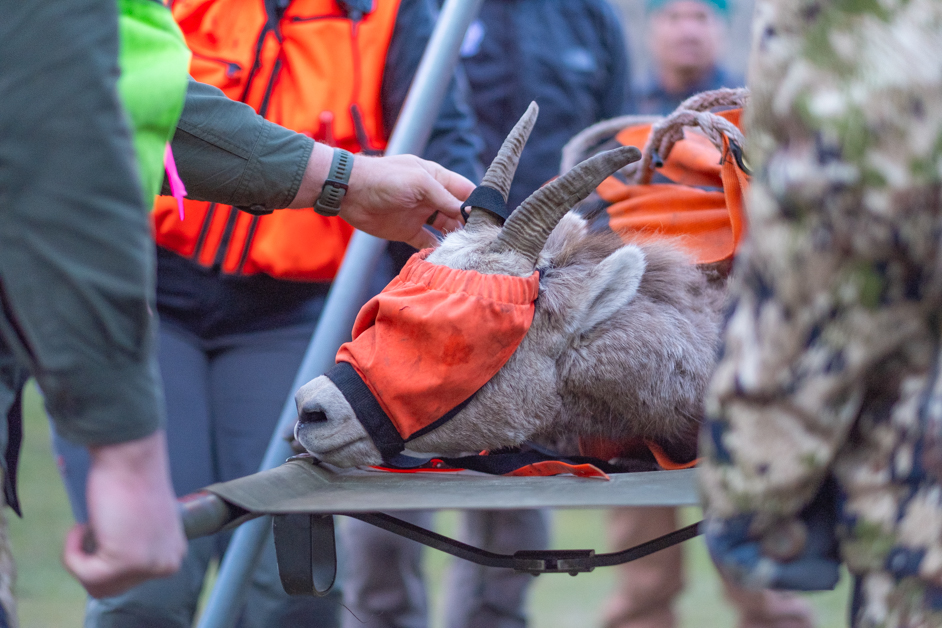
The CTUIR officials involved were Andrew Wildbill, the tribe’s wildlife program manager, who has been part of the effort since 2022, and wildlife technician Iosefa Taula and Ira Ashley, who have participated in several projects.
“The work is challenging, but every healthy sheep counts,” Wildbill said. “Everyone shares the same goal: sustaining healthy populations of bighorn sheep.”
Taula, wildlife technician III for CTUIR, said the process is an important learning opportunity for the tribe.
“These are our lands, and as stewards of the animals and the landscape, we need to understand every part of it,” Taula said. “It’s not just about fish or elk. We have bighorns and many other species that need our attention as well.”
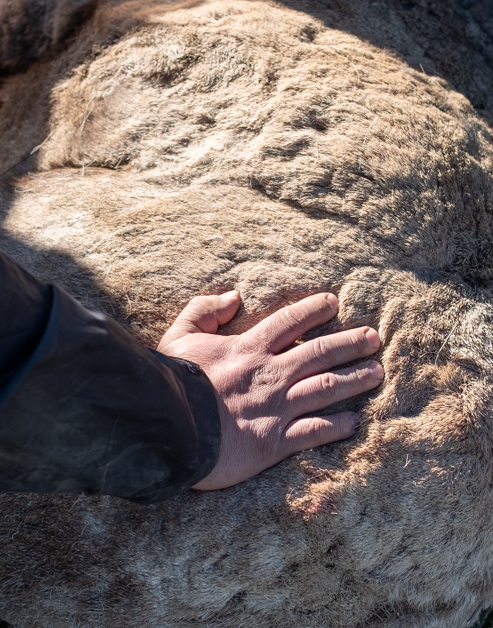
Wildbill said bighorn sheep were once as widely used as deer or elk. In the 1800s, their populations were robust, but over time they were wiped out from much of their historic range in Oregon, Washington and Idaho.
States later reintroduced bighorn sheep, restoring herds prized by hunters for their rams and by tribal members for seasonal sustenance, he noted. Tribal people historically relied on the meat, hides and horns — using hides for dresses and horns for bowls, spoons and bows.
“The extermination of bighorn sheep, probably in the early 1900s, cut off our access to them,” Wildbill said. “Now, with reintroductions, these populations are important to everyone.”
Wildbill said partners across state and tribal lines share one goal: maintaining healthy bighorn sheep populations.
Ashley, wildlife technician III for CTUIR, emphasized the importance of honoring tribal traditions while building knowledge for the future.
“As a sovereign nation, we should know these things and keep them on record for future generations,” he said. “This knowledge could be a vital resource. It’s possible that in the future we might not have these opportunities, so as much as we can learn now and pass it down to the next generations, that’s the most important thing.”.
Saving the Herd
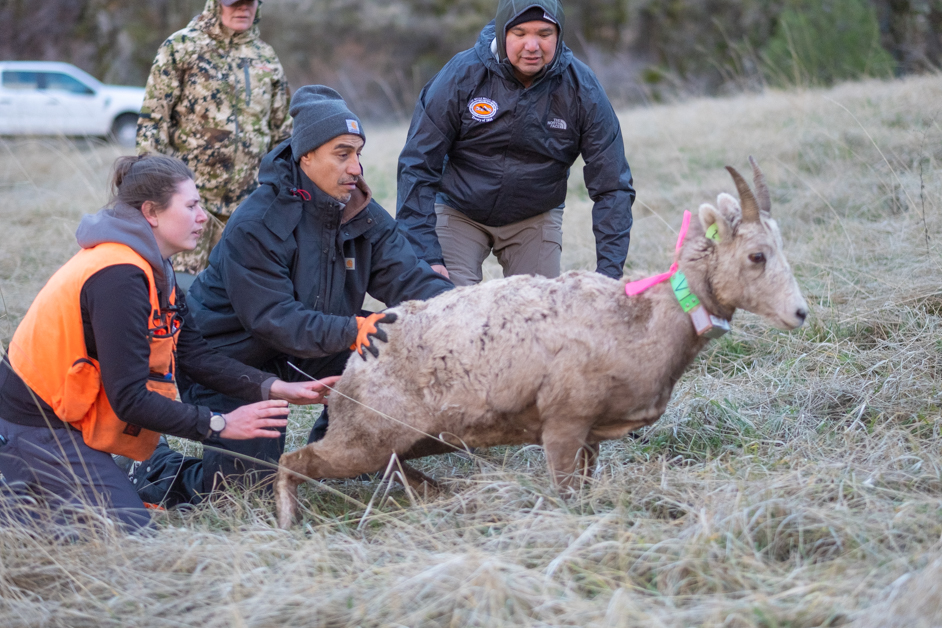
According to the 2024 “Range-Wide Status of Bighorn and Thinhorn Sheep in North America” report, Oregon is home to an estimated 5,500 bighorn sheep. Disease continues to threaten these herds, with officials reporting 795 cases of illness statewide, including 71 confirmed Movi infections.
Of those, 22 animals developed pneumonia and eight died, highlighting the ongoing impact of the bacterium on wild sheep populations. Pneumonia caused by Movi remains one of the most significant factors limiting bighorn populations in Oregon, often outweighing habitat loss, genetic concerns, predation, climate and hunting, according to the report.
To combat the threat, wildlife officials are conducting “test-and-remove” operations, in which they capture, test and remove infected animals to slow the spread of Movi and protect the broader population.
In the field, a helicopter team flies into the mountains to capture bighorn sheep using a net gun, then secures them in a harness and airlifts them to waiting ground crews. The process is safe, though sheep can sustain minor cuts if tangled in the net or hurt themselves while fleeing. To ensure more safety, a veterinarian is on hand to ensure each animal is healthy before release.
Once on the ground, teams transport the sheep on stretchers to a “weigh station,” where each animal is processed on a large tripod and scale. Field teams are divided into specialized roles: some biologists focus on animal health and welfare, checking for injuries, illness and overall condition, while others collect data such as weight, temperature and other health metrics.
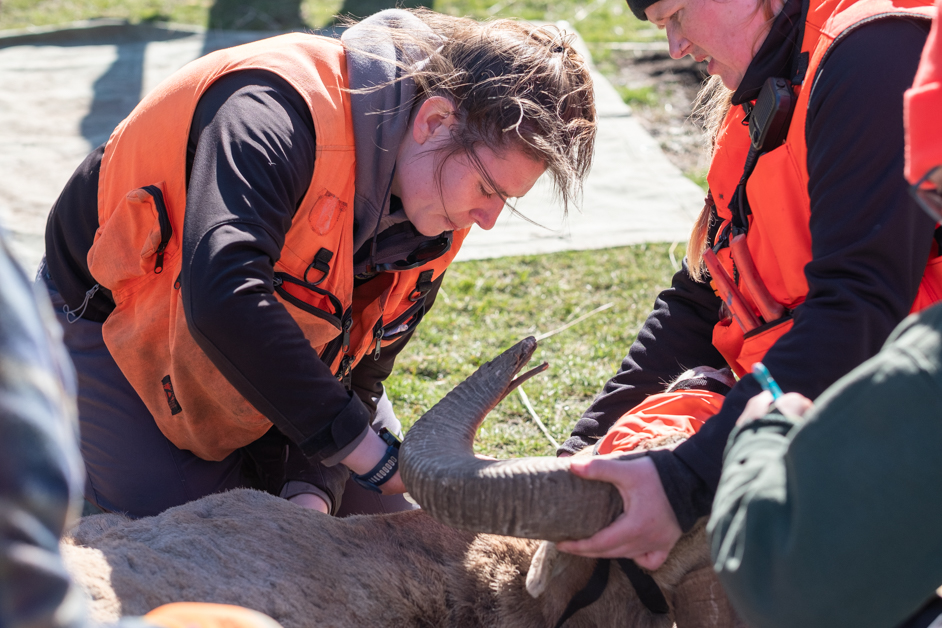
Anna Boyle, a big horn sheep biologist for the Washington Department of Fish and Wildlife, said the work is critical to restoring bighorn sheep populations in Hells Canyon, which were once among the most numerous animals on the landscape.
The herds dwindled after humans settled the area and overharvested wildlife, while pneumonia caused a significant decline in their numbers, she said.
“Chronic carriers left on the landscape can reduce lamb survival and recruitment,” Boyle said. “Lambs often don’t have the immune system to fight off the bacterium, so removing these individuals is critical for sustaining healthy herds.”
Sheep that test positive on their first capture may be released back into the mountains because Movi can sometimes clear within a year. Animals that tested positive last year are recaptured for a second test. If an animal remains positive, it may be removed from the population to prevent further transmission, particularly to newborn lambs.
Animals that remain positive may be euthanized to prevent further spread.
“It’s a hard decision because we can’t take these animals anywhere else,” Whittaker said. “But removing that source of infection allows for faster recovery in lamb survival, recruitment and the overall population.”
Local herds have felt the effects of Movi sharply, Boyle said. In the Mountain View herd, she noted, the 2024 outbreak caused an estimated 60% mortality rate, reducing the population from roughly 150 sheep to fewer than 100. In the area between Troy and the Grand Ronde River, the population once numbered 500 to 600 animals.
“It’s very important that we all keep working together, contributing, collaborating and sharing,” Whittaker said. “That’s what it’s going to take to protect these animals, which are valuable to all of us and hold even greater significance for tribal communities. Managing the landscape requires intensive, coordinated effort. If any part of the effort stops, we risk losing the animals we’ve worked so hard to protect.”
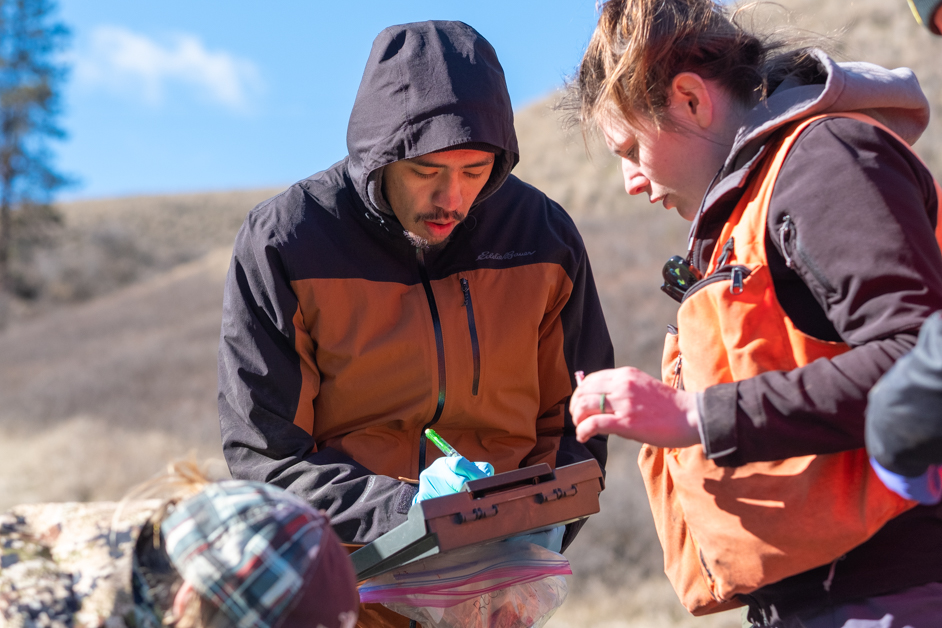
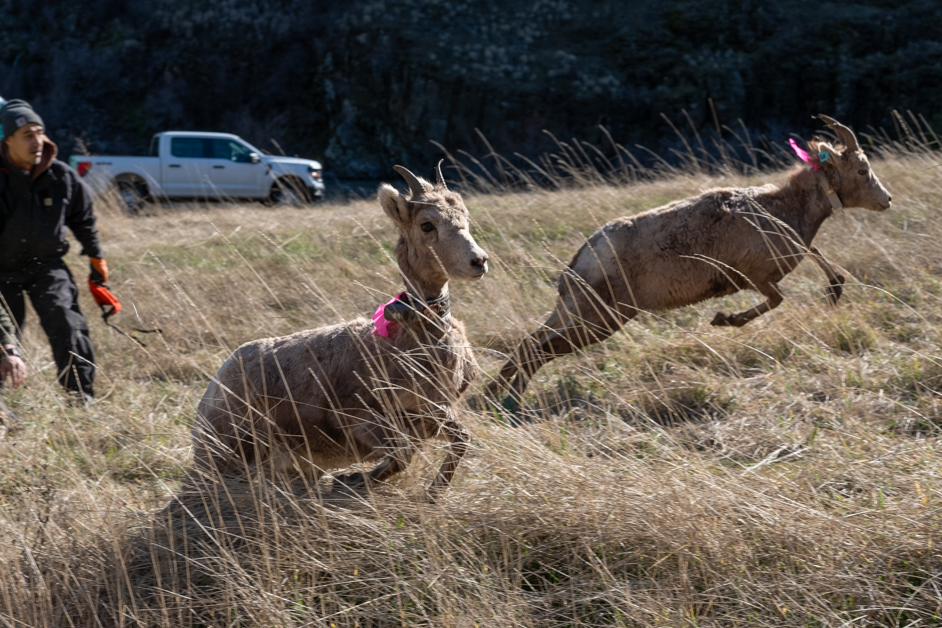
Throughout the day, the team tested and collared more than 25 bighorn sheep, moving fast and methodically, releasing ram, lamb and ewe back into the mountains when each was done. The helicopters hummed overhead, kicking up dust and cold wind, while crews on the ground juggled stretchers, scales, nets and data sheets.
Toward the end of the day, one sheep ran too hard, too fast and tripped, suffering a severe leg injury. After a long examination, the on-site veterinarian determined it could not be saved. Silence fell over the team, their hard work interrupted by grief. The cold wind carried the quiet sounds of sniffles and hushed voices.
“We do everything to make sure these sheep are okay,” Whittaker said. “This is a terrible loss.”
As the sun dipped behind the mountains, the team packed up, tired and silent, knowing that tomorrow the rugged landscape, disease and the mission to save and repopulate the bighorn sheep would demand their return.
On the drive back, before heading up the mountains, Wildbill pulled over by the Grand Ronde River, handing herbs to Taula and Ashley and offering prayers and blessings for the lost animal. The river ran calmly between the mountains, the sun spilling golden light across its surface. Another day in the canyon had ended, but the mission to protect these sheephorn stretched on into tomorrow.