MISSION — The Confederated Tribes of the Umatilla Indian Reservation (CTUIR) Board of Trustees (BOT) is partnering with the U.S. Army Corps of Engineers (Corps) on the Columbia River Shoreline Reconveyance, a project that began in 2018.
On March 16, the BOT unanimously approved draft legislation, a memorandum of agreement (MOA), a Cultural Practices Easement and the Napúutkwit Ground Disturbing Protocols.
“The high-level summary of the legislation is that this bill transfers part of the Columbia River Shoreline within the CTUIR’s ceded treaty territory out of federal ownership to local governments or in trust for tribes,” said CTUIR Cultural Resource Protection Program Manager Teara Farrow Ferman.
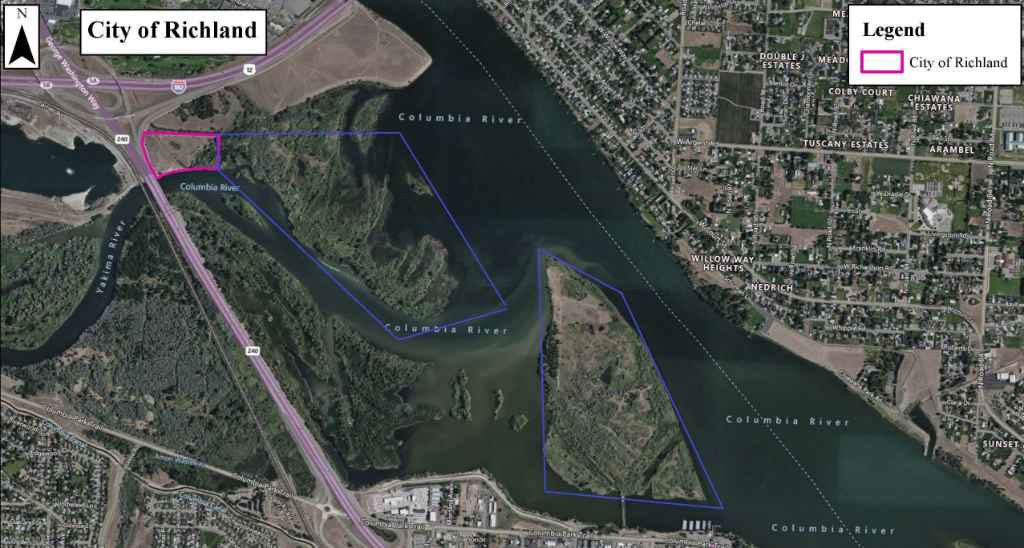
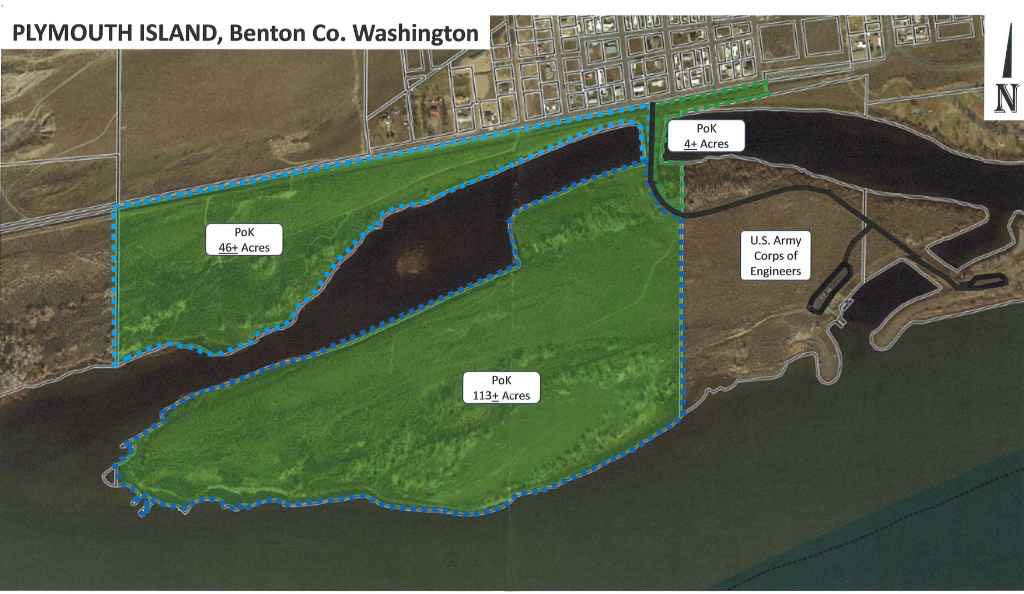
Lands being reconveyed to the CTUIR include Columbia Point South from the City of Richland, which owns upwards of 80 acres of the site, and 163 acres of Plymouth Island, which was offered by the Port of Kennewick to transfer to the CTUIR. Ímatalam, also known as Umatilla Village, was a new consideration along the shoreline that has the potential to be reconveyed from the Portland District.
Farrow Ferman, who has been with the project every step of the way, gave the BOT an update at a March 11 work session on the MOA, which outlined the government-to-government relationship between the CTUIR and the cities of Richland, Kennewick and Pasco; Franklin County; the ports of Benton and Pasco; and the Tri-Cities Development Council (TRIDEC).
Trustee Lisa Ganuelas traveled with the Shoreline Reconveyance Working Group to Washington, D.C., from March 16-21 to meet with Congress and advocate for the project.
Ganuelas said the group went to a series of meetings in the Capitol, Environment and Public Works meetings on the Senate side of Congress, and Transportation and Infrastructure meetings on the House side.
“It’s a lot of working together to see if we can get this accomplished,” Ganuelas said, “What a lot of people know after going to Congress is often you can’t get everything the first time, you’re gonna have to go back more times to get all of the bugs worked out.”
Ganuelas said that through this process, the government-to-government relationships have grown through the collaboration between the municipalities, and that these relationships the CTUIR can take into the future.
Key stipulations in the MOA approved by the BOT at the March 16 meeting focus on government-to-government relationships, established through the annual meetings it requires. Another critical element is the protection and exercise of CTUIR treaty-reserved rights, which led to the creation of the Cultural Practices Easement and the Napúutkwit Ground Disturbing Protocols. These two documents were developed over the past five years.
The BOT appointed an internal Shoreline Reconveyance Working Group in 2020. Since then, through monthly meetings, the group has developed the MOA, the Cultural Practices Easement, and the Napúutkwit Ground Disturbing Protocols.
“We went through all of these documents together, line by line, making adjustments so that everybody’s in agreement with them,” Farrow Ferman said.
The Cultural Practices Easement is intended to protect tribal treaty rights and cultural resources permanently. The document, originally drafted by the Yakama Nation, was adjusted for the CTUIR.
The Napúutkwit Ground Disturbing Protocols designates a committee that will meet monthly with designated representatives of TRIDEC and the municipalities as developments or other forms of ground disturbances take place. They will confer on how best to comply with cultural resource protection procedures detailed in the MOA.
The Napúutkwit Ground Disturbing Protocols are also a key component of the BOT stipulation for protection and management of cultural and natural resources, alongside cooperation with the State Environmental Policy Act and developing a long-term strategy and management plan as developments take place.
Other stipulations focused on by the BOT in the MOA include the focus on tribal history and interpretation and economic development, which could include tourism and recreational or community development.
Farrow Ferman said the BOT had several priorities for the legislation. “The first and foremost is ensuring that our treaty-reserved rights are protected and that we have access to those lands to continue exercising those rights,” she said.
Other priorities included concerns over Environmental Review, which prompted the Napúutkwit Ground Disturbing Protocols, formalizing government-to-government relationships through MOAs and developing a long-term strategy and management plan with other municipalities.
At the work session, Farrow Ferman also outlined lands requested for conveyance into trust status to support economic development, protect cultural sites and pursue joint ventures with local governments.
A key parcel is Columbia Point, specifically mentioned in Article Five of the CTUIR 1855 Treaty, which the BOT discussed with the city of Richland. Another land request is Plymouth Island, offered by the Port of Kennewick.
“The partnerships that we’ve established with the local governments, the years of work that we’ve put into this has really strengthened our relationship with one another,” Farrow Ferman said. “Us providing a lot of education to those local governments has been really insightful for them, to learn about the processes we have to go through and how those different processes affect different rights of the tribe. This is a collaborative joint effort and the relationships are really strong.”