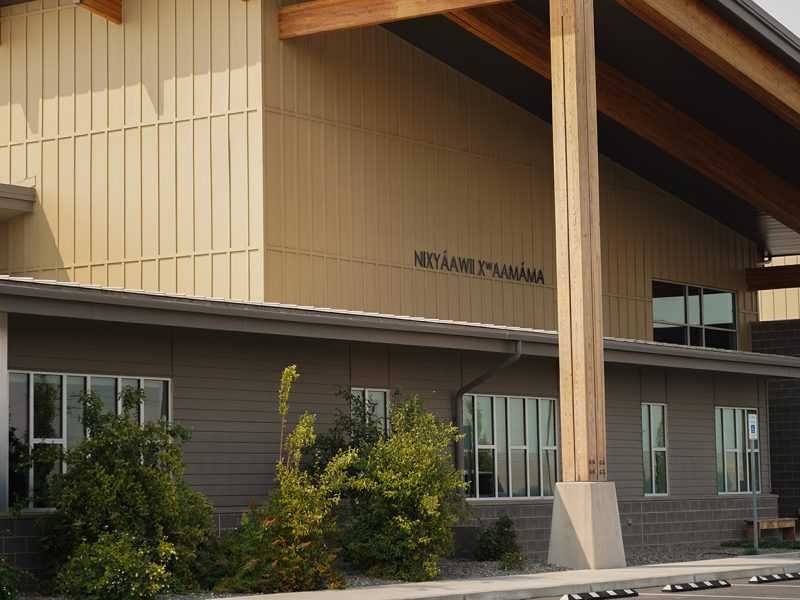
PENDLETON — Air service at Eastern Oregon Regional Airport (EORA) could change soon, as the Pendleton City Council has recommended SkyWest Charter for the city’s Essential Air Service contract, pending final approval.
Following a thorough discussion involving the Essential Air Service (EAS) Selection Committee, city council members and the public, the city council voted 6-1 on Feb. 3 to back SkyWest Charter for the next two-year air service contract.
The city followed the recommendation of the EAS committee, which had decided between four airlines — Boutique Air, Contour Air, SkyWest Charter and Advanced Air — who all submitted proposals in response to the federal Essential Air Service docket.
Pendleton Mayor McKennon McDonald said she was excited by the four viable options for the EAS at the airport.
“Having been involved in the EAS process before, I was thrilled to see two providers with larger planes, seating 30 passengers, willing to bid,” McDonald said. “It signals that they see the airport as a viable option for their business and the scale of service they provide.”
She said the council’s decision was influenced by the opportunity to grow enplanements above 10,000, which would increase Airport Improvement Program (AIP) funding to maintain the airport.
“This growth is tied to economic development in our region, making Pendleton a more attractive location to locate or expand industry,” McDonald said.
She added that with the enplanements SkyWest can provide, the airport’s position in the EAS subsidy program could move from the nation’s bottom 25% to the middle range, bringing more stability to the airport and the region.
“Our goal throughout this process was simple: ensure that Pendleton receives safe, reliable, and sustainable air service that meets the needs of our community,” the EAS Committee wrote on the staff report.
EAS Committee members also evaluated each proposal using consistent criteria, including safety and regulatory compliance, reliability and on-time performance, fleet capacity, financial stability and long-term sustainability, according to the report.
The committee also weighed route connectivity to major hubs, affordability, customer service, environmental responsibility and each company’s level of community engagement.
“This isn’t just about flights; it’s about keeping Pendleton competitive.” – EORA Airport Manager Dan Bandel
“Boutique Air provided service for many years, but the community has outgrown the limited capacity and schedule limitations of that model,” Airport Manager Dan Bandel said. “SkyWest Charter offers larger aircraft, more seats and a service structure that better supports Pendleton’s long‑term economic trajectory. This isn’t about dissatisfaction — it’s about matching the region’s growth with the right level of air service.”
The staff report noted the contract would have a positive fiscal impact for the city. The airline pays about $28,200 annually in leases and approximately $18,000 in fees. The U.S. Department of Transportation (USDOT) provides the federal subsidy, which ranges from $4.2 million to $6 million.
The council’s decision on SkyWest Charter will now go to the USDOT, which makes the final decision on the federally subsidized service.
“DOT is reviewing everything now, and while the exact timing is up to them, we expect a decision fairly soon,” Bandel said. “They tend to move efficiently once they’ve gathered community input and evaluated all the proposals.”

From small to large service
After 10 years of service, Boutique Air’s current contract is set to expire May 31. The company offered 21 weekly flights on an eight-seat aircraft between Pendleton and Portland but does not use a gate at Portland International Airport.
McDonald said changes in air service are always challenging to work through.
“The city council opted to delay a decision by a few weeks to have additional questions answered by the selection committee,” she said. “To me, this signaled that they understood the magnitude of this decision and wanted all the information before making a choice.”
McDonald said the community actively engaged in the public comment process, with many opposing a change in carrier and expressing their views to elected officials.
“There is comfort with the known provider, and the public still has many questions about what SkyWest will provide,” she said. “Once they clearly communicate flight schedules, prices, and the upgraded experience they will offer regional travelers, it should ease concerns.”
Bandel said any time a carrier changes, coordination behind the scenes is crucial.
“The airport team is working closely with local partners, stakeholders and the airline to make sure everything lines up smoothly,” Bandel said. “A major challenge is managing all the moving parts while keeping service consistent for travelers.”
Bandel also noted that the team has been intentional about planning to minimize disruption for the community.
If the USDOT approves the recommendation, SkyWest Charter would operate 12 weekly flights on 30-seat jets, including Transportation Security Administration screening. While the schedule would include fewer weekly departures than Boutique Air’s current 21 flights, total seat capacity would more than double, from 168 seats per week to 360.
According to the city staff report, officials divide EORA’s commercial air service into two eras: the “large air service era” from the 1930s to 2008, when aircraft seated more than 30 passengers, and the “small air service era” from 2008 to the present, when aircraft have seated fewer than 10.
From the 1930s to 1981, United Airlines served with aircraft seating more than 30 passengers. From 1978 to 1981, two additional commuter airlines also operated at the airport.
From 1982 to 2008, Horizon Air — operating as Horizon Air, United Express and Alaska Horizon — provided service with aircraft seating between 37 and 130 passengers.
From 2008 to 2026, SeaPort Airlines and Boutique Air operated at PDT with aircraft seating fewer than 10 passengers.
Boutique Air operated during the small air service era.
However, Bandel said an airport of Pendleton’s size is expensive to maintain.
On the staff report, he noted it had accumulated $2 million in debt by 2014. He also estimated that between $150 million and $200 million in infrastructure must be maintained to Federal Aviation Administration (FAA) standards.
“Pendleton needs an air service model that can grow with the region,” Bandel said. “Our enplanement numbers have been slowly rising over the past several years, and that growth directly affects our eligibility for Airport Improvement Program dollars. The FAA ties AIP funding to passenger counts, so maintaining and increasing enplanements is essential for keeping federal investment flowing into our runways, taxiways and safety projects.”
Each FAA AIP grant requires a 5% local match. On a $5 million project, for example, the city must contribute $250,000. The airport depends on enplanements to help generate AIP funding. Passenger Facility Charges (PFC) supplement the city’s 5% match requirement. The more tickets sold, the higher the PFC revenue and the lower the city’s out-of-pocket share.
Changes are coming
Air service is one of the most powerful economic engines a rural community can have, Bandel said.
“Every additional seat that comes into Pendleton supports local businesses, boosts tourism, especially during Round Up and other major regional events and that helps the UAS (Unmanned Aerial Systems) Range, which depends on reliable air access for visiting engineers, test teams and federal partners,” Bandel said.
He added that expanded service also attracts future employers evaluating Pendleton for expansion.
Higher enplanements strengthen the airport’s eligibility for federal funding, Bandel said, which in turn supports infrastructure projects that create local construction jobs and promote long-term economic stability.
“This isn’t just about flights; it’s about keeping Pendleton competitive,” he said.
On the staff report, he wrote that no one disputes that Boutique Air has done a “very good, not great” job over the past decade, outperforming its predecessor, SeaPort Airlines.
He said staff members value Boutique’s employees, and airport management has supported selecting the airline three times during that period.
He acknowledged that many passengers appreciate Boutique’s service and that some would be affected by a change. He added that it is natural for the airline to encourage customers to lobby the council when its contract is at stake, noting the proposed contract totals $4,794,536.
“We really appreciate how engaged the community has been throughout this process,” Bandel said. “Change always brings questions and that’s healthy. But it’s important to look at the bigger picture. Pendleton is growing — economically, technologically and regionally. Our airport needs to grow with it. This move isn’t about replacing one airline with another; it’s about positioning our community for long-term success.”
He added that SkyWest Charter gives the airport the capacity to increase enplanements, secure more federal funding, support the UAS Range and strengthen the local economy.
“It helps ensure that Pendleton remains a place where businesses want to invest, families want to stay and visitors want to return,” Bandel said. “In the end, this is about protecting our airport, supporting our economy and ensuring Pendleton continues to thrive.”