MISSION — Yellowhawk Tribal Health Center (Yellowhawk) hosted a Gathering of Native Americans (GONA) at Nixyáawii Community School (NCS) to foster intercommunity relationships and build trust among the students.
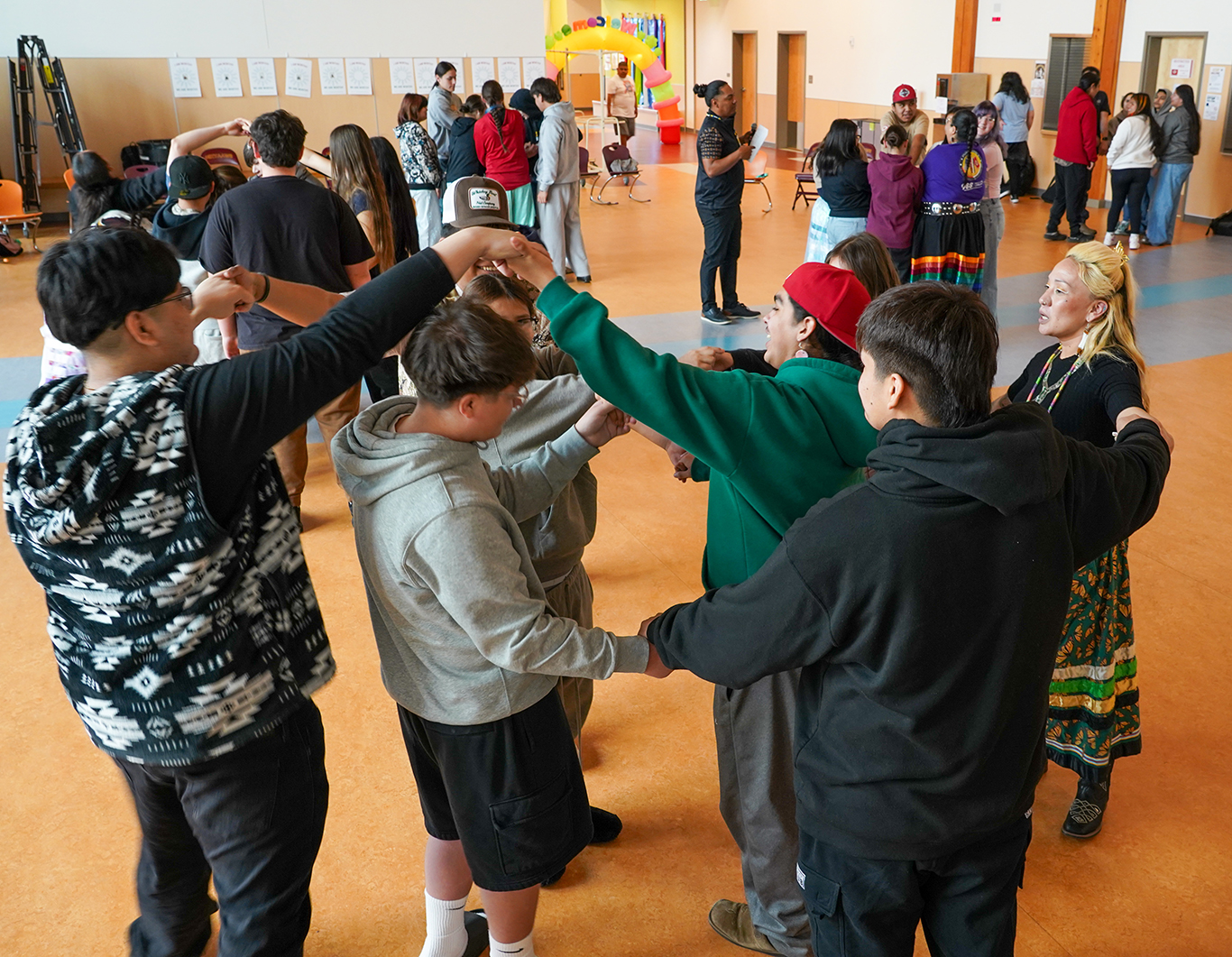
NCS students gathered on April 15 in a circle and participated in relationship-building exercises designed to strengthen and build connections among peers.
Yellowhawk Chemical Dependency Prevention Coordinator Jessica Collins said the GONA framework is built on four distinct parts developed to build trust and connections — belonging, interdependence, mastery and generosity.
“Each one kind of means something different, belonging is about building trust, mastery is recognizing strength and skills, interdependence is understanding how we support one another and generosity is giving back to each other and the community,” Collins said.
Collins said a group of Yellowhawk employees, including herself, were trained in the GONA curriculum in 2025.
“We work really closely with the schools and we’re a really close-knit community, so we hear stuff that’s going on,” she said. “I think we’ve recently heard about maybe some things happening over here that might revolve around bullying, peer pressure or hurting each other’s feelings.”
Although the name emphasizes Native American involvement in the program, she noted that it’s open to all students regardless of background.
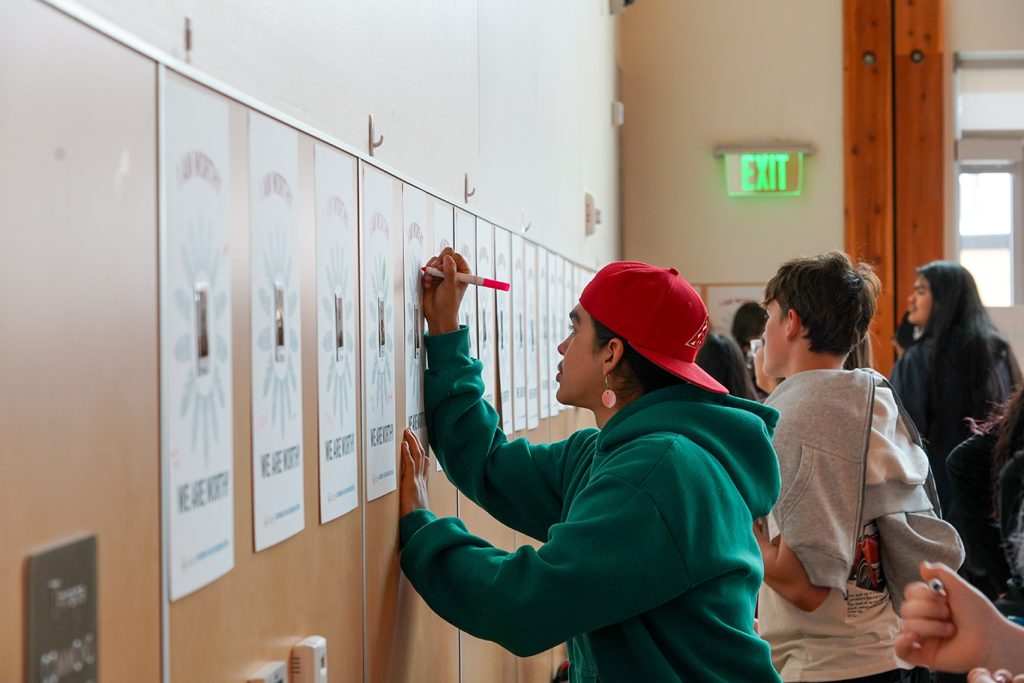
Over the course of the day’s program, which ran most of the school day, students took part in exercises intended to get them out of their comfort zone and encourage them to speak and work with classmates they might not typically collaborate with, regardless of gender, age or social groups. Students were randomly placed into these groups to foster community building, where communication has been noted as lacking.
“This was meant for the kids to take positive risks, increase their awareness of behavioral health and prevention resources and to show them the school and community has their backs,” NCS Principal Ryan Heinrich said. “Thanks to Yellowhawk for sponsoring this and being willing to work with the kids for a big chunk of the day.”
Collins said that was what they wanted to address through the GONA, to bring students together and show how much they depend on one another. She said it was important for them to care for each other and want the best for each other.
“Just in their life right now, as teenagers, all of the stuff they’re going through with pressure — pressure to get good grades, pressure to do well in sports, all of that stuff. They actually have a lot more in common than they realize,” she said.
Collins said GONA programs can be deep experiences. They typically revolve around dealing with having experienced trauma and grief, at least when the subjects of the program are adults, she added.
“We wanted to be careful with the kids; we wanted to tailor it to what they’re dealing with at this point in their lives, but for adults it could look a lot more complex,” Collins said. “We just really wanted the kids to feel connected with each other and understand that this is their school, this is their community and they belong together. It’s important for them to respect each other and understand that they have a lot in common.”
Yellowhawk Youth Suicide Prevention Outreach Specialist Jeremy Wolf said connectivity is the main aspect of any community, but because communication at the school is not strong, a good sense of community was the foundational focus of the GONA.
“That could be with each other, it could be with their families, it could be with their culture, their greater community or even with themselves,” Wolf said. “This is our future and we need to all play a role. This exercise with them is just one of many things that are going to help them on their way and become the young adults they’re meant to be.”