This is a story that has been in development since its publication on Sept. 3. The Hagen Fire has now burned over 61,000 acres and is 82% contained.
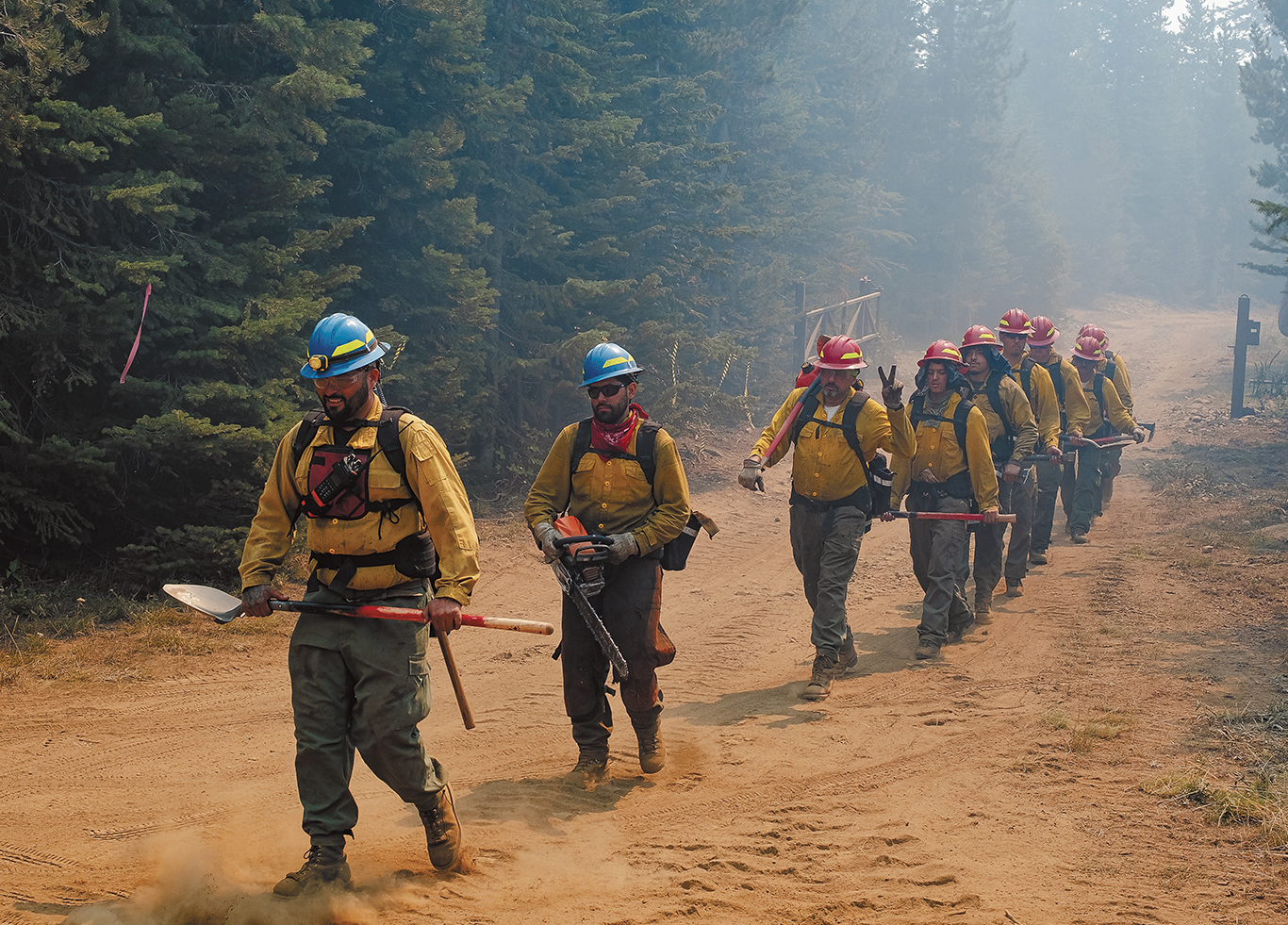
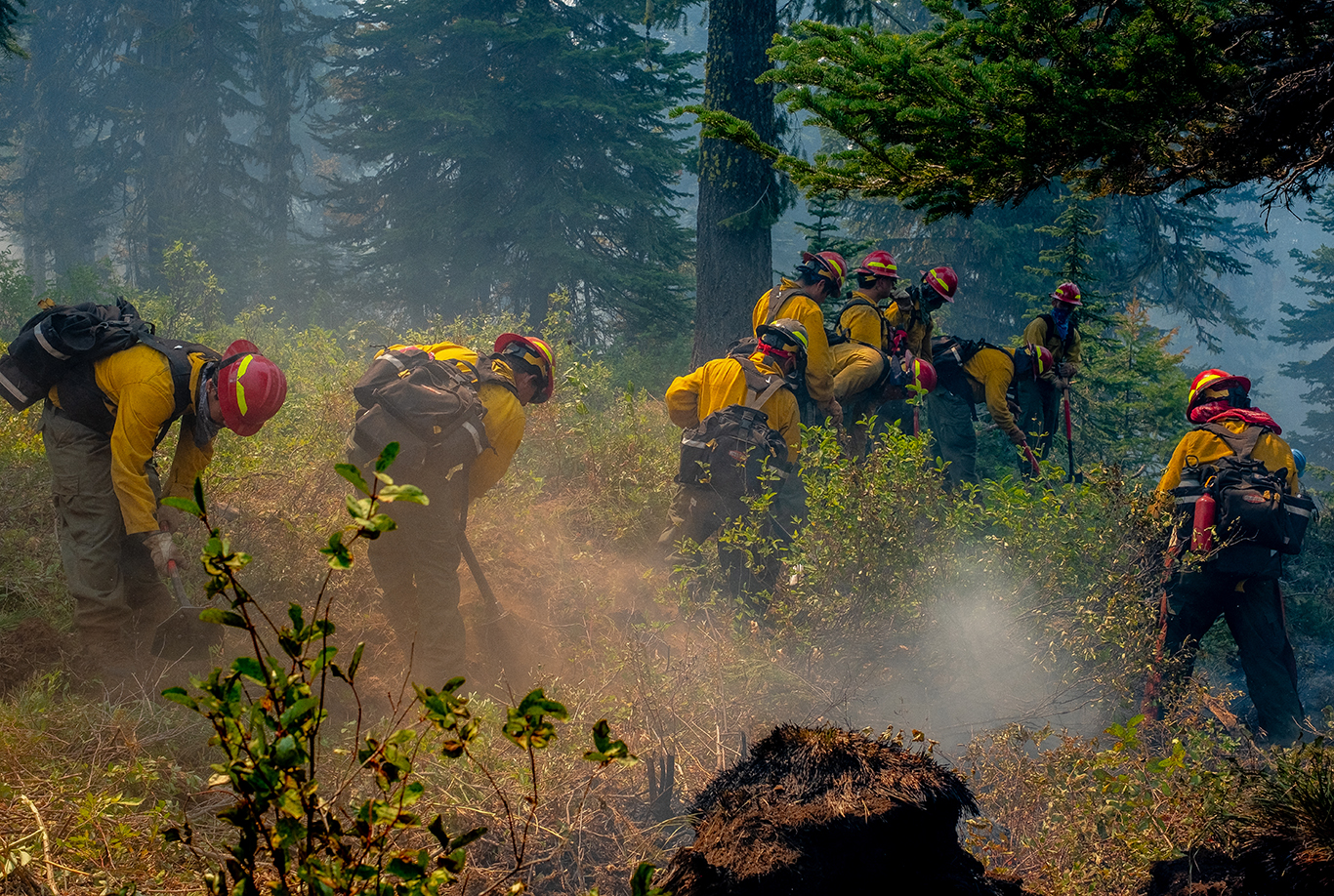
TOLLGATE — By midafternoon, smoke hung over the North Fork Umatilla Wilderness. A group of wildland firefighters moved along the hillside in the sweltering heat, working to keep the flames from spreading.
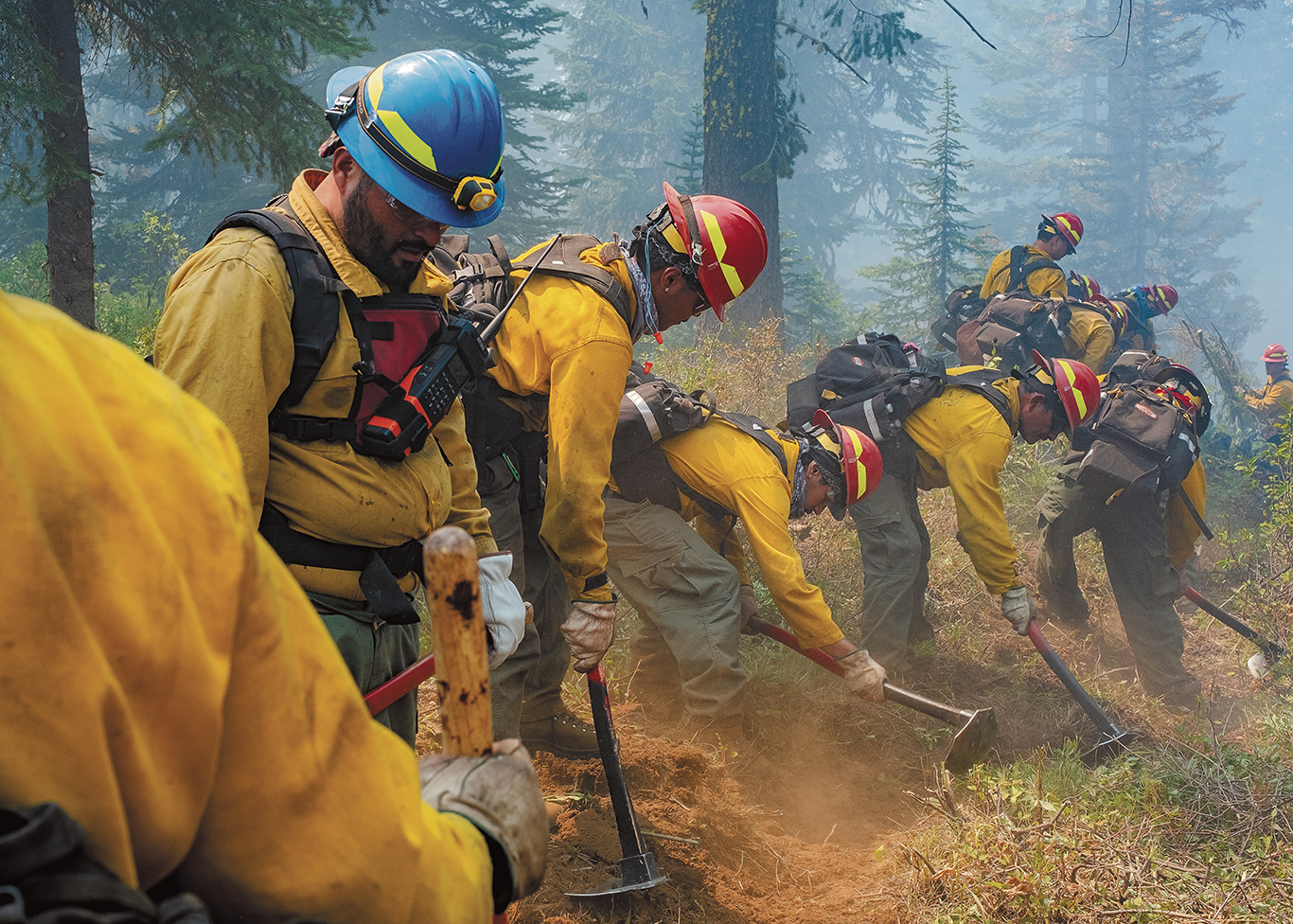
Among those working the line on Aug. 11 were members of Northern Rockies Team 6 and R. Franco Restoration. In heat and smoke, they worked through rugged terrain with a clear mission: contain the fire.
Crews are battling the Hagen Fire, which has burned more than 60,000 acres and is 50% contained. The fire line has spread across a 12-mile stretch through Umatilla and Union counties. It is one of the largest fires to hit Eastern Oregon.
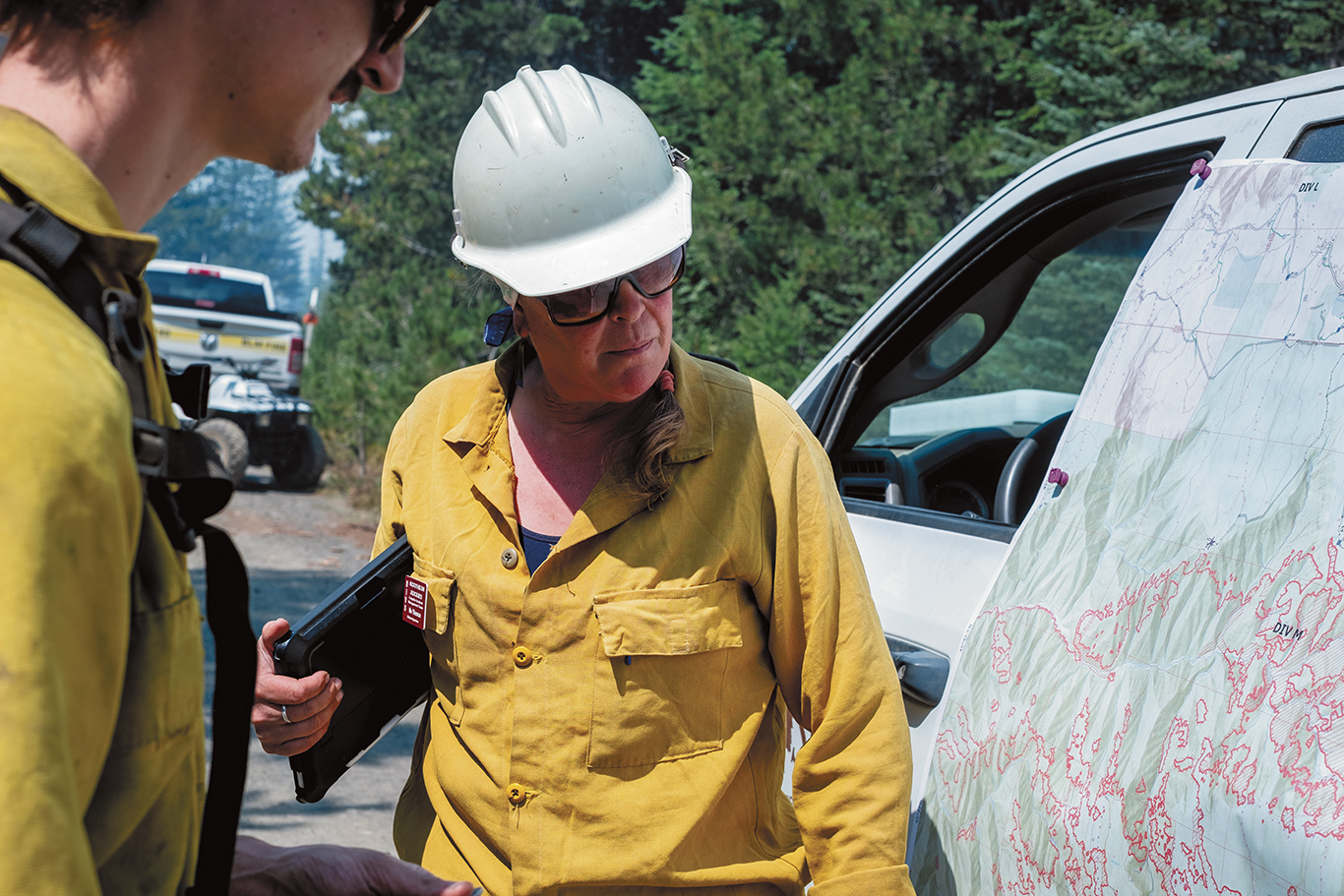
In the forest, Monica Thomas, a Division Mike supervisor with Northern Rockies Team 6, pulled a large map from her truck and spread it across the side of her vehicle. Beside her stood Klye Spears, the task force leader for Division Mike with Northern Rockies Team 6. Together, they both surveyed the red fire line stretched across the map.
“All the red is the fire edge,” Spears said, while pointing to the map. “These are all the spots that we picked up. The fire was hung up down here, but we finally got a hot, dry day. We had some wind on it and it finally wanted to run out of the drainage up the North Fork Umatilla. That’s where we picked up all these spots.”
Jarid Gibson, 35, of Montana, a division supervisor with Northern Rockies Team 6, said the fire made a strong push up the North Fork of the Umatilla River two days earlier. Crews have since held the fire near Highway 204 and are working to contain it near Coyote Ridge.
“So far we’ve been able to kind of hold it along the 204,” Gibson said. “We’re also trying to hold it near the Coyote Ridge, as it comes up into more favorable terrain for the firefighters. There is a lot of smoke in the air, but I think we’re still sitting pretty good.”
Overall, Thomas described the crew’s effort as “incredible,” noting that firefighters were working in heavy smoke, hiking steep terrain with heavy packs. She added that communication among the teams has also been essential to containing the fire line.
Containing the fire on the ground
On the ground, wildland firefighters rely on shovels, chainsaws and adzes for much of the work. They wear gloves, helmets, long-sleeved fire shirts, long pants and boots. Some wear masks or cover their faces with bandanas to block the smoke.
Some crew members use chainsaws to clear out vegetation. Others form a line, bending low as they scrape the ground and search for hot spots buried beneath the soil. When they find one, they dig it out and extinguish it.
Other firefighters operate a skidgen, a vehicle that combines a logging skidder with a large-capacity wildland fire engine. Spears said the vehicles can carry 300 to 1,000 gallons of water and can navigate steep terrain.
Uriel Martinez, a crew boss with R. Franco Restoration, gathers his team to discuss strategy. The firefighters begin inching down the slope. First, the chainsaw crew clears the vegetation. Then firefighters working with adzes move in, scraping away the dirt as the smell of burning timber hangs in the forest.
Before long, they uncover a fire beneath the ground. A flame pops up. The crew quickly extinguishes it and presses on, scraping along the line, pushing deeper into the thick wilderness.
Martinez said chasing hot spots is the biggest challenge. He said the work can give firefighters an adrenaline rush. Heat and hydration are also concerns. Martinez makes sure his crew drinks plenty of fluids and gets enough food to keep going.
Gibson said steep terrain has also been a challenge, while heavy smoke can make it difficult for aircraft to see the fire below.
If pilots are making retardant drops in an area, they do not want helicopters dropping water there at the same time, Thomas said. Air attack coordinates the aircraft to maintain separation between retardant and bucket drops, as well as between drones and helicopters.
To keep things safe on the ground, Thomas said drones help reduce risks for firefighters. Without them crews would have to walk through the area to search for heat.
Instead, drones can fly high above the fire and scan large areas with infrared cameras. The technology detects heat, which crews can mark and map. Firefighters can focus on specific spots rather than searching the woods on foot.
Thomas said the team’s top priorities are firefighter and public safety, protecting structures and minimizing acres burned. She said protecting timber stands for future logging is also a consideration, but crews are focused on minimizing the fire’s footprint.
Safety sometimes means pulling firefighters back from the fire’s edge, she said. Crews may build a contingency line and burn out an area they can hold more safely.
The steep, rugged terrain in the wilderness creates another challenge. Some areas are too dangerous for crews to enter, especially when fire moves through the bottoms of deep draws.
Preparedness Level 5
In wildland firefighting, Preparedness Level 5 (PL5) is the highest national readiness level. It means major fires are burning across the country, placing heavy demands on firefighting resources. At this level, the National Interagency Fire Center (NIFC) must prioritize where resources are sent.
As of Aug. 17, the NIFC reported 92 new fires nationwide. Firefighters were working to contain 80 uncontained large fires. About 28,710 personnel are battling incidents across the country.
So far this year, firefighters have responded to 48,960 wildfires. The fires have burned more than 7.2 million acres.
A nationwide shortage of middle managers is complicating firefighting efforts, Thomas noted. The situation underscores the importance of maintaining a manageable span of control, she said. Thomas oversees about 140 people assigned to her division.
“The crews on the ground are working hard and giving everything they have each day,” she said. “The work has come with personal sacrifices.”
One firefighter, she noted, missed the birth of his grandchild while another spent his birthday working the fire.
Gibson said firefighters are doing the best they can with the resources they have.
He said demand for firefighters is high across the country, making crews harder to find at PL5. The crews on this fire are doing what they can to protect local communities and other values while using the safest and most effective strategy available.
Managing the fire also means balancing several needs, including safety, food, supplies and rest. At Walla Walla Community College, hundreds of tents fill the campus grounds. After long shifts in the wilderness, crews return to shower, eat and sleep.
Inside nearby buildings, communications teams and fire specialists work around the clock. They communicate with crews and track overnight and daytime fire activity. They also map out fire strategies and help coordinate firefighting efforts.
Every morning starting at 6 a.m., incident management teams provide an operational update. They also post about three times a day on their Facebook page.
Linette Schmidt, public information officer for Northwest Rockies Team 6, expressed gratitude to the community for supporting firefighters. She urged residents to stay connected to fire information, their local sheriff’s office and emergency management agencies.
She said residents living near the fire should monitor those sources for evacuation notices and updates about when it is safe to return home. Fire information is also posted at several locations in the community. Residents can also call the fire information line.
For now, as the smoke settles over the mountains, crews keep fighting along the line. They are working hot spots and battling huge blazes, holding what they can and protecting what matters most.