MISSION — The Confederated Tribes of the Umatilla Indian Reservation (CTUIR) has outlined five main priorities to improve and strengthen tribal operations.
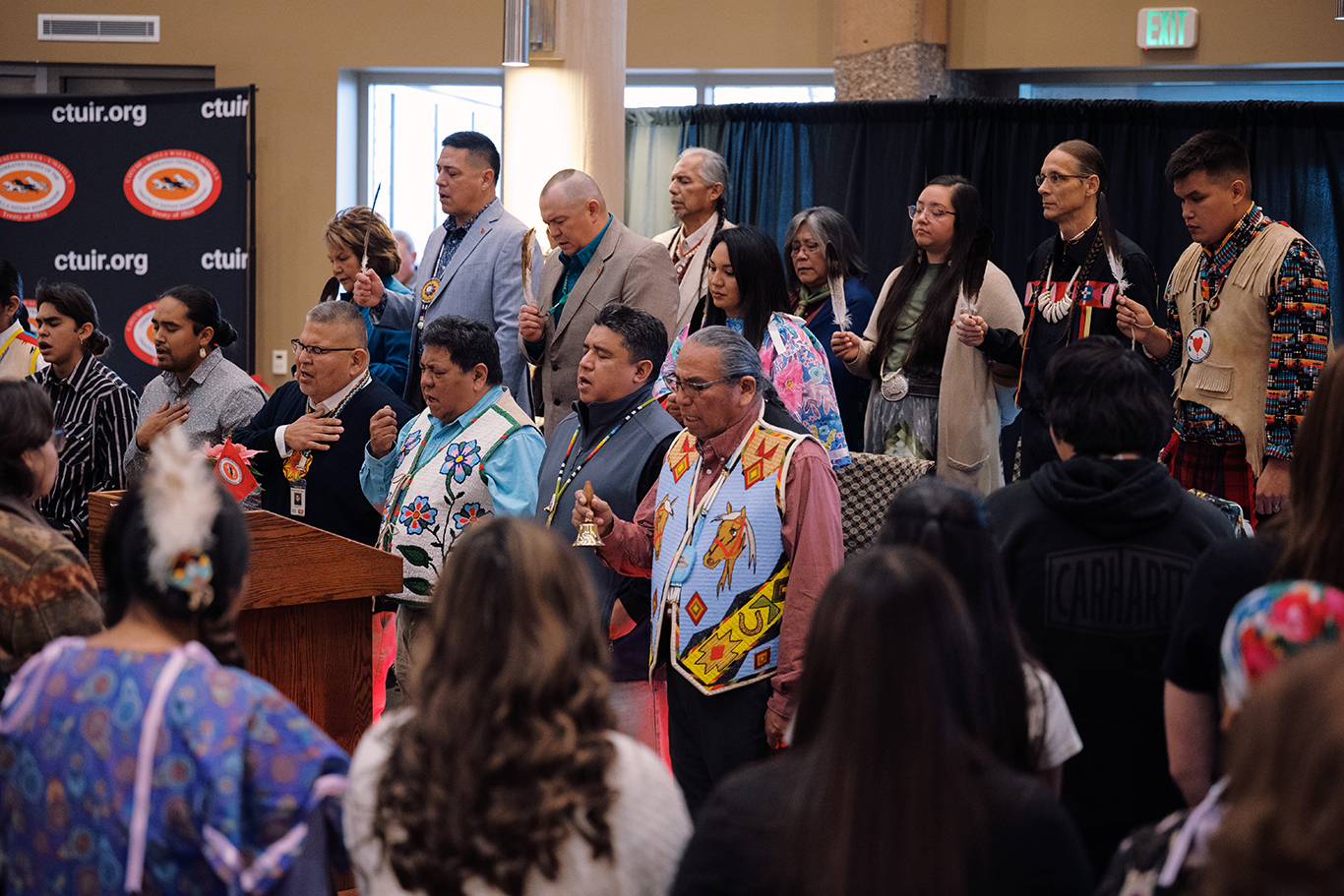
The Board of Trustees (BOT) at its July 13 meeting at the Nixyáawii Governance Center (NGC) passed the 2026-27 Board Priority Implementation Plan (26-039). The BOT explored and began designing the plan during its retreat held Jan. 27-30.
The plan included nearly 40 projects, grouped into five broad categories: organizational development and improvements, treaty rights and natural resources, economic development, human services and energy.
Executive Director JD Tovey said the priorities reflect the tribe’s long-term responsibilities and areas where the BOT believes it can make meaningful progress during its term.
“Many of these projects are ongoing, so the work has already begun,” Tovey said. “Staff and the board held work sessions and advanced several projects even before formal adoption of the plan. Organizational improvement is among our immediate areas of focus.”
He said requests for proposals have been issued and responses are under review, with several projects expected to begin in late September and October.
According to the implementation plan, the retreat gave trustees time and space to focus on strategic decision-making within the BOT’s two-year term while strengthening governance effectiveness and long-term continuity.
BOT Chair N. Kathryn Brigham said the priorities are important not only to the BOT but also to the community because they focus on improving services and internal coordination and communication.
“We’re working to be more proactive than reactive, but we all know that takes time,” Brigham said.
After the retreat, trustees held several work sessions to finalize the priorities.
Other organizational improvements also include transforming the NGC’s west wing, changing management training, Human Resources transformation and leveraging health care economic opportunities through third-party billing.
The retreat also gave the BOT time to align its goals, set clear priorities and make decisions based on fiscal realities, according to the implementation plan.
“Once the board prepared a list, we asked the managers for their input as well. Our executive director then created the flowchart and graphs showing who is responsible for each priority and the timeframe for completion,” Brigham said. “We’re working to complete five priorities by the end of our term.”
The priorities are also built on previous BOT initiatives and include long-term efforts such as the Umatilla Basin Water Rights Settlement, construction of a wastewater treatment facility, implementation of the Climate Adaptation Plan, research on the East Boundary, an updated population study, housing projects and stronger regional and national partnerships.
“Some that have been championed by tribal members in particular include the improvements at the Longhouse and July Grounds, the Tax Commission, improved policies around Missing and Murdered Indigenous People and improvements to the language programs,” Tovey said.
The CTUIR also points to recent accomplishments as a foundation for its next two years of work, according to the implementation plan. Those accomplishments include updates to the Fish & Wildlife Code and Historic Preservation Code to strengthen treaty rights protections, as well as completion of the First Foods Policy.
Building on that work, CTUIR has also pursued economic diversification through investments in the Economic Diversification Fund, the Txtáyma Food Truck Park, the Cairnspring Mills partnership and the latest Wildhorse Resort & Casino expansion.
The CTUIR has also advanced social and community services by adopting an Opioid Settlement Plan, establishing the Workforce Development Department and improving the Umatilla Tribal Police Department.
These efforts provide a foundation for the 2025-27 priorities, which call for continued investment in project management, strategic planning and organizational capacity. These priorities also emphasize preparing for external pressures, including energy development, climate change, changes in federal policy and emerging industries such as data centers and artificial intelligence.
The plan also calls for continued investment in CTUIR’s workforce and community as the CTUIR responds to internal growth and new opportunities.
Tovey said many priorities involve complex ongoing work intended to span multiple BOT terms. The goal is to identify measurable portions of those long-term goals that can be completed during a single term. Housing, for example, has been broken into smaller achievable tasks to keep the projects moving forward.
“The organization has grown so much in the last 10, 20 and 30 years, and our systems have not necessarily kept pace,” Tovey said. “It’s like flying rocket ships with the use of an abacus. It gets the job done, but there are better and more efficient ways to do it. I think we are very successful, and very progressive with using what we have. I can only imagine how much more success and improvements we’ll have with governmental systems in place that really allow us to operate on all engines.”
Brigham said she is pleased the BOT and executive director support the priorities and emphasized that moving them forward will require collaboration across the organization.
“We can’t do this alone, so we’re looking forward to working with all the directors and everyone who needs to help us move things forward,” Brigham said.