MISSION — The Confederated Tribes of the Umatilla Indian Reservation (CTUIR) Tribal Farming Enterprise (TFE) recorded an abundant harvest on the Umatilla Indian Reservation (UIR) despite drought and wildfire affecting the region.
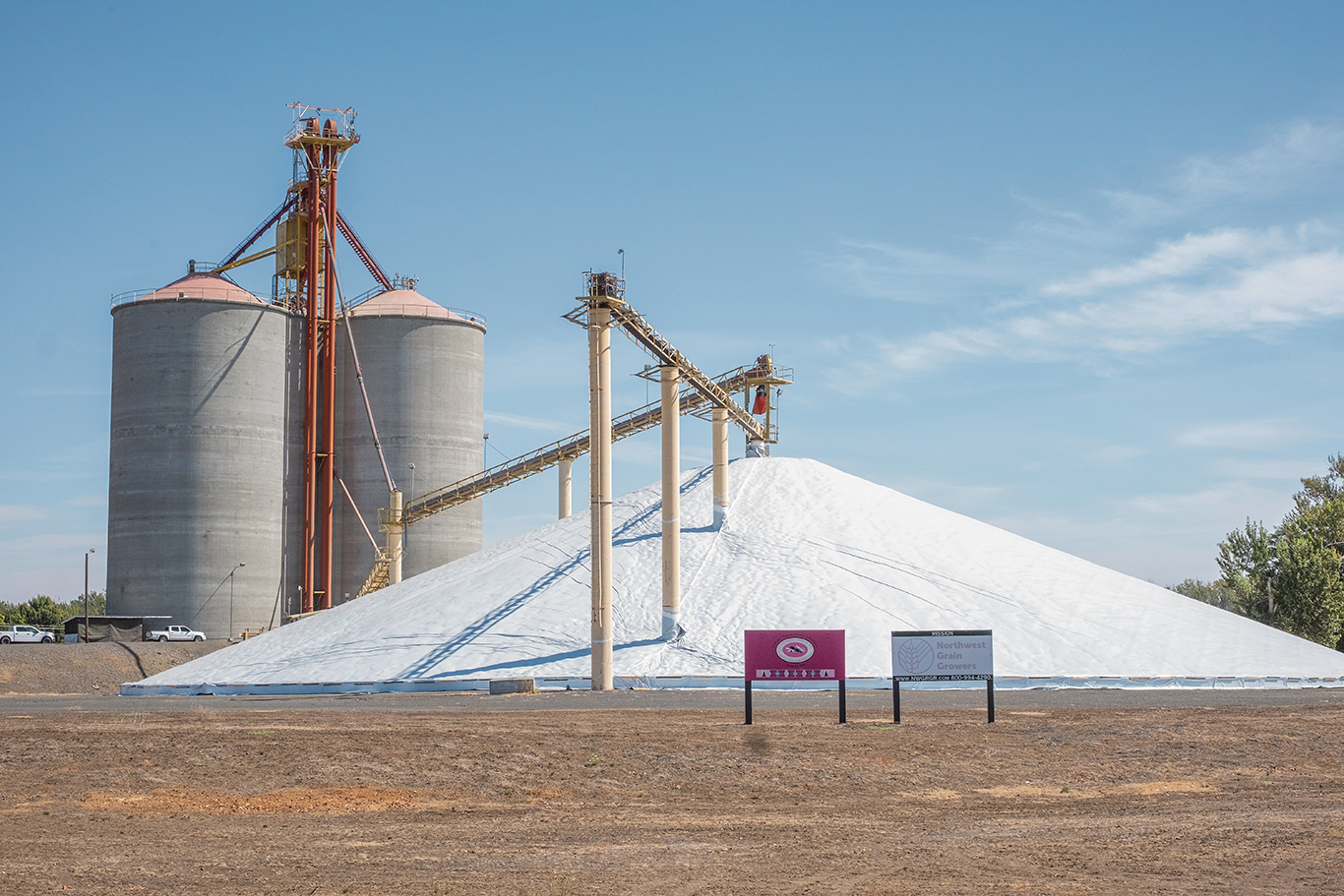
The TFE harvested 4,563 acres of winter wheat, plus 307 acres of hard red wheat destined for Cairnspring Mills. Overall, the farm averaged 63.5 bushels per acre this year, compared with about 49 bushels per acre across roughly 5,300 acres last year.
Tami Rochelle, Farm Office coordinator, said the operation finished harvesting its soft white wheat Aug. 8 after starting July 6. Despite the ongoing drought, yields were up.
Johnny Pimentel, TFE acting farm manager, described this year’s wheat crop as “a pretty good improvement” over last year.
“The spring wheat yield was down because of the drought, but overall production was better than last year,” he said. “If Mother Nature hadn’t gotten away with the rain, some fields could have reached yields in the 70-bushel range.”
Pimentel said the region didn’t really have a winter, so the wheat started growing through the season. December and January brought a few cold days, but crews usually don’t start getting into the field to apply chemicals until about April.
This year, however, the crew was in the field in March when the wheat was already tall and growing. The crop had gotten about 3-1/2 weeks ahead of schedule.
“Wheat was that tall,” Pimentel said, holding his hand above his desk to illustrate the crop’s height. “And it was growing.”
The crop kept developing after receiving good moisture, but the rain eventually stopped and fields began to dry. Pimentel said he planted spring wheat when conditions were favorable and the soil was wet. Initially, the crop looked good, but the lack of moisture eventually reduced yields, he said.
Despite the lower yields, the wheat had good protein levels, which are important for meeting the crop’s high-protein requirements.
Pimentel attributed the crop’s success to good stewardship, including caring for the soil, applying fertilizer, maintaining good weed control and managing vegetation to help wheat progress through each growth stage.
In addition, Pimentel hired an agronomist for his team because he said he recognized the need for expert guidance. So he sought out Rob Stoddard, owner of Good Ground Ag Services. Stoddard has a decade of agricultural experience, including work as a farmhand and crop consultant for a chemical retailer.
His company, Good Ground Ag Services, provides drone-related services to agricultural operations. Stoddard has helped guide the tribe’s crop production through his experience in agronomy, crop management and agricultural technology.
Pimentel said Stoddard has been a valuable asset to the tribe and is helping the operation pursue regenerative agriculture certification for the flour mill. The certification would allow the mill to use a regenerative agriculture label on its artisan breads.
“He’s been a great help and couldn’t do it without him,” Pimentel said. “And I got a good crew. We got a few hiccups now and then, but we can work through them.”
Rochelle said farm crews also worked tirelessly through smoky conditions, while truck drivers without air conditioning worked from dawn to dusk.
Pimentel said the fires and smoke have significantly affected CTUIR’s hay production. He said the hay stopped growing despite fertilization and weed control. After consulting with his agronomist, Pimentel attributed the slowdown to smoke and fog reducing the sunlight available for photosynthesis.
The smoke has also made it difficult for hay growers in the Hermiston area to dry their crops, he noted. Pimentel harvested three cuttings last year but expects to get only two this year, making it a low year for hay production.
He has about 289 acres of irrigated hay but is still waiting for a second cutting on some fields.
Pimentel said the operation must continue adapting to future challenges, including environmental concerns.
Those challenges became especially apparent during the region’s wildfire season. TFE was not the only operation affected by area fires.
A local farmer was affected by a fire on Marsh Hawk Lane in Mission. The fire spread through a harvested wheat stubble field and advanced toward two structures. The Umatilla Tribal Fire Department Chief James Halls said dry fuels, hot weather and light vegetation contributed to the fire’s rapid spread and escalated the incident from a vegetation fire to a structure fire.
Pimentel said nearby farmers in the area really come together when such events happen. “We look out for each other. The farmer who had the fire here had been having a bad run of luck this year, so we’re always diligent about what’s happening in the surrounding areas.”
“We prepare by carrying water and a small firefighting system,” Pimentel said. “We keep fire extinguishers and water cannons on our equipment, and we carry shovels and what I call a fire-water tender — a tank with a motor, pump, hose reel and nozzle. We take it with us wherever we go.”
The crews also keep a tractor and disc nearby. While water remains an important firefighting resource, Pimtel said a tractor and disc are the most valuable tools to have on hand because they can create a fire line and help slow the spread of flames.
If a fire breaks out within about 5 miles, the crew sends a tractor rather than hauling one 10 or 20 miles across the UIR.
When a farm hand scouts a fire and determines that additional help is needed, the operations shut down and send a tractor and water tender to assist. Pimentel said they have twice stopped working to respond to nearby fires.
For Pimentel, helping local farmers during emergencies is part of helping the community.
“We’re just trying to do good, but let’s leave it better than what we found it,” Pimentel said. “That’s probably what I do, and that’s my biggest goal because this is tribal ground.”