PENDLETON — The Pendleton Arts Commission (PAC) has welcomed a new member to its ranks.
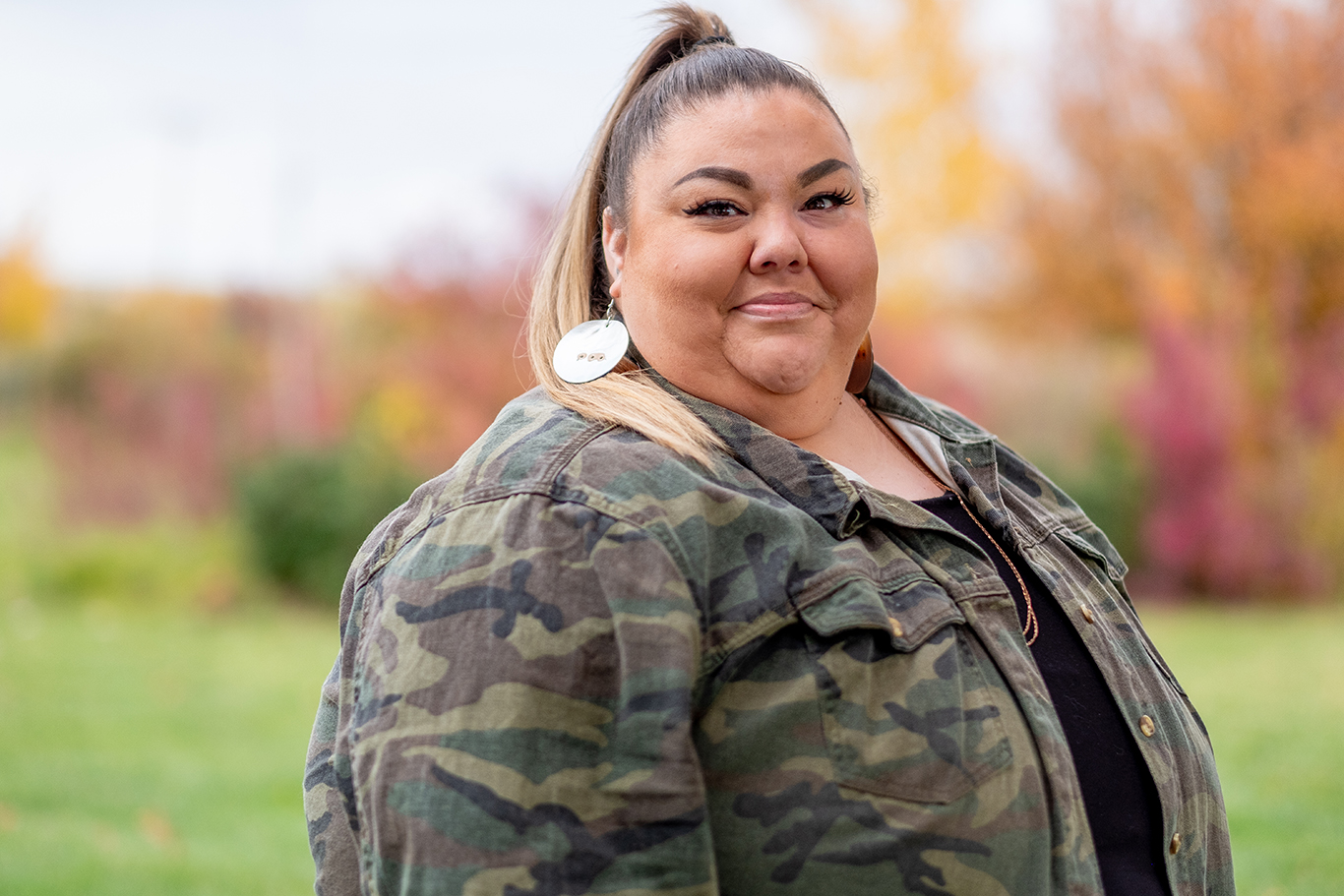
Confederated Tribes of the Umatilla Indian Reservation (CTUIR) member Jiselle Halfmoon was elected to the PAC on Sept. 22 in the Community Room at Pendleton City Hall. The motion passed 4-0.
The PAC is a seven-member advisory body appointed by the mayor and confirmed by the city council. The commission guides local arts policy, oversees the city’s public art collection and creative placemaking throughout Pendleton.
Halfmoon is the digital marketing manager for Cayuse Native Solutions. She had previously served as the CTUIR’s interim Communications director for 15 months and spent more than 10 years as operations manager for KCUW Radio.
She was among the original employees of Cayuse Technologies when it launched in 2007, working as a software engineer, tester and website administrator. She has also worked as a freelance graphic designer.
As a new commissioner, Halfmoon hopes to bring a unique perspective and strengthen connections between the PAC and tribal artists.
“There are tribal members and members of tribal families currently on the commission, so my being a CTUIR member isn’t groundbreaking in this space,” she said. “But as a new commissioner who also happens to be Native, I hope to bring another unique perspective and serve as a resource or an additional connection to our tribal artists. I’m absolutely an idea generator and a dreamer, so I hope that will be constructive in this space as well.”
Halfmoon describes herself as an art advocate and enthusiast rather than an active creator, though she continues to explore different creative outlets.
Her work as a digital marketer takes up much of her creative energy, leaving personal projects on the back burner, she noted. Still, she enjoys landscape photography and is working on a memoir and a collection of essays.
Earlier this year, classes at Crow’s Shadow Institute of the Arts helped her make her first Jingle Dress and beaded cap, despite having no previous sewing experience. The institute also introduced her to printmaking more than 15 years ago, eventually leading to invitations to participate as a printmaker in its annual Monothon fundraiser.
During the COVID-19 pandemic, Halfmoon created a linocut print at home and submitted it to BESTIARIUM 2020, a global art exhibition. Her work was selected and displayed at ETCHINK in Athens, Greece, in 2020.
Halfmoon continues to explore new artistic techniques, working on incorporating gold-leaf painting into her landscape photography and gathering materials to experiment with “kinusaiga,” a Japanese fabric-art technique with a Native-inspired twist.
Halfmoon said art has long played an important role in Indigenous culture, bringing people together through creative expression while preserving traditions, stories and teachings.
“When I think about art in our culture, I think about gathering together to create,” she said. “It wasn’t just about making things we needed to sustain our way of life, but making them beautiful, too. Baskets, beadwork, horse regalia, painted faces and bodies, songs, drumming, petroglyphs, ledger art, our people have always found creative ways to express themselves.”
She said creativity also served a purpose, passing stories, teachings, history and communication from one generation to the next.
“Every piece was created with intention, meaning and color,” she said.
Halfmoon said public art should reflect the diversity of Pendleton and the many cultures that shape the community.
“I love seeing more Native representation in downtown Pendleton because it’s an important part of who we are and our history here,” she said.
While Pendleton is sometimes viewed as a “cowboys and Indians” town, Halfmoon said the community has much more cultural depth and richness to celebrate.
She hopes public spaces will continue to showcase that diversity through greater Hispanic, Asian, Black and LGBTQ+ representation, along with the many other voices and cultures that make up the community.
“Art reminds us we are human, and it reminds us others are human as well. This is needed more than ever in this constantly divided and scrutinizing society,” she said.
Halfmoon said she hopes to learn more about the commission’s processes, priorities and ongoing projects while exploring ways to expand opportunities for tribal artists.
She has long advocated for an open, accessible art studio on the Umatilla Indian Reservation where tribal creatives can gather and pursue their artistic work. She hopes her role on the commission will help her develop a more informed approach to making that vision a reality.
Art can help bridge divides, Halfmoon said, and foster a greater sense of shared humanity.