Repeated cleanup efforts have done little to stop dumping and vandalism, while soil testing reveals elevated lead concentrations.
MISSION — Despite months of cleanup efforts at Johnley Pond, the pollution keeps returning. Each time crews clear the land of debris, people return, leaving behind more trash.
In April, crews from the Confederated Tribes of the Umatilla Indian Reservation (CTUIR) and the U.S. Environmental Protection Agency (EPA) joined forces to clean the area.
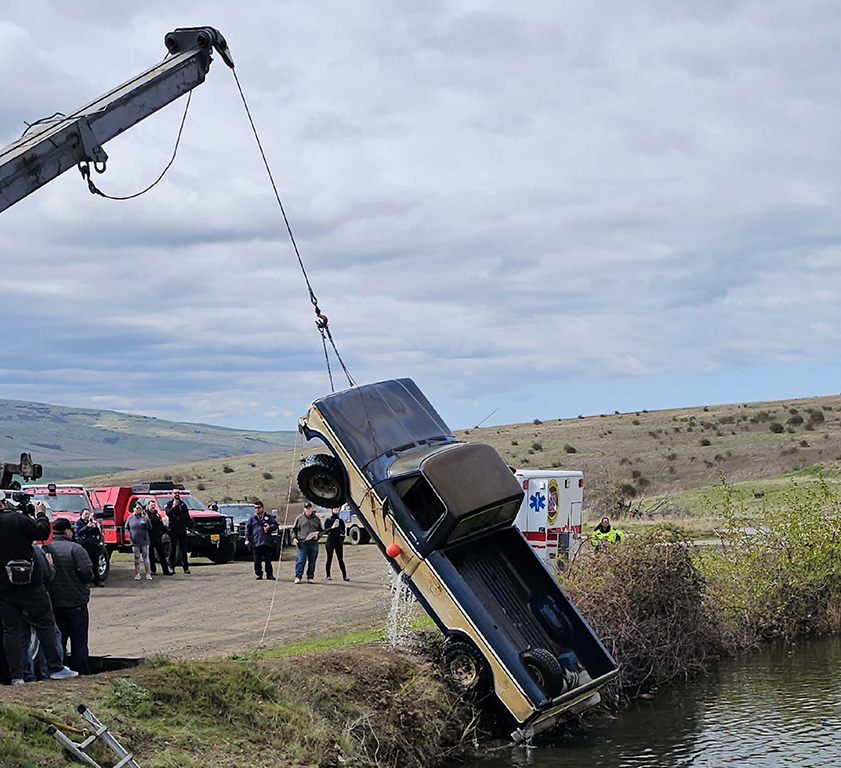
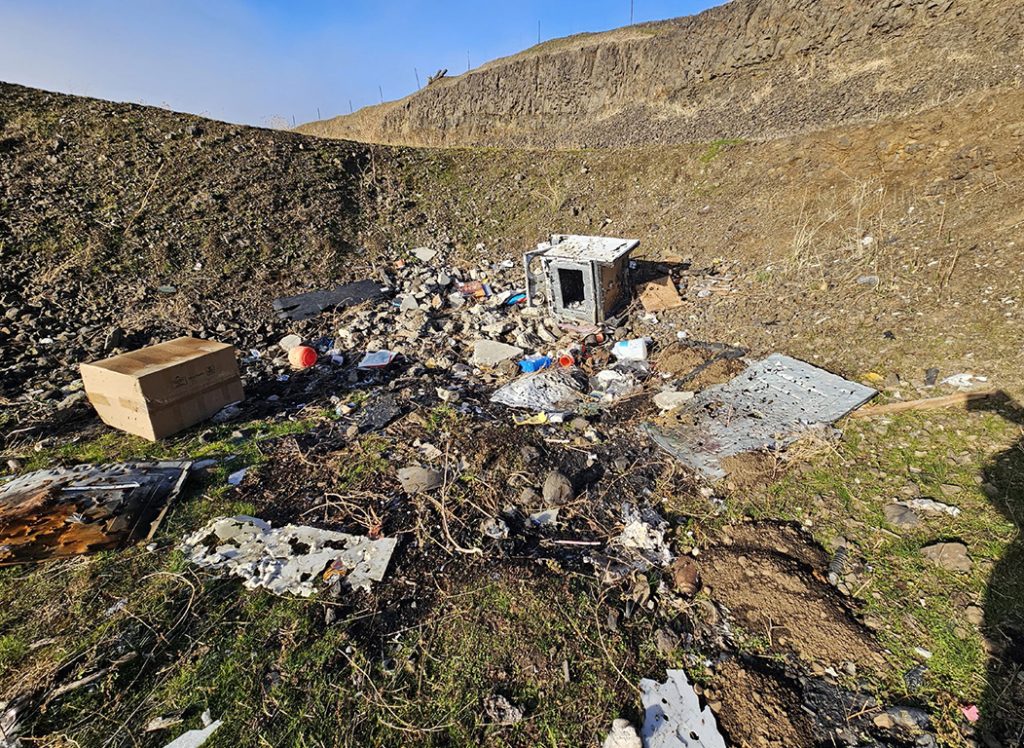
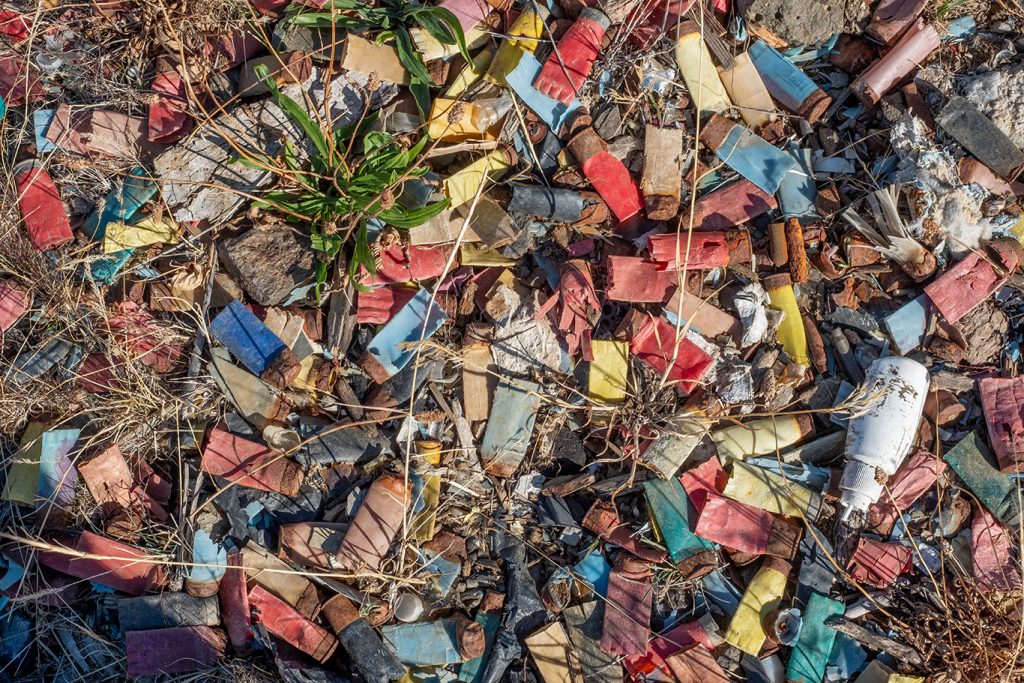
Workers hauled four cars, tires and other debris from the pond in April. Across the surrounding land, crews removed burned debris, bullet casings and shells, empty cans, broken bottles and other waste.
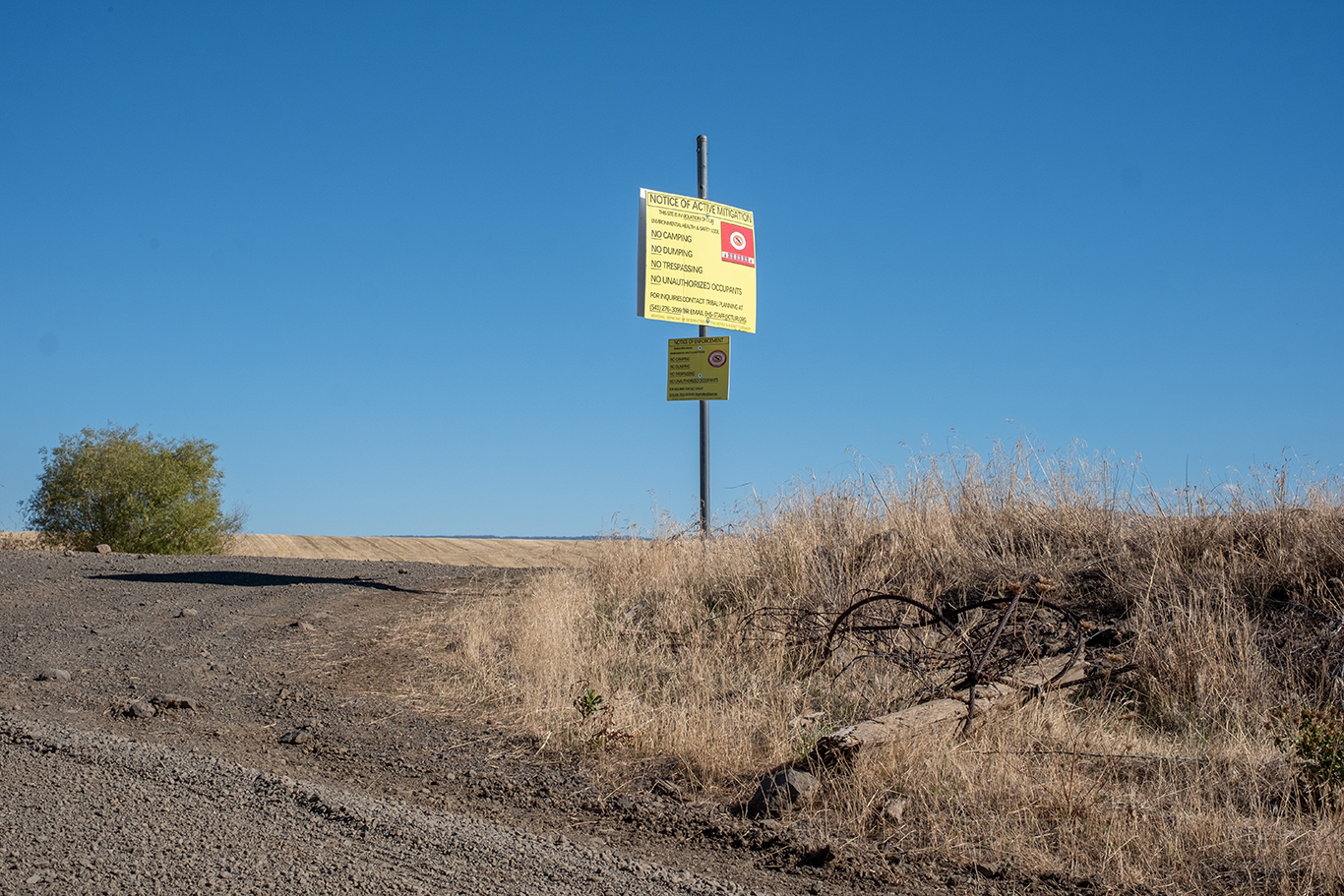
Brian Fullen, CTUIR Environmental Health and Safety specialist, said the EPA returned to Johnley Pond weeks later to conduct additional soil testing, including drilling. The site was relatively clean aside from bullet casings and damage to the no-trespassing signs, Fullen said.
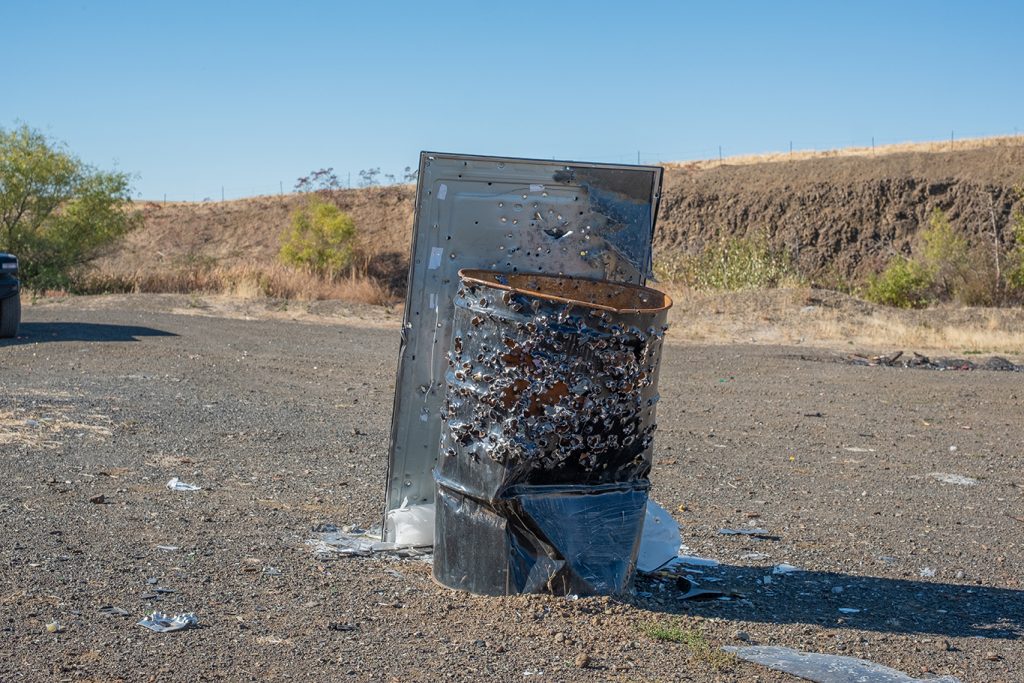
But the improvement did not last. Within about two weeks, barrels marked with toxic hazard warnings had been shot to pieces. In the weeks that followed, more discarded appliances and household items appeared, including refrigerators, televisions, beds and mattresses. Rather than using paper or wooden targets, people shot at electronics, propane tanks and other discarded items, Fullen said.
By October, bullet casings littered the ground, and flat-screen televisions and mattresses had been shot up and abandoned. Barrels bearing contamination warnings were riddled with bullet holes.
Even the fencing meant to block access to the area had been torn apart, leaving mangled posts and wreckage scattered across the land.
Despite the cleanup efforts, Johnley Pond had once again become a shooting range and dumping ground, raising questions about how to protect the area from further damage.
EPA report of the area
In September, the EPA provided the CTUIR with an environmental report documenting elevated lead concentrations at Johnley Pond.
According to the “Johnley Road Pond Site Report: EPA Removal Site Evaluation Findings,” soil samples collected during the EPA’s April evaluation showed elevated lead concentrations in several areas of the site. The highest laboratory result measured 38,500 ppm in surface soil, which is more than 64 times the 600 ppm comparison level the agency used in its assessment.
A lot more than a lead mine, said Fullen.
The report identified multiple areas where lead concentrations exceeded that level, including the unofficial shooting range where crews found large quantities of spent bullet casings. The EPA concluded that a removal action was likely warranted, but said further internal discussions were needed to determine the next steps, including the timeline, logistics and funding for a potential cleanup.
The elevated concentrations were found in surface soil, generally within the top 6 inches of the ground.
The report also found that lead concentrations in sampled subsurface soil and surface water did not exceed the applicable comparison level. However, those findings do not establish that all soil and water at the site are free of contamination.
According to the EPA, lead concentrations in U.S. soils range from 0.5 to 1,200 ppm, with a nationwide average of 26 ppm. The agency also noted that lead can migrate from soil into groundwater, depending on the type of lead compound and the characteristics of the soil.
A history of dumping and environmental concerns
Concerns about Johnley Pond date back to November 2024, when the CTUIR’s Planning Department received a report from the Umatilla Tribal Police Department (UTPD) about a submerged truck in the pond.
While visiting the area, Fullen said staff noticed an oil slick on the water’s surface, raising concerns about potential environmental contamination. They also found acres of solid waste surrounding two nearby properties, including discarded household materials, and identified the area as an unsanctioned shooting range.
Videos circulating on Snapchat on Oct. 31, 2024, appeared to show a young person losing control of a 1979 Ford F-150 and driving it into the pond, Fullen said. The footage showed the truck sinking into the water and eventually helped staff identify its owner, a high school student from Helix.
The recovery effort began on April 12, 2025, when Oregon Rescue Divers, a volunteer dive team from Southern Oregon, arrived to assist. Divers located a submerged vehicle in less than five minutes, but it was only the first of three vehicles discovered in the pond.
The first vehicle was a mid-2000s Dodge Cummins diesel that investigators later determined had been reported stolen from Umatilla in 2017. Divers also recovered the 1979 Ford F-150 and a third vehicle, a 1984 Camaro IROC.
During the recovery effort, divers found animal bones among the debris. Fullen said UTPD took the remains for analysis, which later confirmed they were animal bones.
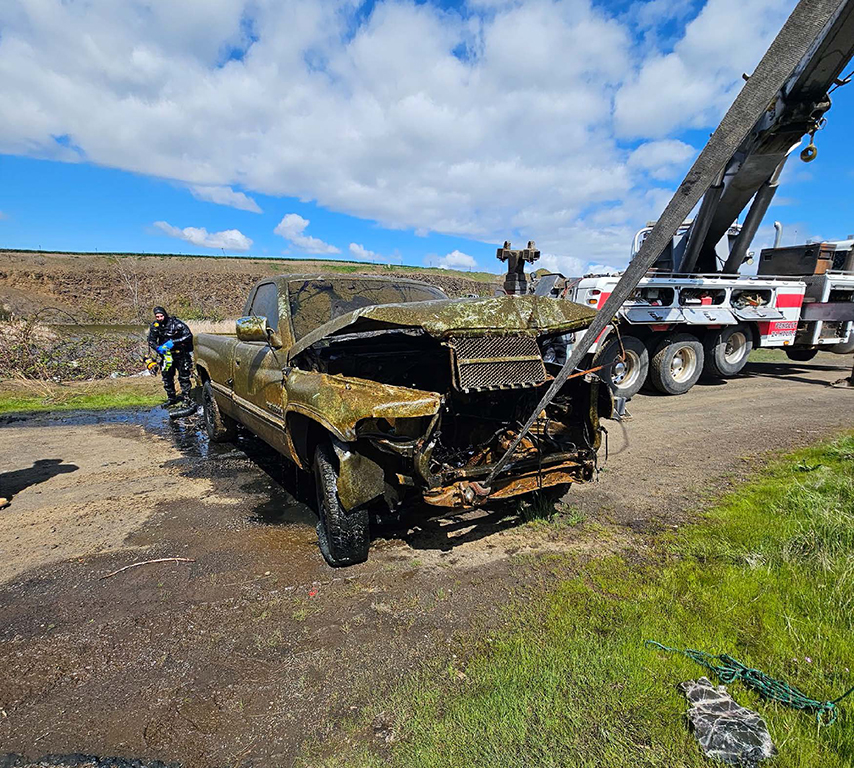
The recovery operation involved four divers and a full day’s work. Removing the three vehicles helped address potential sources of further environmental damage.
Johnley Pond’s remote location has long drawn people to the area for various activities, from social gatherings and target shooting to, more recently, repeated dumping and environmental damage.
The pond also sits on privately owned fee land, while the surrounding area includes trust and fee land. Fullen said that distinction can complicate questions of responsibility for environmental cleanup.
At one time, the UTPD used the area for firearms practice, while hunter safety education programs held rifle training there. Both have since stopped using the site because of concerns about damage and misuse, Fullen said.
Despite the concerns, Johnley Pond continues to attract people who share its location on social media when others ask where they can go shooting.
While surveying the area before the April cleanup, Fullen ran into a group of young people who planned to shoot at a bottle of nitrous oxide, known as “laughing gas,” and blow it up. He confiscated the bottle, he said.
Despite repeated cleanup efforts, Fullen said, Johnley Pond’s remote location continues to attract people who use the area for target practice, parties and illegal dumping.
“We’re trying our best. We are trying very hard to get it cleaned up, and some days that’s a losing battle,” Fullen said.
But the effort extends beyond keeping the area clean and safe.
Johnley Pond is about 600 yards from the Umatilla River, raising concerns about potential lead contamination reaching the waterway, Fullen said.
Lead exposure can cause serious health problems, particularly in children. According to the EPA, exposure can contribute to behavioral and learning difficulties, hyperactivity, slowed growth, hearing problems and anemia in children. In adults, lead exposure can cause cardiovascular effects, reduced kidney function and reproductive problems.
Pregnant women exposed to lead also face increased risks, including miscarriage and premature birth. Lead exposure during pregnancy can also affect a child’s development, increasing the risk of behavioral and learning difficulties, according to the EPA.
The cleanup also aims to protect First Foods — culturally significant foods, plants and natural resources central to the CTUIR community — as well as roots and other plants that grow in the area and hold cultural importance.
“We don’t want to ruin anybody’s fun, but we’re trying to do it the right way and be responsible,” Fullen said. “We’re also protecting First Foods. There’s a lot of roots and plants that are in that area that are very important to the community. I think the community is my family and I wanna do what I can to help them. ”
Removing the debris is only part of the challenge. With elevated lead levels documented and waste continuing to accumulate, finding a lasting solution remains difficult. Nearly two years after the first report of a submerged vehicle brought attention to Johnley Pond, the site remains caught in a cycle of cleanup and renewed damage.