MISSION — Community members had the opportunity to hear some lived experience and learn about the rising and falling trends regarding opioid use at the annual Tribal Opioid Summit hosted by the Yellowhawk Tribal Health Center (YTHC).
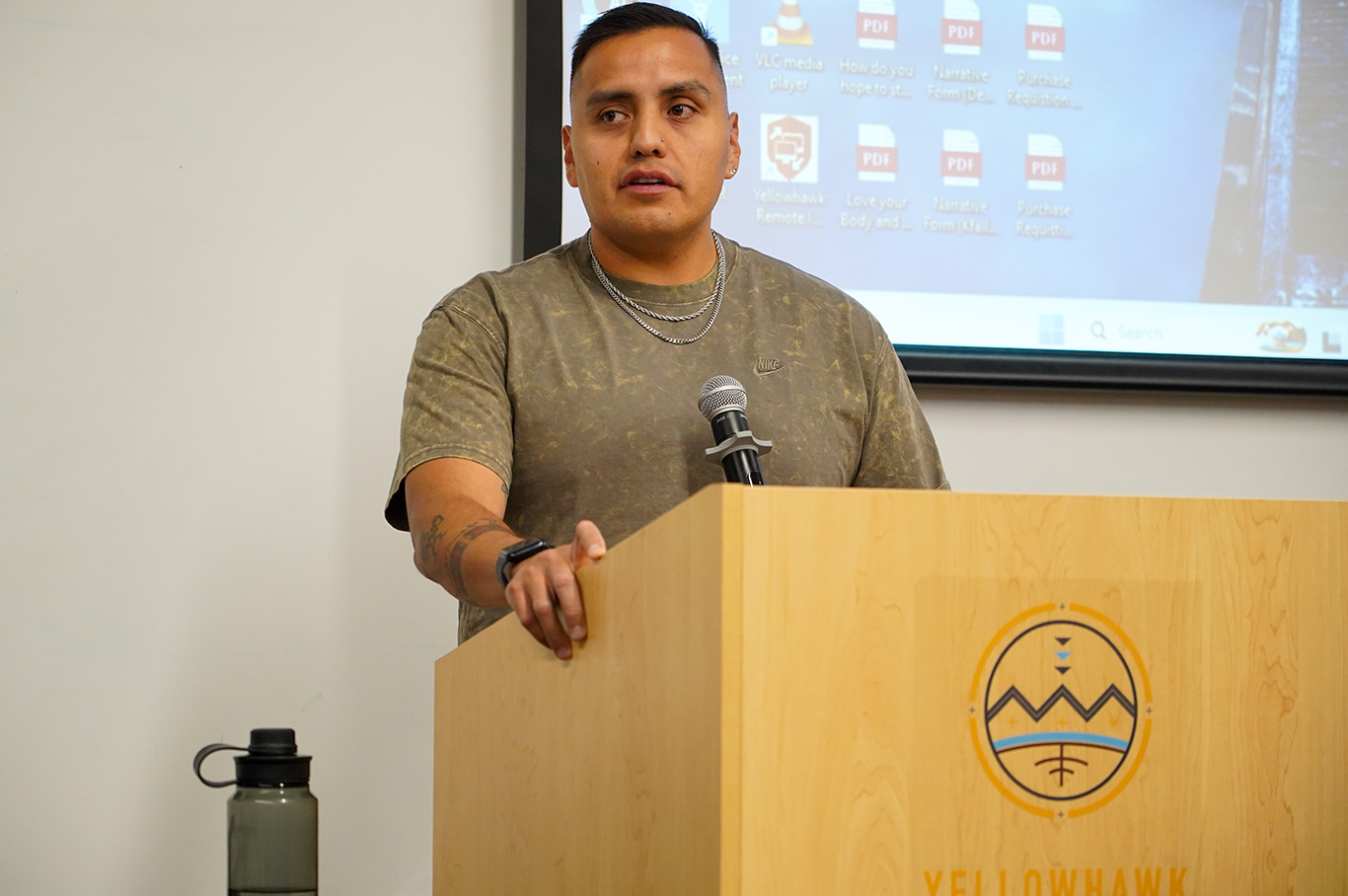
On Oct. 22, the YTHC hosted representatives from Nepenthe Labs and the Northwest Portland Area Indian Health Board (NPAIHB) Tribal Opioid Response (TOR) Consortium. Starting off the summit, however, was Confederated Tribes of the Umatilla Indian member Dion Denny, who narrated his opioid use experience and what it took for him to overcome it.
“We look for people who have a lived experience and have navigated the system itself,” YTHC Chemical Dependency Prevention Coordinator Leighton Pennington said. “We also work with a lot of these presenters through different grants and funding sources, which is how we connected with them. They’re already speaking on these topics in the tribal communities, so we hone in on them and bring them in.”
Pennington said the summit has been held for five years now and was an educational opportunity for the community to learn about local data trends happening in tribal communities regarding opioid abuse. Over the years, he said attendance has slowly grown and that at some point he is hoping to have at least 100 community members in attendance seeking education about opioid abuse.
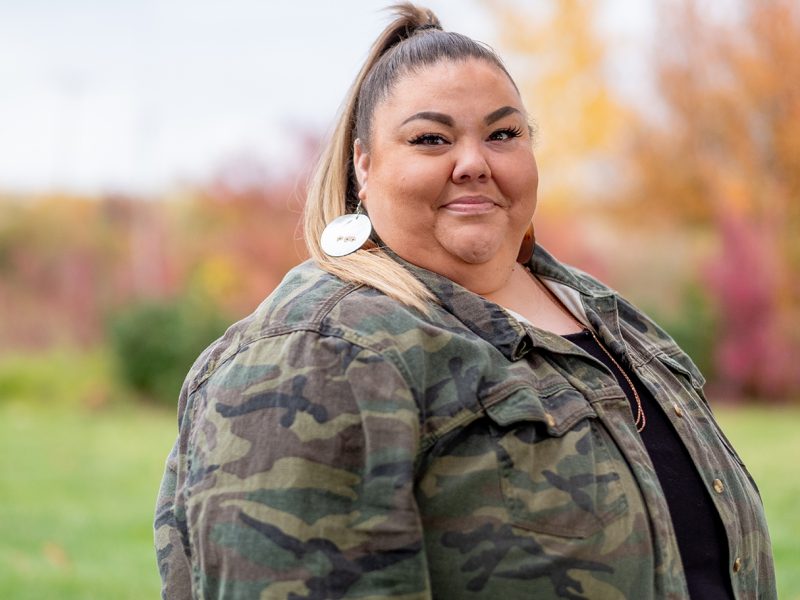
First on the summit’s agenda was Denny, who recounted his opioid addiction experience. Denny runs The Recovery Gym in Portland, a fitness center for individuals in behavioral health recovery.
“This is my first time coming here to speak about recovery and about how I live today,” he said. “I’ve never done it in front of community members here, but to also be able to do it in front of people who are in it daily, like police, some behavioral health workers, people from Portland — people that are actually a part of it all.”
Denny said he hopes people attending the summit would hear about his experience and implement what worked for him into their lives.
“For me, it’s been movement, prayer, community, fatherhood, hunting and fishing,” he said. “And the people who are helping, their impact matters, their work matters, and I would just want to reassure them because it’s challenging to work in this field.”
Justin Monahan, sales director at Nepenthe Laboratory Services, provided statistics of drug trends in tribal communities. Monahan said Nepenthe processed between 100,000 to 200,000 tests in the past year, with 20,000 of those tests being in tribal communities across nine states, primarily the Pacific Northwest.
Monahan went through the rising and falling trends for THC, methamphetamine, fentanyl, kratom, xylazine and more. He also provided trends regarding alcohol use — noting that the younger generation is consuming less alcohol in all areas.
NPAIHB Clinical Support Services Project Manager Larissa Molina and TOR Project Coordinator Lexy Packer shared resources and information about the project, which aims to assist tribes with overcoming the opioid epidemic by increasing capacity to implement effective prevention, treatment and recovery efforts.
Pennington also spoke about recovery resources provided by and through the YTHC, including supportive transitional housing and a deflection program for individuals dealing with charges associated with arrests. Pennington also pointed out the Narcan machines at different locations such as the Wildhorse Resort & Casino or Mission Market on the Umatilla Indian Reservation. These free vending machines provide Narcan, which can help reverse overdose by blocking the effects of opioids, and safer choice kits. The only thing people need to do to receive a kit is to enter their zip code into the machine, as it tracks data from how many people take kits and from where.
“We just want to get all of (the services we provide) out there, including the resources, so that way community members can have them and connect with the right people,” Pennington said after the summit.
Pennington said he hopes the summit continues to grow and that tribal members take advantage of the resources being provided to help them through the YTHC and other projects and facilities in the region.