Tribal restoration effort returns Pacific lamprey to Breitenbush River
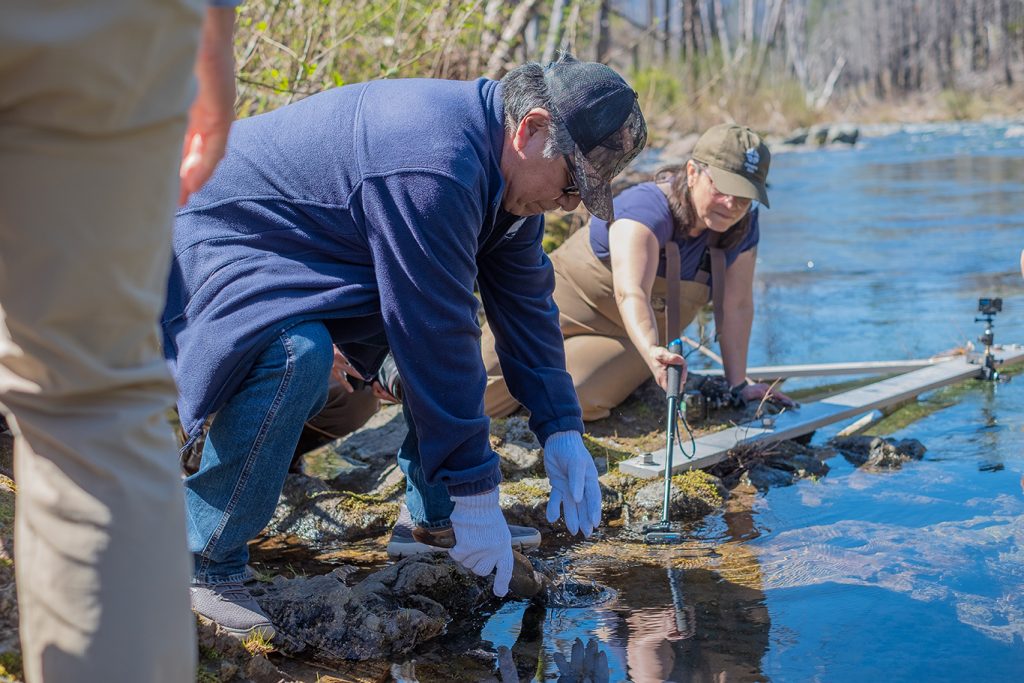
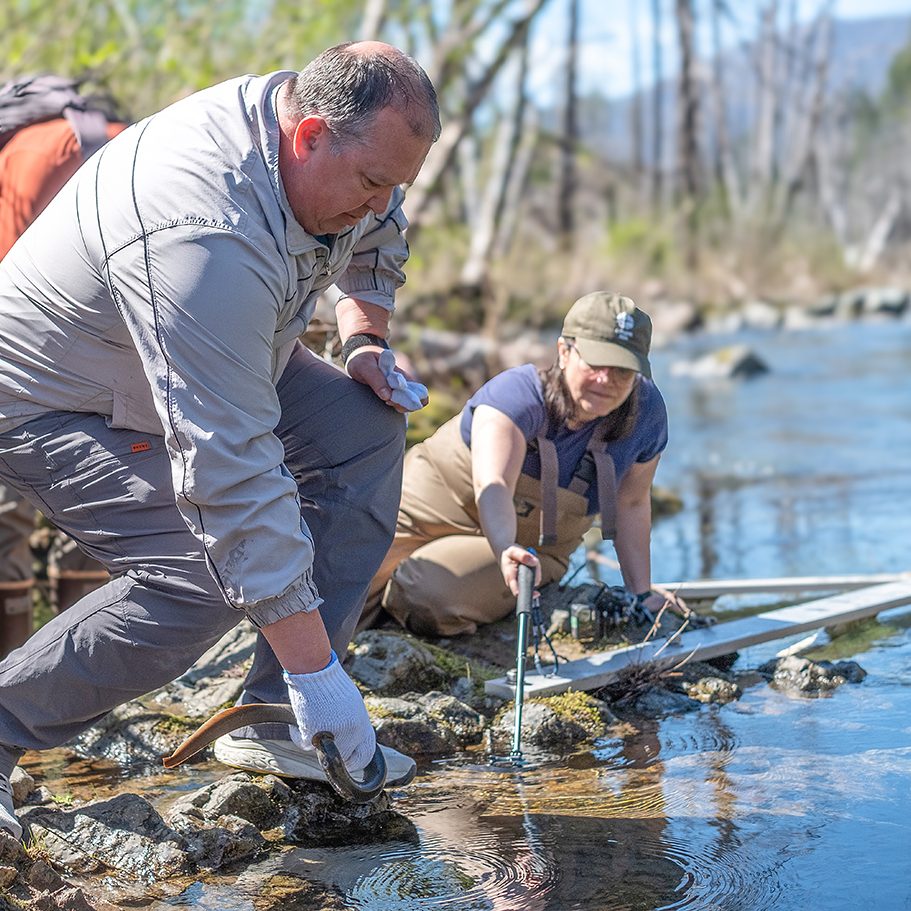
PORTLAND — Twenty-three Pacific lamprey were released into the vast, cold streams of the Breitenbush River, where tribal members and zoo biologists reintroduced the first fish into the freshwater in an effort to help revive the declining population.
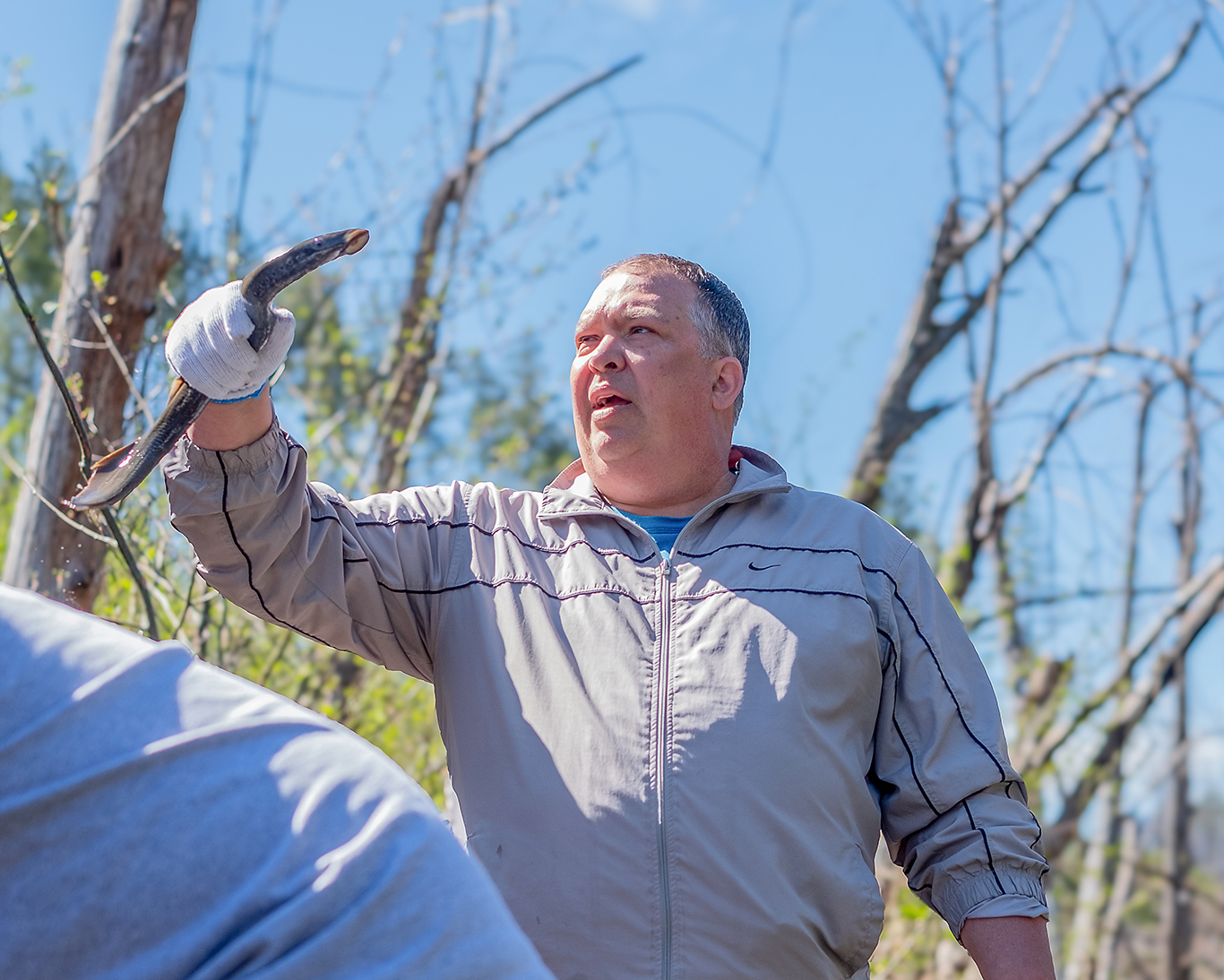
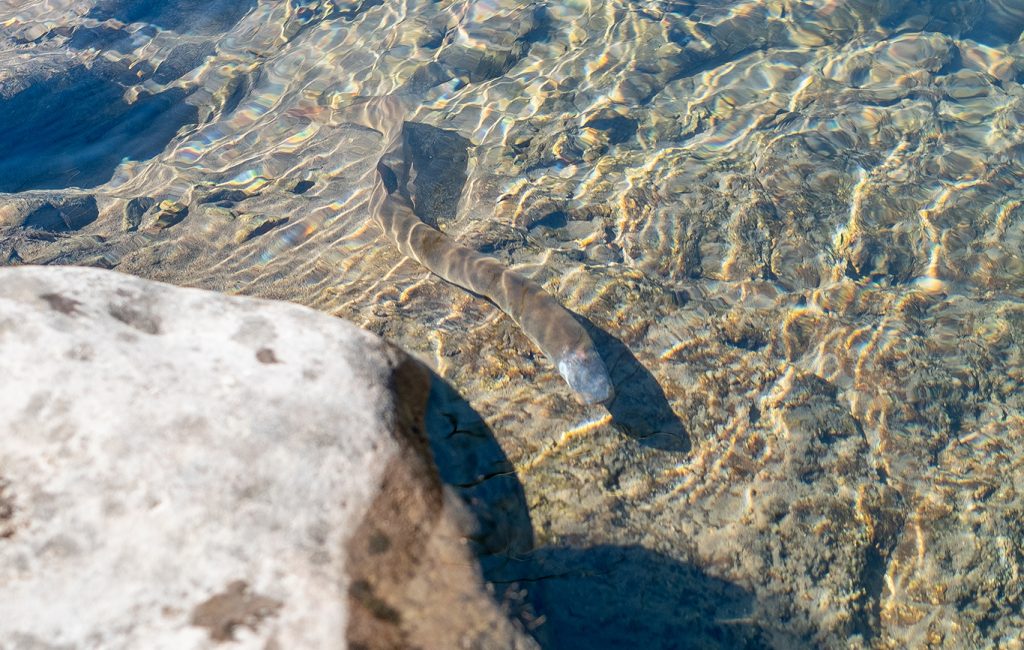
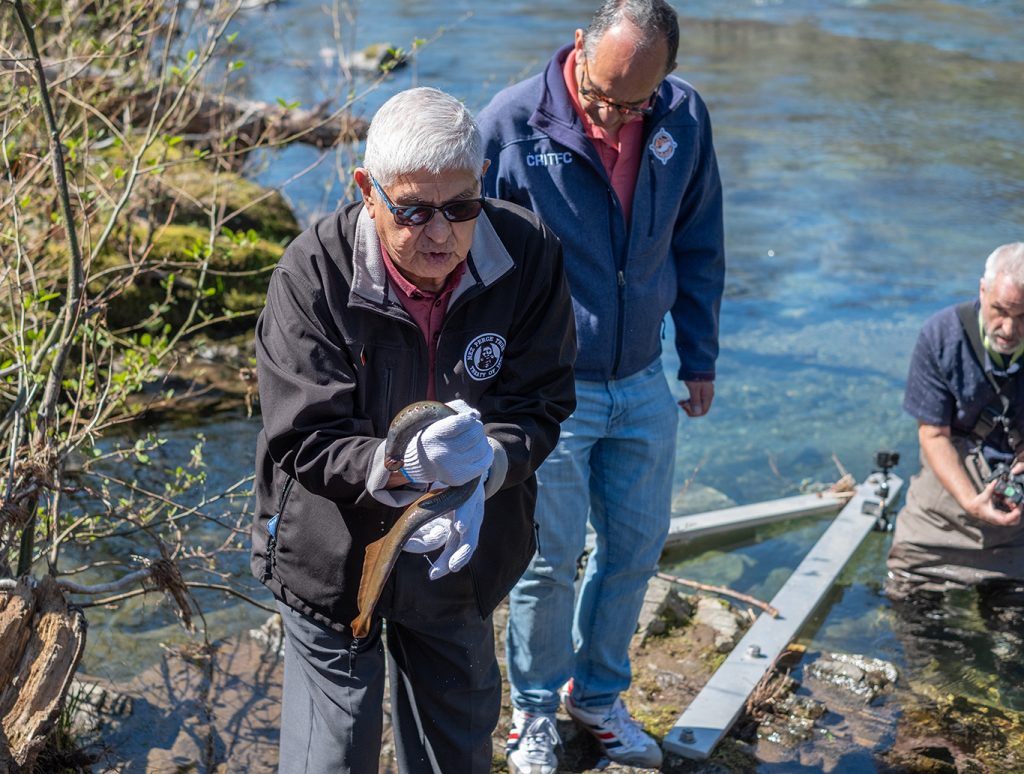
More than 20 people showed up for the ceremonial event. Each official received a lamprey to release on April 8 into a stream that runs through the Willamette National Forest, near the Mount Jefferson Wilderness, northeast of Detroit Dam. As the river flowed on, the fish quickly swam into the clear water and disappeared beneath the glimmering sunlit surface.
The initiative is part of the Tribal Pacific Lamprey Restoration program, which collects lamprey below dams on the Columbia River with assistance from the U.S. Army Corps of Engineers (Corps).
Under the program, the team keeps some lamprey in holding tanks for one to two years until they are ready to spawn, loaning some to the zoo for its exhibit. When ready, crews transport the fish to tributaries of the upper Columbia River and the Snake River, then return with another group for display.
The effort brought together the Confederated Tribes of the Umatilla Indian Reservation (CTUIR), the Columbia River Inter-Tribal Fish Commission (CRITFC), the Confederated Tribes of Grand Ronde (CTGR), the Nez Perce Tribe (NPT), the Oregon Zoo, Oregon Department of Fish and Wildlife (ODFW) and the Corps.
Aaron Jackson, Pacific lamprey project leader and biologist in Fisheries for the CTUIR, said the effort restores access for tribal members to harvest lamprey as they have since time immemorial. In addition, the work helps return the fish to areas where populations have declined for decades and supports broader ecosystem recovery, he added.
“It really feels good to be able to do some of that work and give back to not just the fish, the ecosystem, but our people as well,” Jackson said. “Hopefully, our kids’ kids, my great grandkids, all of our community’s kids will once and always be able to harvest lamprey right back with Willamette Falls.”
Willamette Falls is now one of the few remaining traditional harvest sites after the species was nearly wiped out upstream of barriers across the basin. As a result, tribes continue to bring youth groups to the falls, where elders teach harvesting techniques, preparation methods and the species’ ecological and cultural importance.
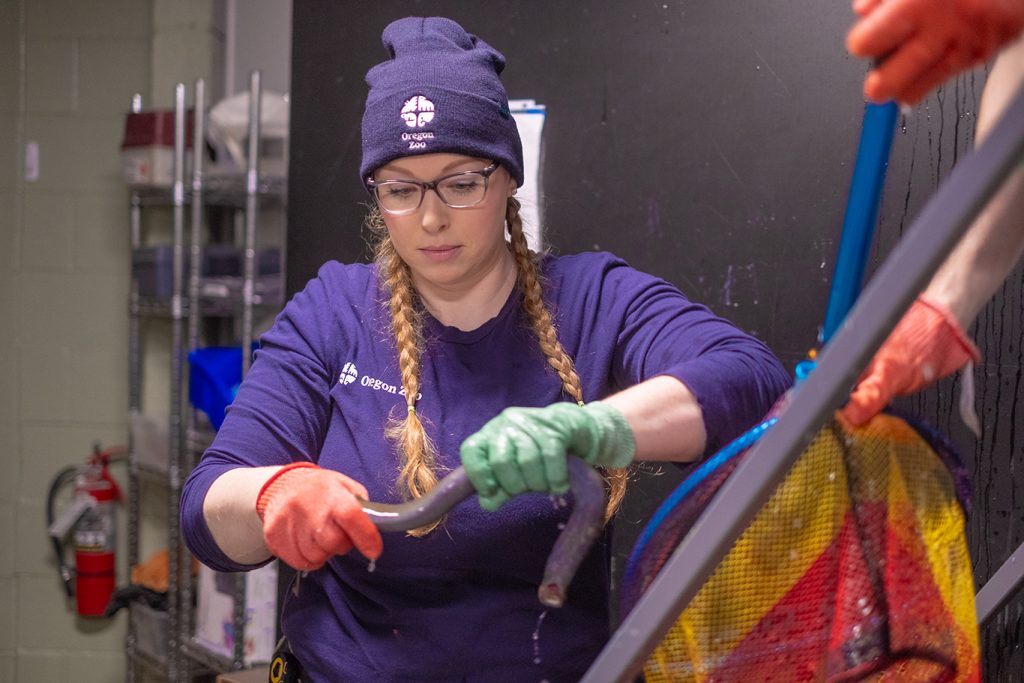
The return-to-river effort began early in the morning at the Oregon Zoo, where zoo staff and tribal members collected the eel-like fish from aquatic tanks in the Great Northwest area exhibit.
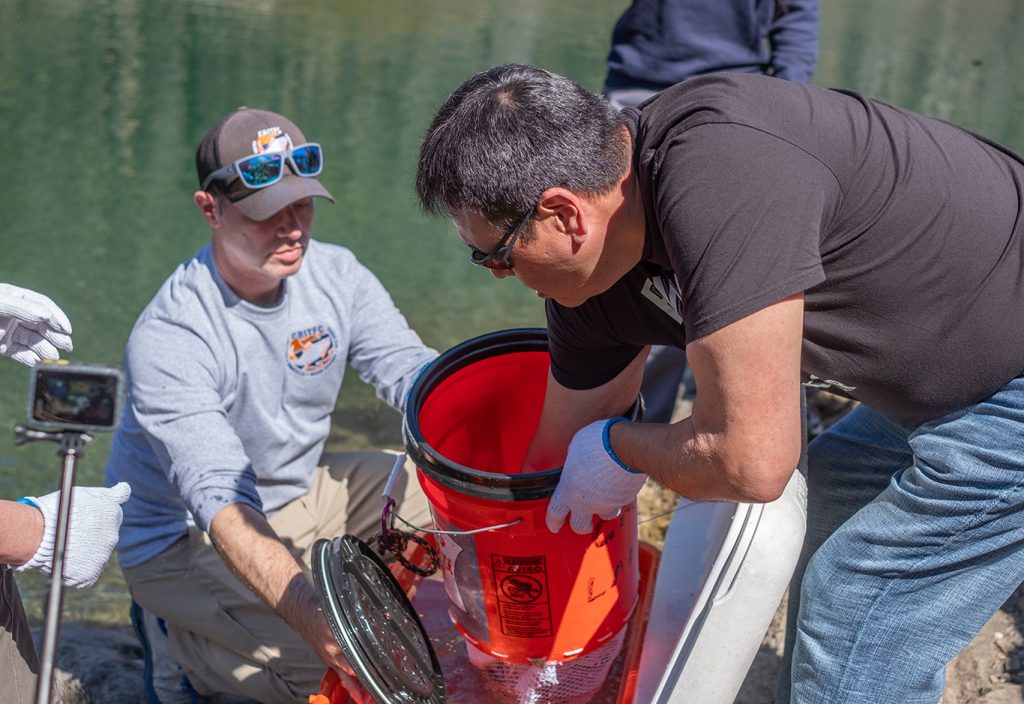
From there, crews pulled them out one at a time and placed the fish into buckets and stored them in large coolers for transport. Throughout the process, zoo staff maintained the water at 50 degrees Fahrenheit to match stream conditions, helping the lampreys adjust before release into their natural habitat.
Pacific lamprey remains a vital source of food, cultural identity and medicine for Columbia River Basin tribes. However, lamprey numbers have declined sharply, largely due to dams that block access to historic habitat.
The Corps operates a network of dams in the Willamette River Basin known as the Willamette Valley System. Those dams have significantly reduced lamprey populations by limiting access to spawning and rearing areas, contributing to long-term declines in both the Willamette and Columbia river basins.
Virgil Lewis, a commissioner for the Yakama Nation, said lamprey, like salmon, have long been overlooked and underfunded in restoration efforts.
Lamprey were historically used both as food and bait, he noted, with some harvested for sturgeon bait and others prepared as a traditional food source. He said families processed the fish by cutting, drying and preserving it for winter.
Releasing lamprey helps them thrive and grow naturally, allowing populations to rebuild at Willamette Falls as they once did, he said.
He added that the effort also supports younger generations by restoring access to traditional harvests, which can then be shared with families unable to collect their own.
“That’s one of the goals, the long-range goals for the tribes,” Lewis said. “We take lamprey to our reservations and release them and we’re hoping those that are released will come back and it’s working.”
Historically, Pacific lamprey occupied more than 3,000 river kilometers across five Willamette subbasins. That abundance supported large harvests at Willamette Falls, including an estimated 97,000 to 530,000 lamprey annually between 1943 and 1952, largely through commercial fishing, according to the Willamette Inter-organizational Lamprey Leadership Passage Assessment Surveys Syntheses (WILLPASS Strategy Document).
By contrast, harvests fell to between 16,000 and 46,000 annually from 1997 to 2001. In the 2020s, annual harvests have dropped below 8,000 fish, primarily by tribal fishers.
Today, lamprey occupy less than one-third of their historic habitat in the Willamette Basin, according to the report.
Jon Hess, senior fisheries geneticist with the CRITFC, said lamprey have long been a vital part of the region’s ecosystem.
“The ecosystem has suffered without them,” he said. “As lamprey return to areas they once occupied, those systems will begin to recover.”
Hess said lamprey larvae help filter and clean streams, while juvenile fish provide food for other species. Tracking their movement will also give scientists new insight into how well they navigate dams in the Willamette River Basin.
“Historically, we’ve had data on salmon, but very little on lamprey,” he said. “As they grow and migrate downstream to the ocean, we’ll be able to see where they face challenges and what improvements are needed.”
Researchers hope the fish will eventually return in greater numbers to Willamette Falls, a site of deep cultural importance for Native tribes, Hess added.
“Lamprey is a First Food for many tribes,” Hess said. “We want to restore those populations to levels that support both the ecosystem and tribal traditions.”
The plan to return the Pacific lamprey
Federal and tribal partners have developed a phased WILLPASS strategy to restore lamprey passage at Willamette Valley System dams, which calls for near- and long-term actions to improve upstream and downstream movement and achieve at least 96% passage efficiency.
The plan proposes installing specialized passage structures, trapping and hauling fish around dams and translocating adults from Willamette Falls. Researchers say juvenile lamprey will require additional downstream passage solutions because they can spend three to nine years in river sediments before migrating.
Agencies and tribes will monitor reintroduced populations to measure survival and passage success and compare different restoration approaches.
According to the document, in the initial phase of the project, crews will collect up to 500 adult lamprey at Willamette Falls, genetically sample each fish and release up to 100 fish into each of five river segments where the species has disappeared.
The selected locations include areas upstream of Detroit Dam on the North Santiam River, Green Peter Dam on the South Santiam River, Cougar Dam on the McKenzie River, Hills Creek Dam on the Middle Fork Willamette River, and Fern Ridge Dam in the Upper Willamette and Long Tom Basin.
Researchers will track spawning success and juvenile production using electrofishing, environmental DNA and rotary screw traps. They will also monitor downstream migration and survival using PIT tags, genetic tools and acoustic telemetry where possible.
Biologists still face major uncertainties about lamprey survival, migration and habitat in the basin. They do not know how many adults are available for trap-and-haul operations, how well juveniles survive downstream passage through dams or where suitable spawning habitat remains above barriers, according to the document.
Phase II is expected within five years and will expand restoration to additional river segments based on habitat conditions and passage feasibility.
The phased effort aims to rebuild lamprey populations while improving fish passage at dams over time, with the long-term goal of restoring sustainable runs and supporting tribal harvest and ecosystem health.
Jerrid Weaskus, a lamprey program manager for the CTUIR, said the effort reflects strong collaboration and a shared goal to restore fish to the river system.
“It’s a good thing that we can all work together and hopefully get lamprey back into the river system,” he said. “It’s a positive day. Everybody showed up. It’s good for the fish, and all our work is for the same goal, to return our river systems to natural production of fish.”
Weaskus said agencies and tribes share responsibility for restoring healthy rivers.
“We just want a good, healthy river, and I think this is a good day,” he said. “We’re trying to bring them back.”
He said he hopes the released lamprey will survive, spawn and establish a self-sustaining population that grows over time.
“If they take hold, they’ll spawn, have their babies, and hopefully those babies can grow up here and start a population,” he said. “It’s not going to happen overnight, but the trend can start going up.”
Weaskus said the effort builds on restoration work proven in other river systems and reflects a long-term commitment to rebuilding populations in waters where lamprey have disappeared.
“We’re going into a system where they weren’t here anymore, and now we’re trying to bring them back,” he said. “It’s a very positive thing to do.”