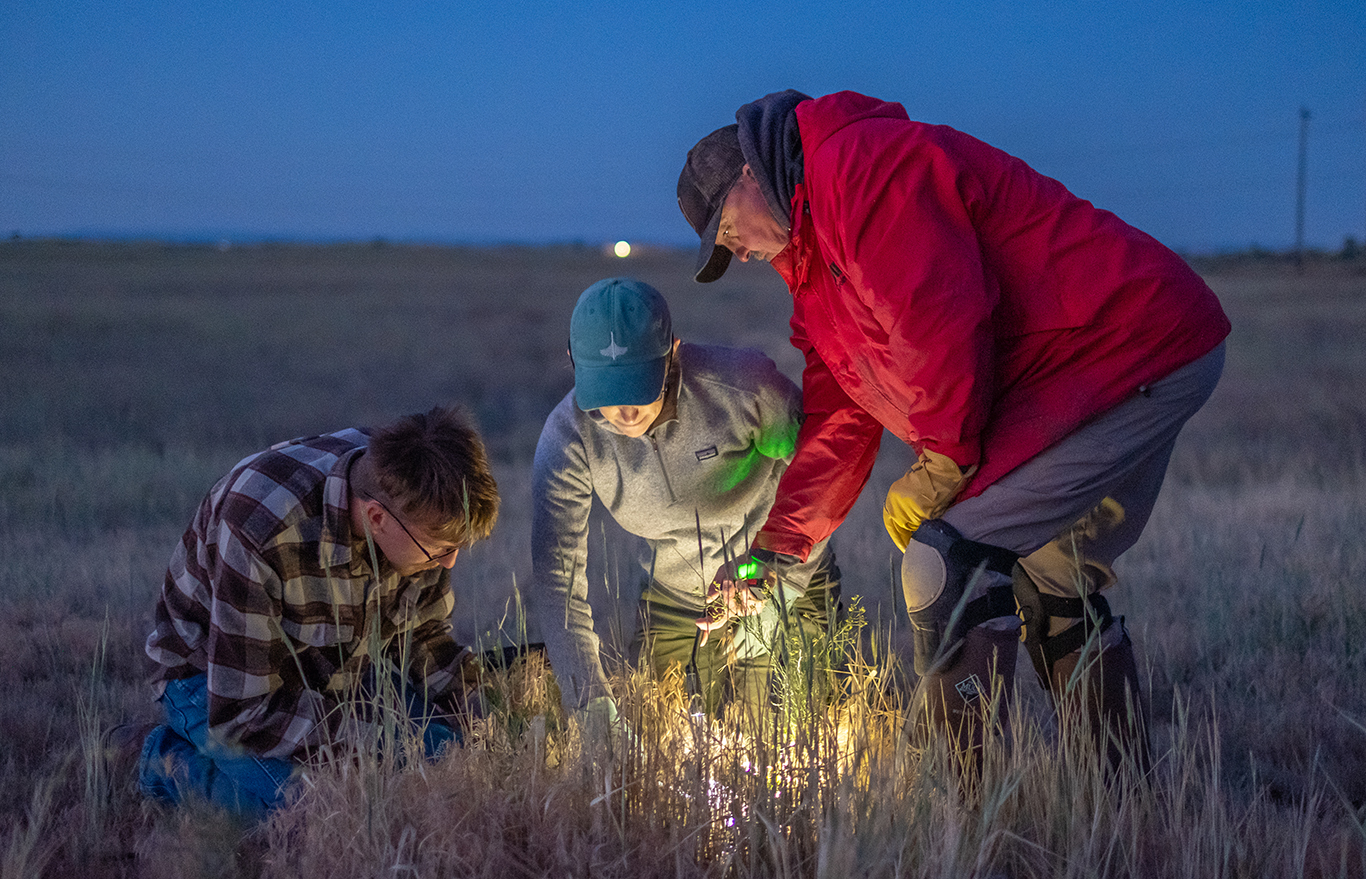
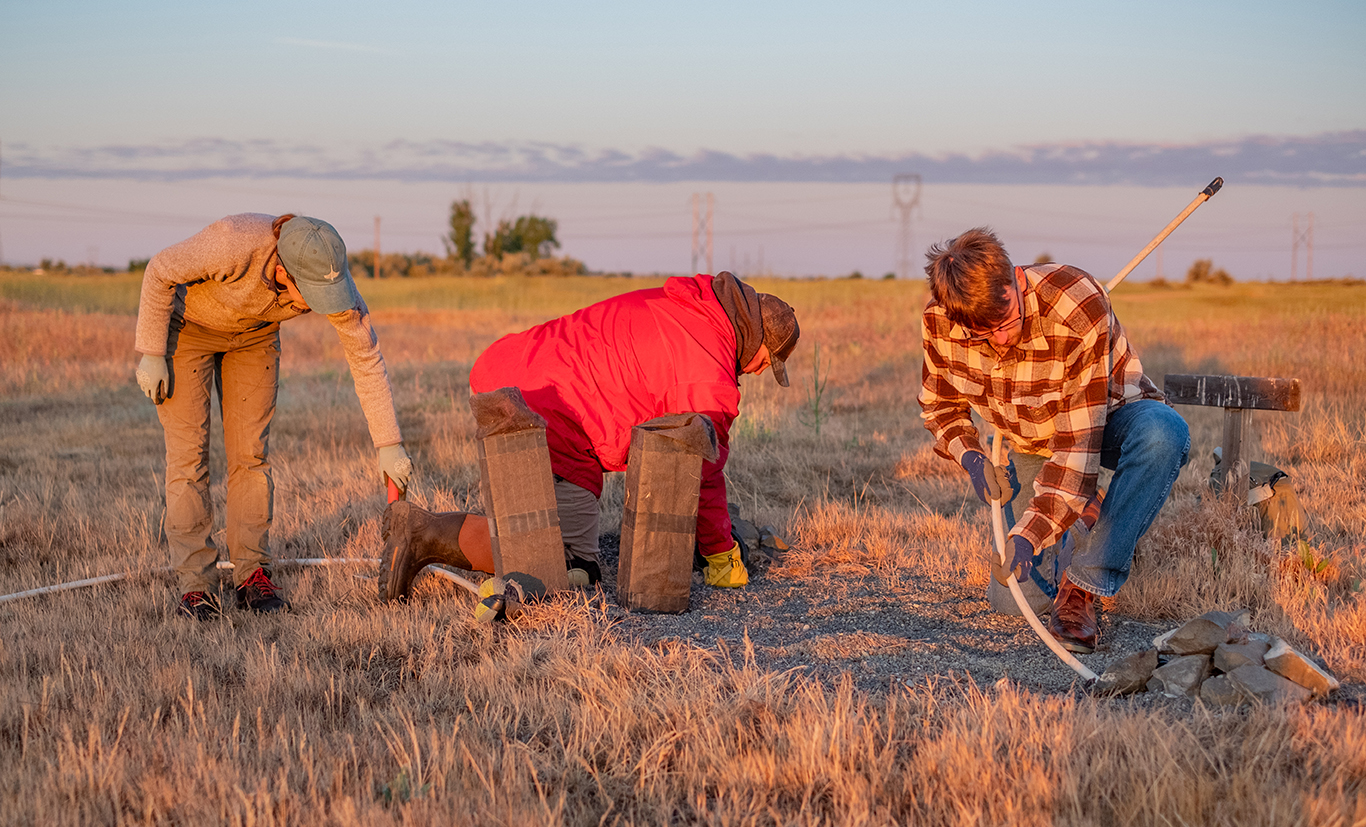
HERMISTON — It is dark when the Wildlife Habitat team arrives at Wanaket Wildlife Area, well before sunrise, to begin setting traps for burrowing owls.
The crew started at about 4:30 a.m. on May 22 at the Wanaket Wildlife Area, moving quietly across the terrain as they set up equipment and checked for signs of activity. The early hours are deliberate and chosen to match the owls’ hunting patterns.
Lindsay Chiono, a wildlife habitat ecologist with the Department of Natural Resources (DNR) of the Confederated Tribes of the Umatilla Indian Reservation (CTUIR), said that when the team arrives at a burrow site, they typically work with two artificial burrows. They open both to determine which one contains the nest. Once they locate the nest, they often find a female owl inside.
They carefully open the burrow, remove the female and record her band number if she already has one. If she is unbanded, they place a band on her and take standard measurements, including her weight, before returning her to the burrow.
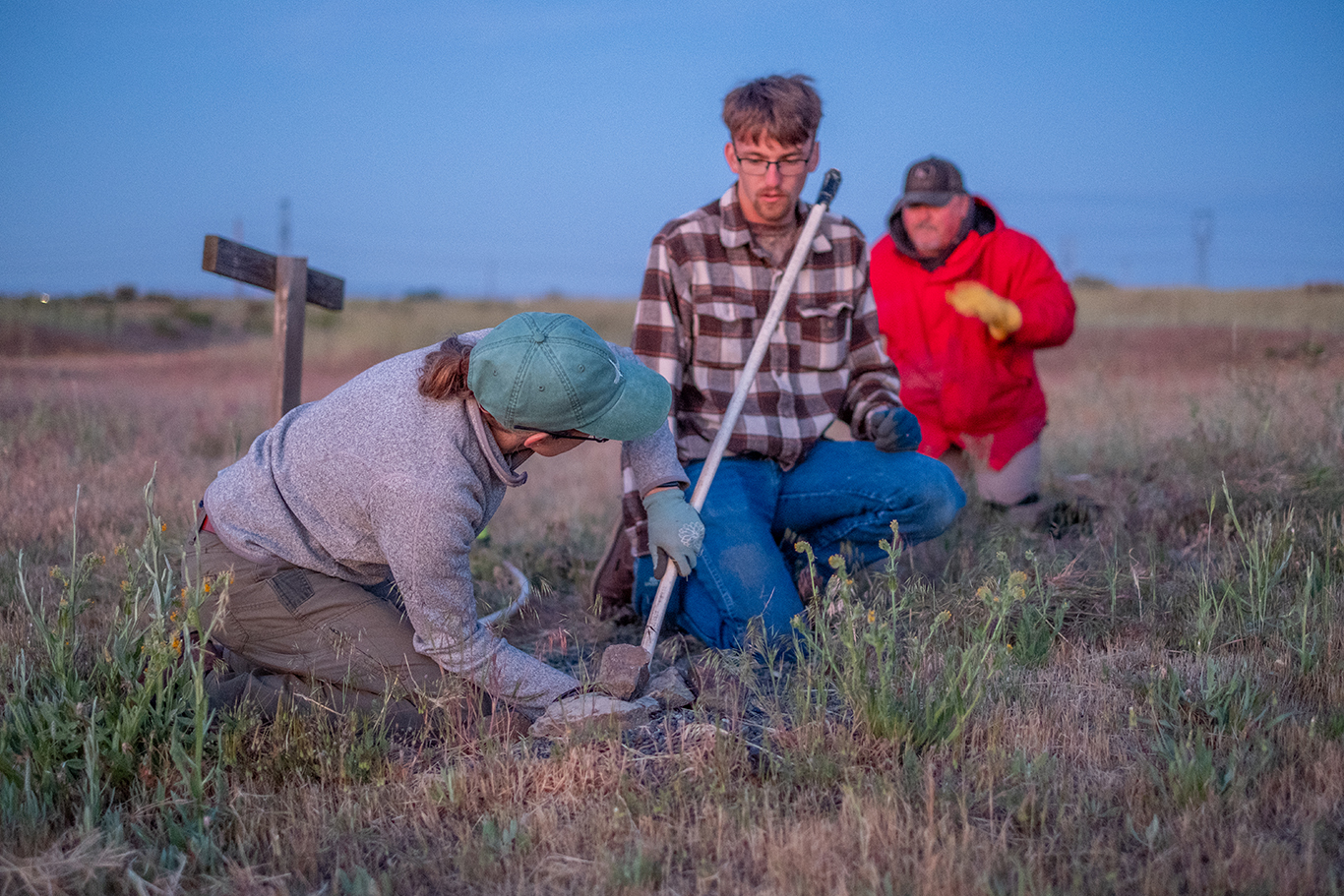
The team then sets a trap outside the burrow for the male or both adults, depending on which birds have already been captured. The trap for the male includes an MP3 player and speaker that plays the call of a young male owl. The recording is intended to provoke a territorial response, leading the adult male to investigate and enter the trap.
After setting the traps, the researchers leave the area for about 60 to 90 minutes to allow the owls time to inspect the setup and become captured. Once they catch the adult male, they repeat the same process — checking his band number or applying a new band if needed, taking measurements and then releasing him.
“We check for the nest, we count how many eggs have been laid and if any chicks have hatched, then we will figure out how old they are,” Chinono said. “And the reason we do that is we want to come back when the chicks are about 21 days of age to band the chicks.”
She noted that researchers wait until that stage because chick mortality is fairly high, around 50%. Banding too early risks placing bands on chicks that may not survive.
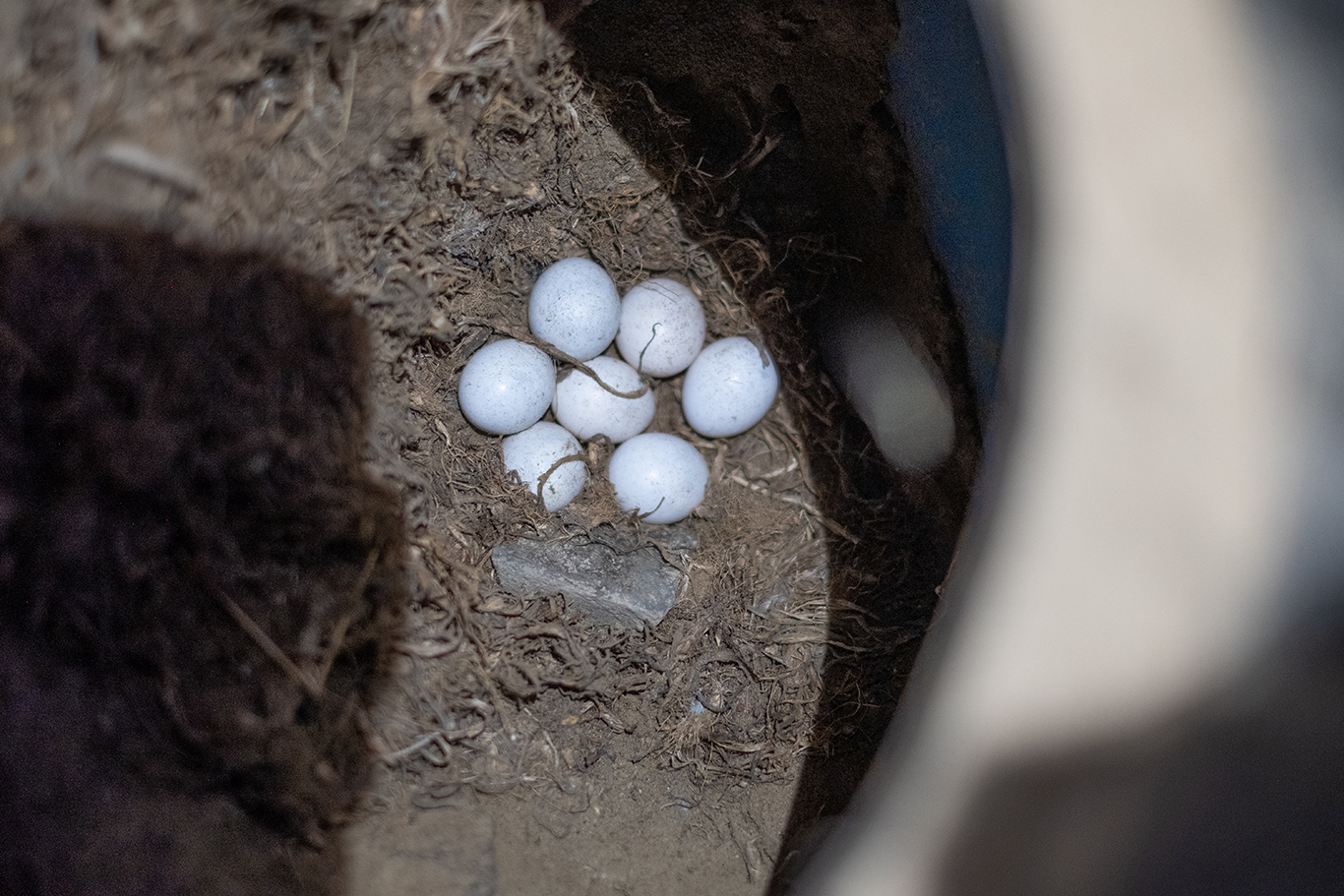
At about 21 days, the chicks are much closer to fledging, the stage at which they leave the nest. At that point, the team is more confident that the bands will remain on birds that survive to adulthood.
Chiono worked alongside Rich Scheele, a wildlife biologist with the DNR of the CTUIR, and was joined this summer by Gabriel Watson, a student of Walla Walla Community College, who participated in a seasonal fellowship with the team.
Watson said conserving local burrowing owl populations is important for expanding habitat opportunities for the species. He noted that his favorite part of the project has been handling the owls and observing them up close. He said he has especially enjoyed seeing the birds in the field, including several chicks this season.
The trio worked through sunrise, setting traps and once all traps were set and mapped, the team hiked across the area to check each one. As the sun rose, temperatures increased across the Columbia Plateau habitat.
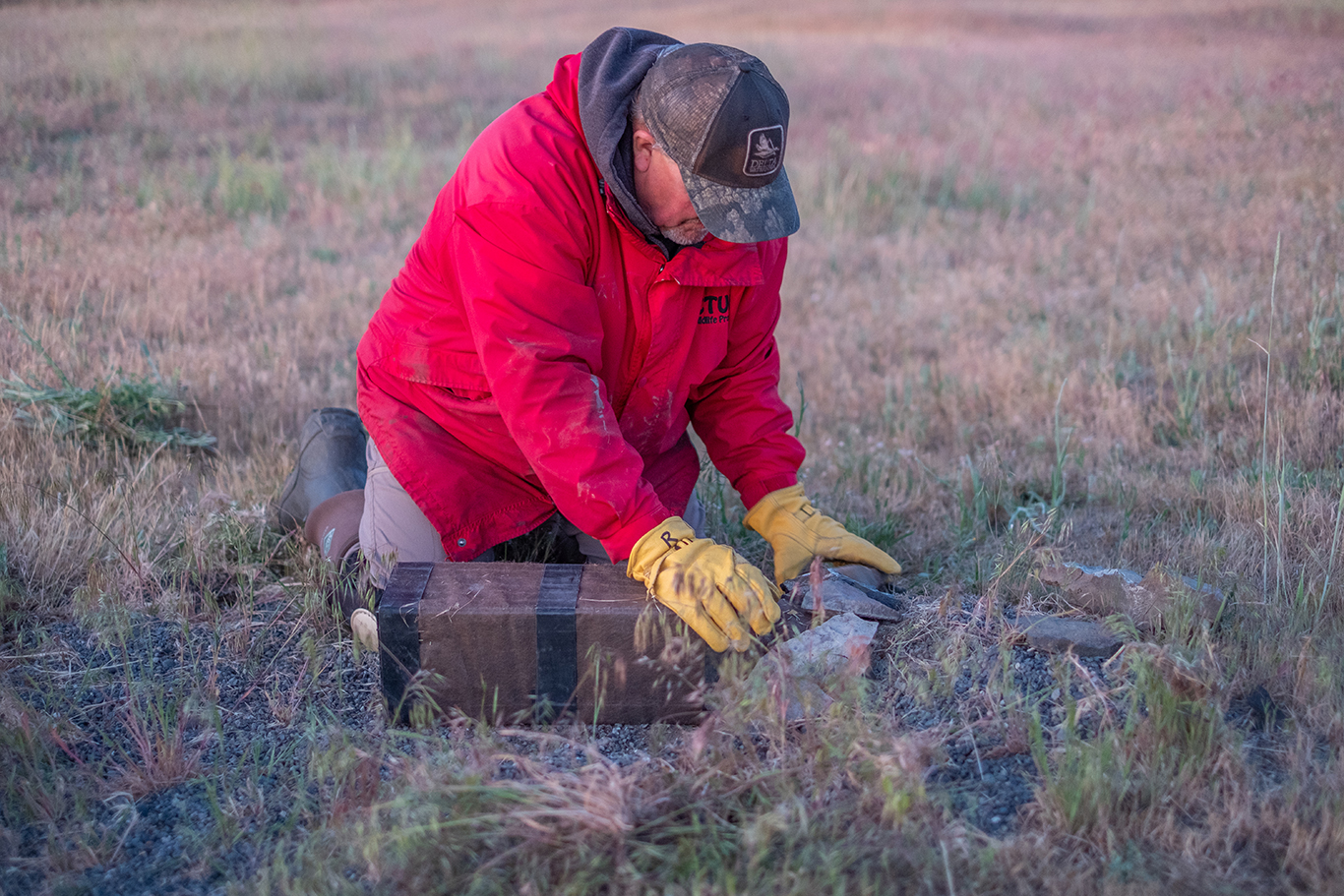
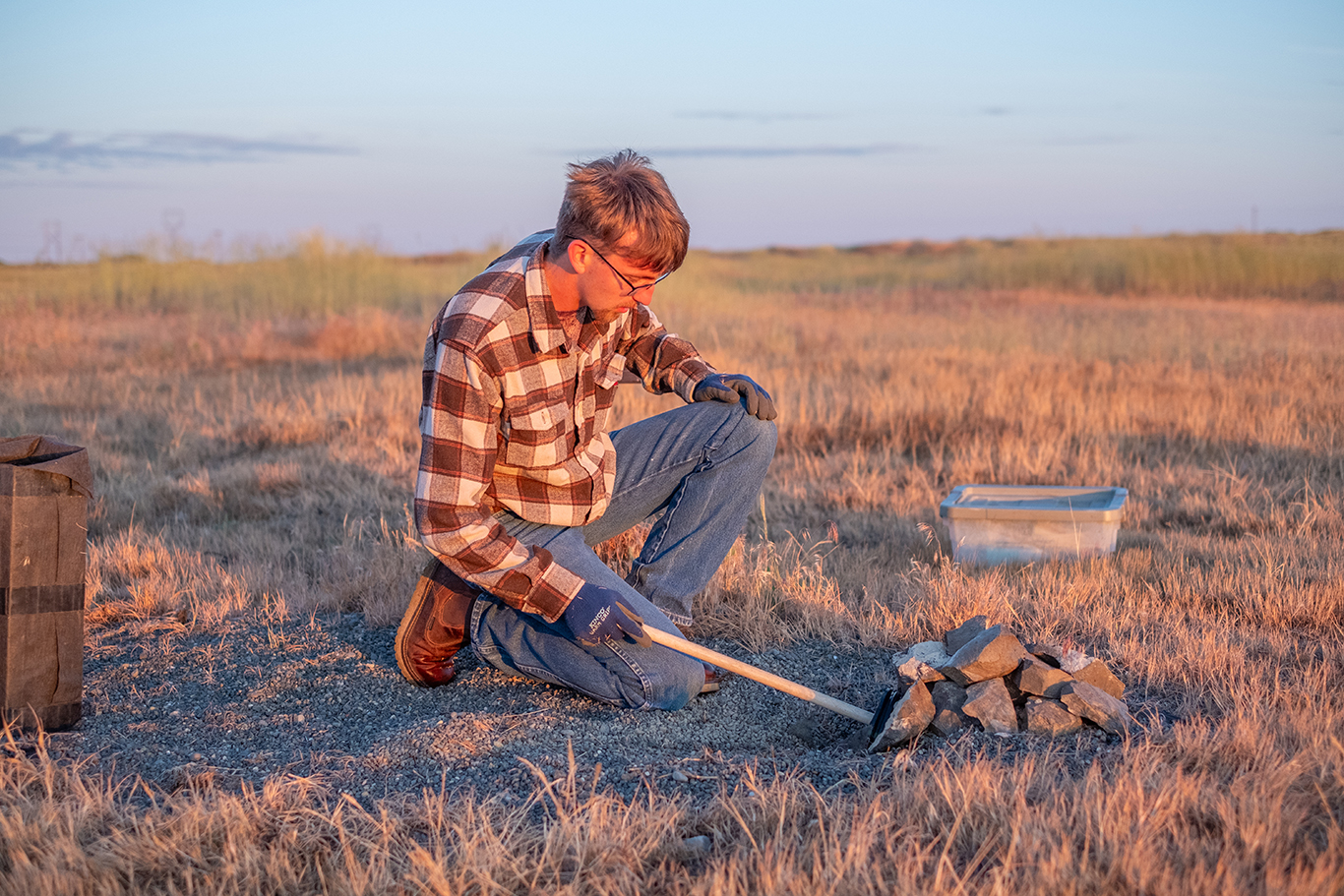
The CTUIR manages the Wanaket Wildlife Area to protect and enhance wildlife habitat. The area includes over 2,700 acres of upland, wetland and aquatic habitats that support many important natural and cultural resources.
With support from David Johnson, director of the Global Owl Project, who previously built the burrow network at the former Umatilla Chemical Depot, the DNR Wildlife Program established a network of 20 artificial burrow sites at Wanaket Wildlife Area.
Each site contains two burrows, designed to meet the burrowing owls’ nesting and storage needs. In a typical setup, the owls nest in one burrow while the male uses the second to cache food.
The first site was constructed in 2009, with additional burrows installed incrementally between 2010 and 2023.
Chiono said it took years for the owls to locate and begin using the system and Wanaket did not record its first nesting activity until 2018. That initial success included one breeding pair and one successful nest.
What followed was five years with no recorded nest, but in recent years, occupancy has begun to slowly climb.
According to DNR, by 2024, a single breeding pair returned and successfully nested. In 2025, activity increased to three breeding pairs, all of which produced successful nests.
Now, with 2026 marking the third consecutive year of active nesting, biologists are seeing continued growth in occupancy since 2024. The trend has renewed cautious optimism among wildlife staff that the habitat improvements are beginning to take hold more consistently across the site.
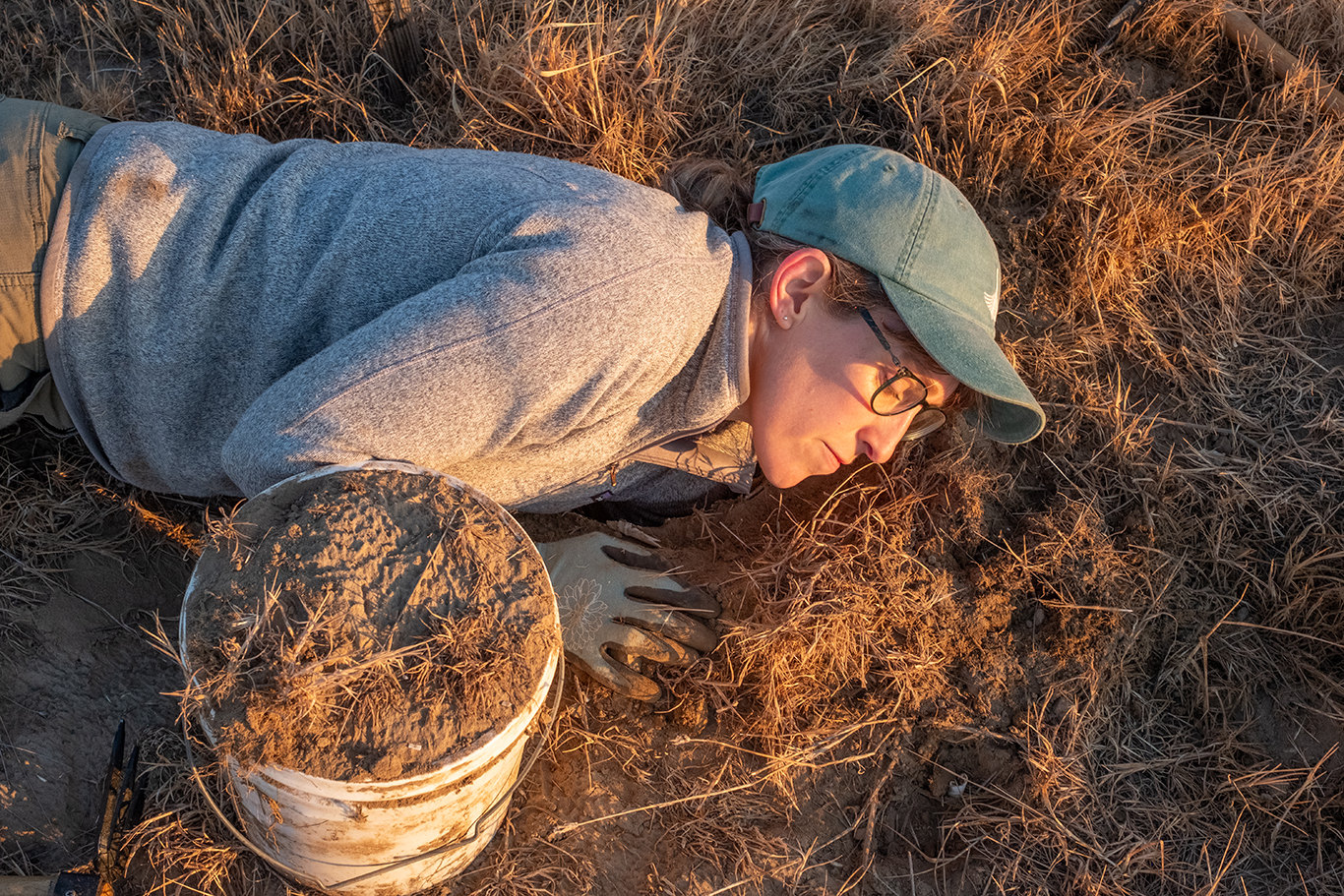
The team checked 14 nest sites and set traps at two locations. At both of those sites, they found eggs—seven to eight in each nest—confirming two active nests.
“Means things are more or less holding steady,” she said. “We had hoped that things were increasing from last year, so we hoped for more like four nests,” she said.
She said the goal is for steady or gradual growth in nesting activity over time, rather than decline. Active nests in previously used sites are a positive sign, she added, suggesting site fidelity among adult owls or their offspring.
Chiono said the projects, including work at the Umatilla Chemical Depot, began because the burrowing owl is not listed as threatened or endangered but is still considered a species of concern due to declining populations. The artificial burrow structures serve as a short-term measure while longer-term habitat issues are addressed.
“Structures are kind of a stopgap measure until we can make larger-scale progress on the real problems facing burrowing owls, which are habitat loss and loss of prey population. These artificial burrows, they work, they demonstrate effective solutions, but they are high maintenance,” she said.
The approach is not a permanent solution to broader population declines but still provides meaningful support, she added.
“It’s not gonna be a practical solution to the larger-scale problem. But it helps us for now,” Chiono said.
She noted that conservation work on burrowing owls is more feasible than efforts for some other grassland species that depend on shrinking habitats such as sagebrush ecosystems.
“There are several grassland and sagebrush-dependent bird species that are sometimes found at Wanquet that are much harder to help because they depend on sagebrush cover, and we have so many fires these days that it’s hard to stop the tide of sagebrush loss,” she said.
She said those broader ecological pressures are difficult to manage directly, while the burrowing owl project remains a more practical intervention. “So the things that are facing those species are a little harder to put our hands around. This is something we know we can do,” she said.