CTUIR removes a century-old water line to restore Coonskin Creek and reopen habitat for steelhead
MISSION — The pipeline carried water, just not for the people whose land it crossed. Now crews are removing the abandoned line from beneath the Umatilla Indian Reservation (UIR), more than two decades after it stopped supplying Pendleton’s municipal water system and became a barrier to fish passage.
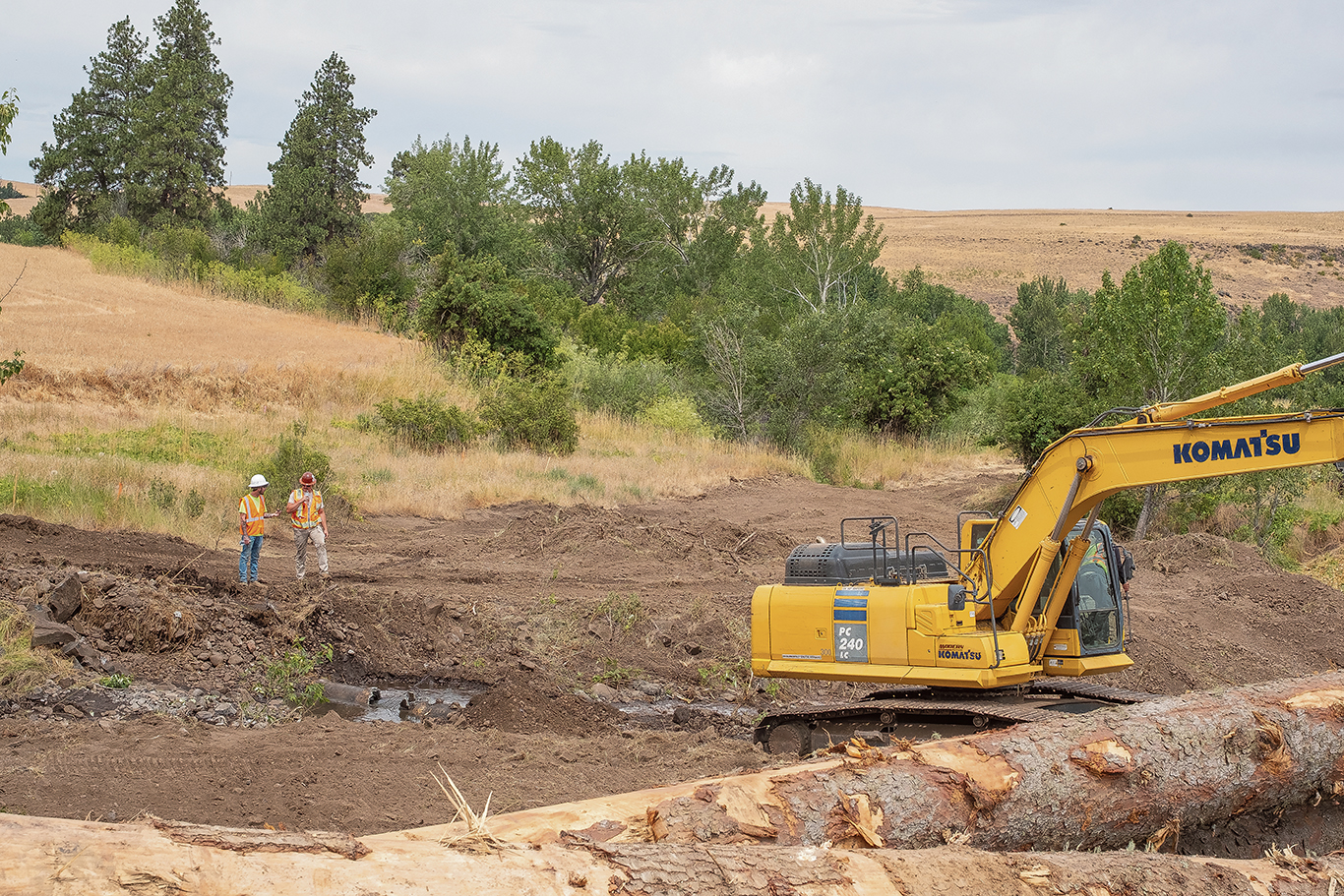
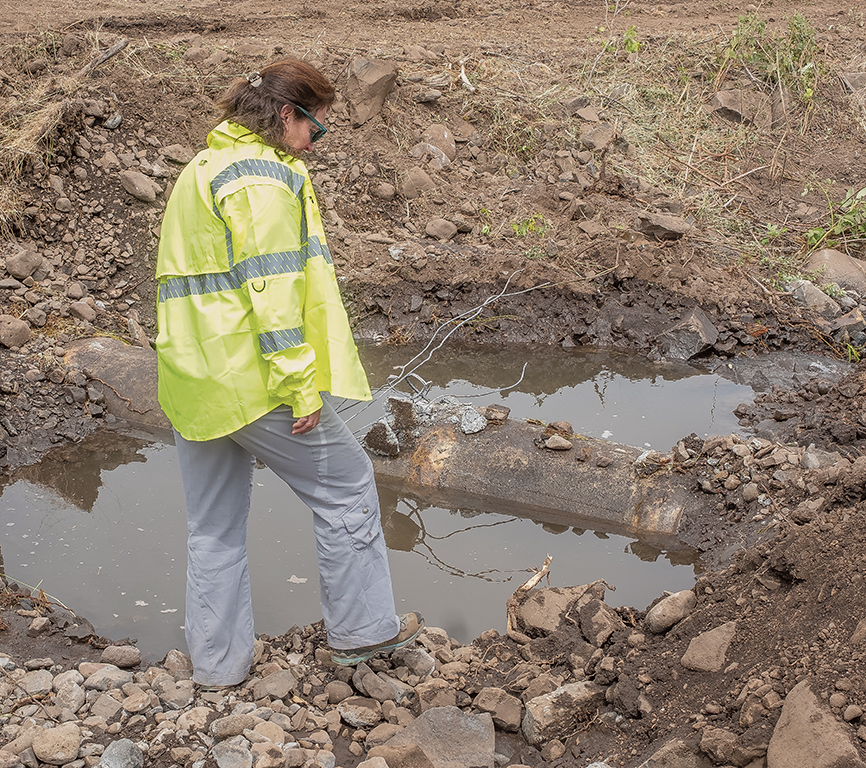
Workers unearthed the pipeline on July 7 as part of the Confederated Tribes of the Umatilla Indian Reservation’s (CTUIR) Coonskin Creek Fish Passage Project, an effort to restore the stream and reopen habitat for steelhead and other native fish.
“We’re removing the sections that impact the creek,” Dana Sheedy, a fish passage specialist with the CTUIR Department of Natural Resources, said. “The hope is that we restore those sections as best we can and start to let the rivers heal and the fish come back into these systems in a healthier manner.”
The pipeline crosses several creeks between Thornhollow and Mission, where it and related infrastructure have blocked fish passage to critical steelhead habitat. About 50 yards upstream, crews are replacing the old pipeline beneath Cayuse Road.
The project is funded through the Bonneville Power Administration’s fish and wildlife mitigation program.
Installed in 1914, the pipeline carried spring water from the upper Umatilla River to Pendleton for nearly 90 years. The system drew water from high-quality springs on tribally owned allotments near Thornhollow and crossed about 19 miles of the UIR before reaching the city.
Although the line crossed UIR land for miles, it did not supply water to UIR residents.
Pendleton retired the pipeline in 2003 after developing a new municipal water source. The line remained buried across tribal lands, where it has become an obstacle for fish passage.
Sheedy said the system originated near the springs at Thornhollow, where groundwater naturally rises through gravel deposits along the upper Umatilla River.
The abandoned pipeline and a concrete apron built to protect it from erosion altered the creek’s channel, increased water velocity and contributed to bank erosion and fine sediment entering the stream, she said.
The crossing, along with nearby grade-control structures, blocked threatened Mid-Columbia summer steelhead and other native fish from reaching upstream spawning and rearing habitat.
Sheedy said the restoration project will remove four barriers that have long hindered fish migration.
“All four barriers are located within a relatively short stretch of stream,” Sheedy said. “Two of them were grade-control log weirs below a water pipeline that was covered by a concrete apron for erosion control. Together, those structures created stream conditions with water that was too shallow and moving too fast for migrating fish to pass.”
More than a fish passage project
For the CTUIR, however, restoring fish passage is about more than engineering.
“Salmon and steelhead are First Foods to the CTUIR community,” Sheedy said. “This project is going to reconnect Coonskin Creek to its headwaters, where high-quality habitat remains just upstream of Cayuse Road.”
Although portions of the creek flow underground through the project area and surface water is typically present for only about six months each year, Sheedy said fish still need access to the perennial reaches upstream.
“We want fish to migrate upstream through the site and reach those higher-quality areas,” she said. “We also want the young fish they produce to be able to grow and stay healthy. The larger and healthier they become before migrating downstream, the better their chances of surviving.”
Restoring connectivity is especially important as climate change affects water temperatures and stream conditions throughout the region, Sheedy noted.
As summer temperatures rise, portions of the lower Umatilla River can become increasingly difficult for salmonids to survive and rear. By reconnecting Coonskin Creek to upstream habitat fed by springs from the Blue Mountains, fish will have access to cooler waters and a wider range of conditions.
“Connectivity becomes really important in order to continue having fish move through these systems and access areas that are going to boost their health better,” Sheedy said.
As climate conditions change, access to cooler water is becoming increasingly important for salmon and steelhead survival, Sheedy said.
Salmonids begin experiencing physiological stress when temperatures rise, producing heat shock proteins that help their bodies cope with the effects of excessive heat. Sheedy said that energy could otherwise be used for growth, migration and survival.
“We really want them to be able to shelter themselves from that,” she said. “As climate may increase or is predicted to increase these temperatures even more, these areas that have colder and more hospitable water temperatures become very important.”
The abandoned pipeline will not remain in place once the restoration project is complete. Crews will remove the section crossing Coonskin Creek and cap the remaining infrastructure under an agreement between the CTUIR and Pendleton, Sheedy said.
Crews will also reshape the creek channel to create conditions that better support fish movement and habitat.
“We’re going to create a better aligned channel there,” she said. “There’s kind of what I call a dogleg, another turn that hit toward a bank to the south and then made a hard left.”
The restored channel will follow a more natural pattern, with gentle bends designed to slow water and create habitat features fish can use during migration.
“We’re going to create a more natural stream channel on the downstream side where the stream will have some meanders,” Sheedy said. “This will create some scour pools that the fish can utilize for resting, adult migration passage and other times when they’re needing it.”
Crews will also add woody structures to help stabilize the channel and create additional habitat. At the connection point between the restored channel and the existing stream, the project will create a backwater area, a slower-moving section of water that can provide important habitat for young fish.
“That will kind of create a little side pond that’s really good for rearing fish and habitat in general,” Sheedy said.
As part of the restoration, crews will fill the former channel and reestablish native vegetation along the creek. Replacing the artificial crossing with a natural stream bed will allow steelhead and other native fish to move upstream without encountering the barriers created by the old infrastructure.
“We pretty much have a natural stream bottom,” Sheedy said. “The fish will be able to move upstream and downstream freely in a naturalized habitat.”
Undersized culverts can create conditions that are nearly impossible for migrating fish to overcome, she noted. When water is forced through narrow crossings, it can increase velocities beyond what fish can sustain.
“With these undersized culverts and the distances of 40, sometimes 50 feet and high velocities, the fish can’t burst speed fast enough to get through and past that obstruction,” she said.
The restored channel will also include features designed to help fish conserve energy as they move through the stream.
“We’ll have a low-flow channel, so we’ll have a deep enough section to be able to swim through,” Sheedy said. “There’ll be roughness and rocks and then potentially within that roughness and rocks, behind a big rock, like a boulder, you have an eddy, and they can kind of duck in and rest there.”
Those small features can make a significant difference for migrating fish. Instead of facing a uniform rush of water, fish will have areas where they can pause, rest and continue moving through the watershed.
“We’re just excited to be doing these projects on the reservation and excited to be connecting this habitat,” Sheedy said. “The streams produce fish for us.”
The CTUIR is continuing similar work throughout the Mission tributaries, replacing aging culverts and removing sections of abandoned pipelines that limit fish passage.
“We’re just excited to be doing these projects on the reservation and excited to be connecting this habitat,” Sheedy said. “The streams produce fish for us and we are moving across the pipeline with sequential projects to replace corroding culverts and remove sections of pipeline so we can continue to improve access in this reach from Mission Creek to the Coonskin area.”