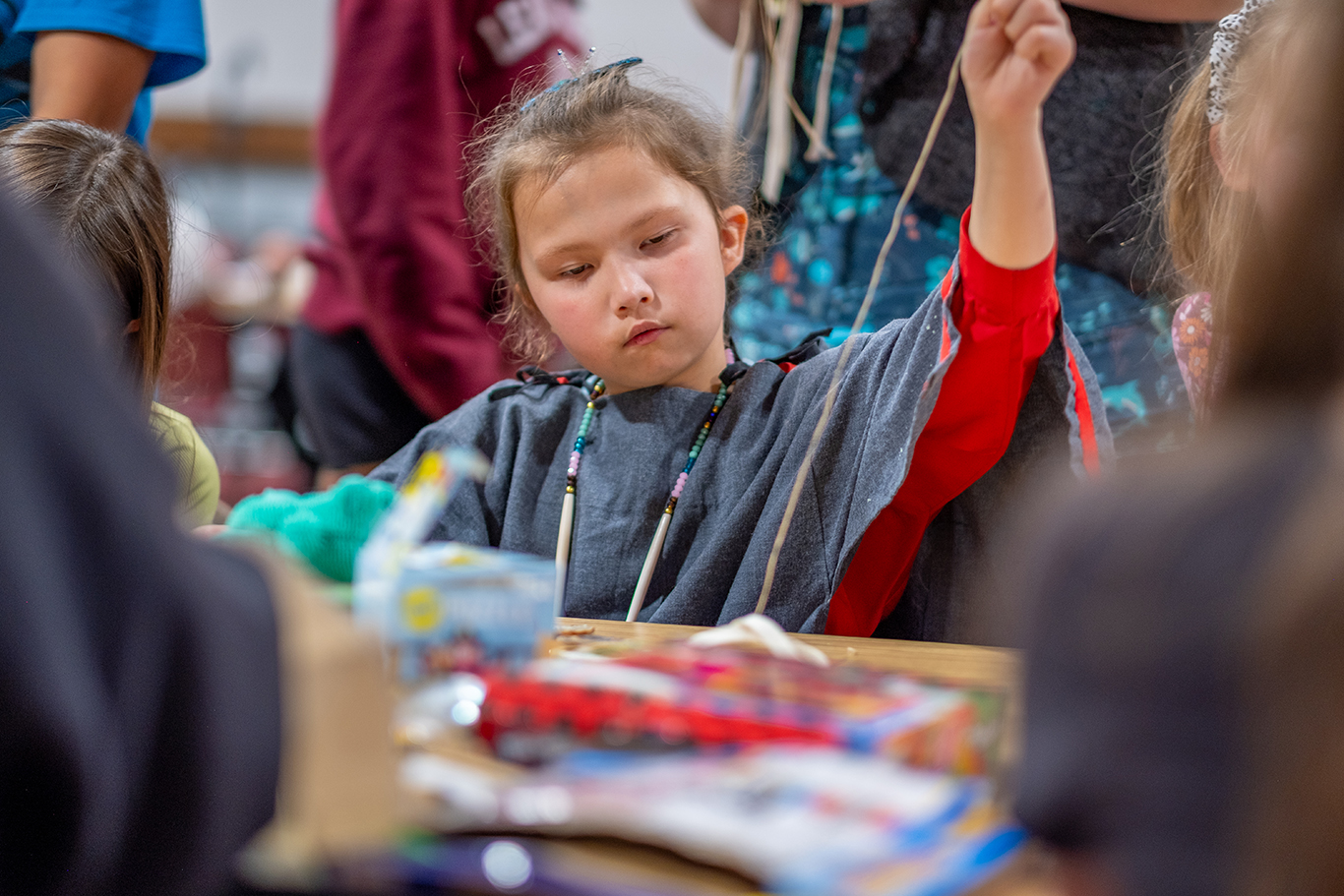
MISSION — Remembering a single word or phrase can help preserve a language was the message that reflected the evening, as community members gathered for Culture Night at the Mission Longhouse to share crafts and learn the Umatilla language.
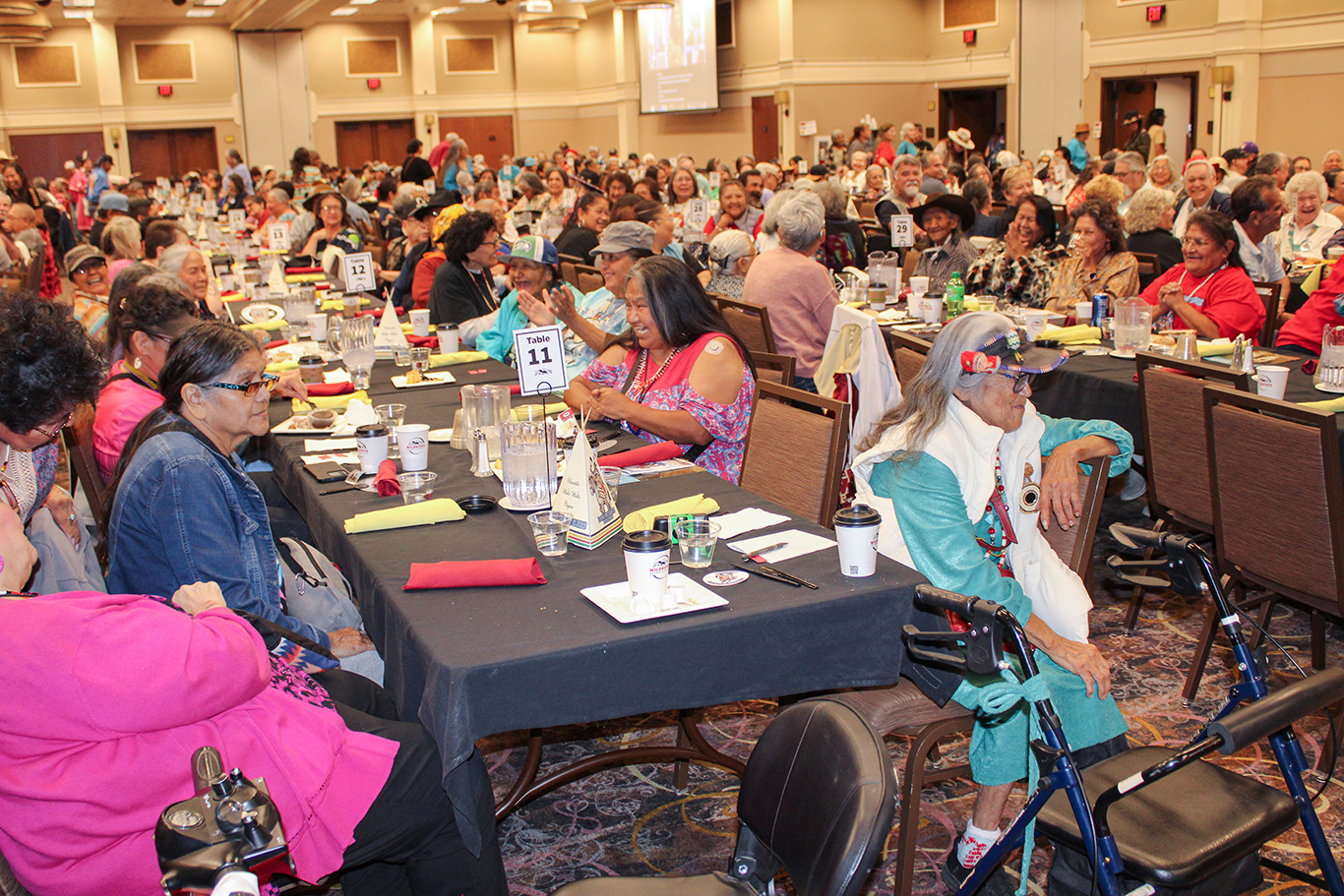
Community members of the Confederated Tribes of the Umatilla Indian Reservation (CTUIR) gathered on March 18 at the Mission Longhouse for a Culture Night dedicated to language.
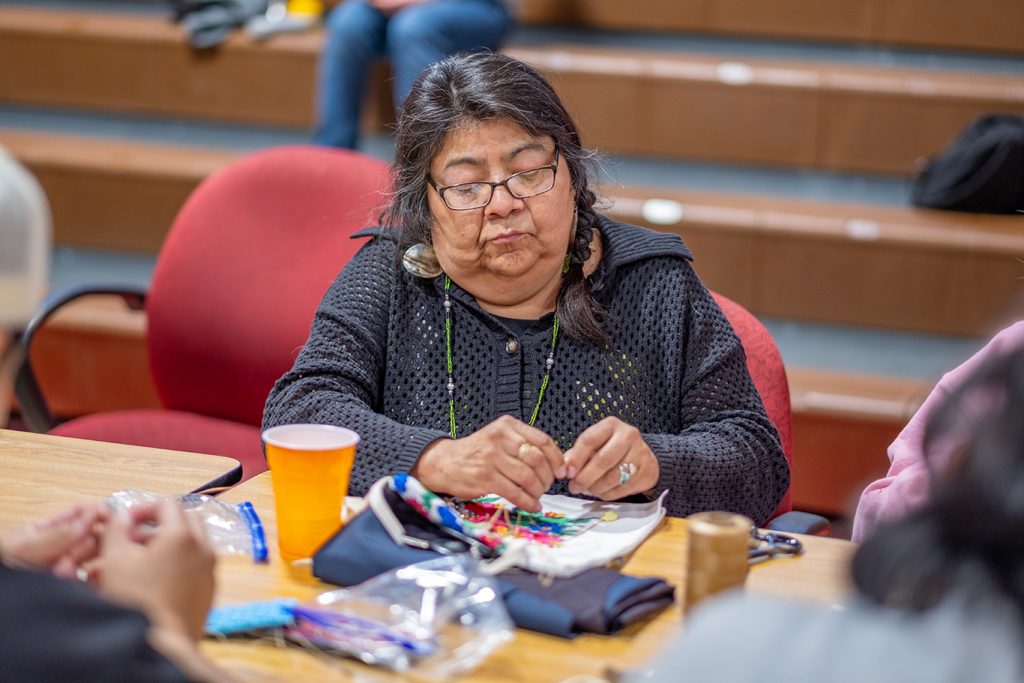
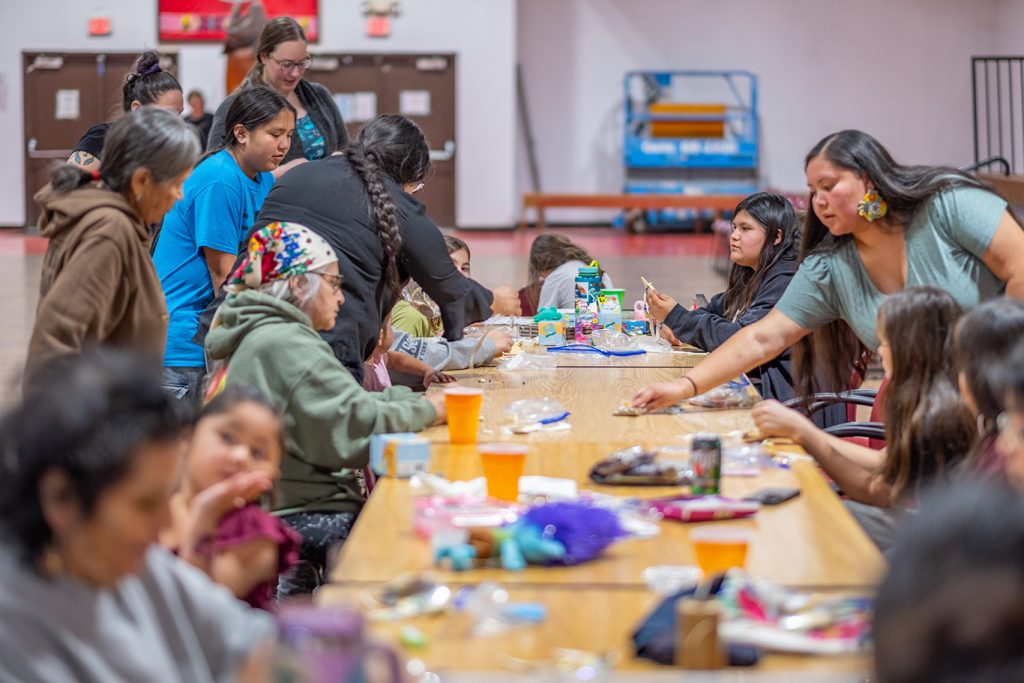
About 30 family members and friends joined the evening’s activities, with elders and youth sitting side by side, speaking the Umatilla language and crafting pieces for their regalia. The event blended learning and connection, as participants passed down cultural knowledge through both conversation and craft.
Keeyana Mata, family engagement specialist for the CTUIR, said the evening aims to emphasize the importance of language to younger generations.
“We wanted to use this time so they could learn words and phrases while doing something hands-on,” she said. “The language program also brought materials to share during the session.”
Mata said combining activities with language instruction helps reach children who may not otherwise engage.
“It’s a good way to bring the language in, especially for kids who don’t always get that exposure,” she said.
Mata said the program is rooted in cultural preservation, focusing on equipping youth and families with meaningful tools and connections.
“Our biggest thing is that cultural preservation piece,” she said. “We’re giving our participants — our kids and families — tools to be productive, to learn and to understand who we are as a people.”
She said each Culture Night is designed to reflect those values, blending tradition, language and community to create a space where culture is not only taught but lived and shared.
The craft stations were split into two sections: one featured dance bell straps, the other shell disk hair ties. Each table offered instructions and tools for participants to complete their crafts. Elders at each station guided youth, helping them build skills and techniques.
CTUIR member Fred Hill taught children how to make bell straps and the proper way to punch holes into the leather with a pair of revolving punch pliers. Hill said the hands-on craft gives boys a chance to create something of their own while connecting to tradition.
The materials and tools used today are more accessible, Hill noted, but the meaning behind the work remains rooted in tradition. He reflected on how past generations created regalia using natural materials such as deer, buffalo and other hides to enhance their dancing and connect with the rhythm of songs and drums.
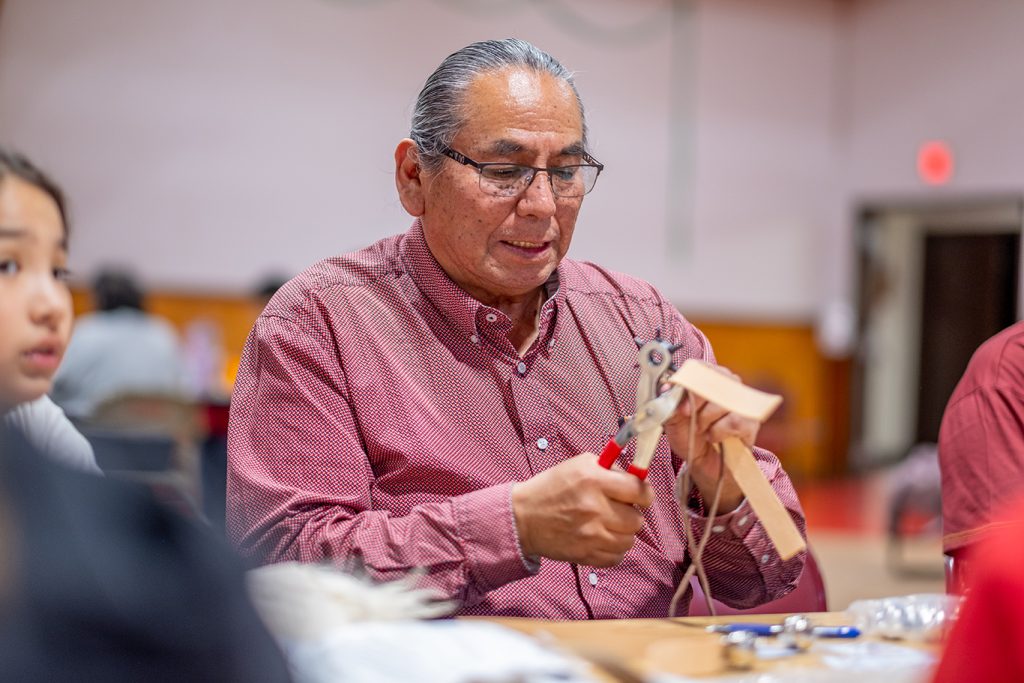
Hill, a dancer himself, said the sound of the bells was once a defining part of traditional dances, with groups of men moving in unison to create a powerful, layered rhythm.
“That’s kind of rare. Nobody does that anymore,” Hill said. “Not like how it used to be, when I remember the men would do that with all their big-sounding bells. Maybe that’s something we can eventually teach our young people, for the sake of memory and honoring their dancers.”
Hill said crafting is closely tied to language and cultural knowledge, which were historically passed down together before the Tribes had the English language.
“I remember when we were kids, we used different animal hides — bear, buffalo, cougar — and we learned how to take care of them,” Hill said. “But a lot of it was also for their own spiritual essence, making connections. That was their way of free communication before what we use today.”
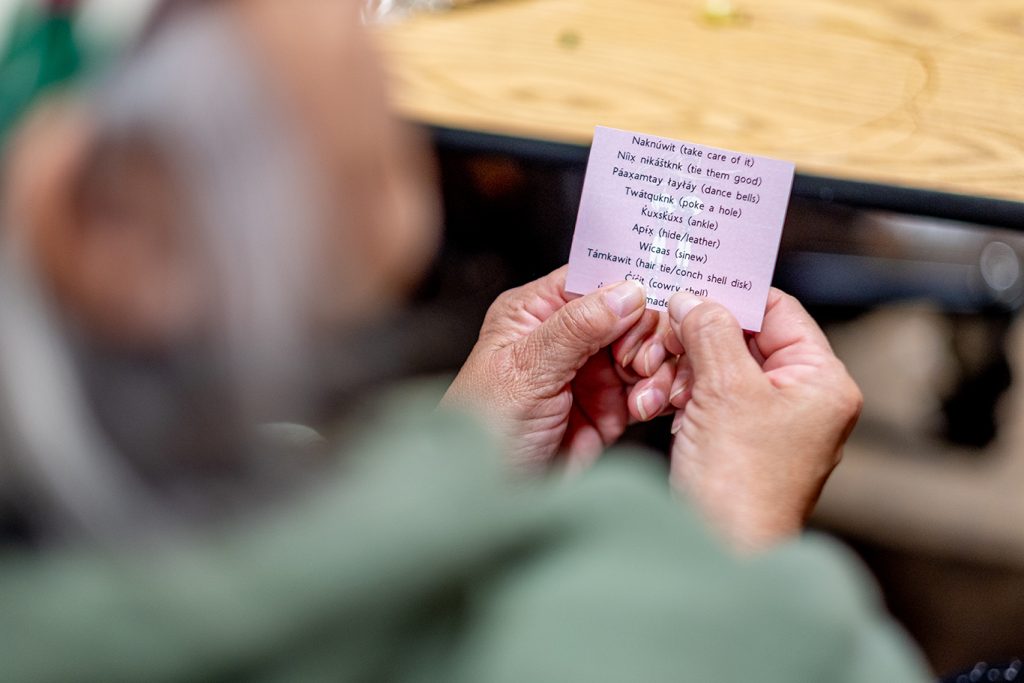
CTUIR member Mildred Quaempts stood before the youth and taught them Umatilla phrases such as twátquknk (“poke a hole”), apɨx (“leather” or “hide”), támakawit (“hair tie” or “conch shell disk”) and naknúwít (“take care of it”), among others. The children followed along with cards that helped them learn the words alongside Quaempts.
While growing up, Mata recalled being immersed in language learning through her mother’s work in a language program, spending time after school with elders and participating in classes. Now, she sees the same importance for her own daughter, Mavis Mata, especially as their family reconnects with language and culture in a new place.
“I grew up in Warm Springs, and she’s growing up here (Umatilla Indian Reservation), so it’s important for her to learn this dialect,” she said. “They’re sister languages, technically the same, but the words and phrases differ. I’m learning that piece of myself as well.”
Mata said even limited exposure can have a lasting impact on language revitalization.
“Having elders and speakers come in, even once a month, makes an impact,” she said. “Even if it’s just one word or a phrase, they remember it. It helps keep the language alive.”