Annual gathering celebrates deep connection to the land
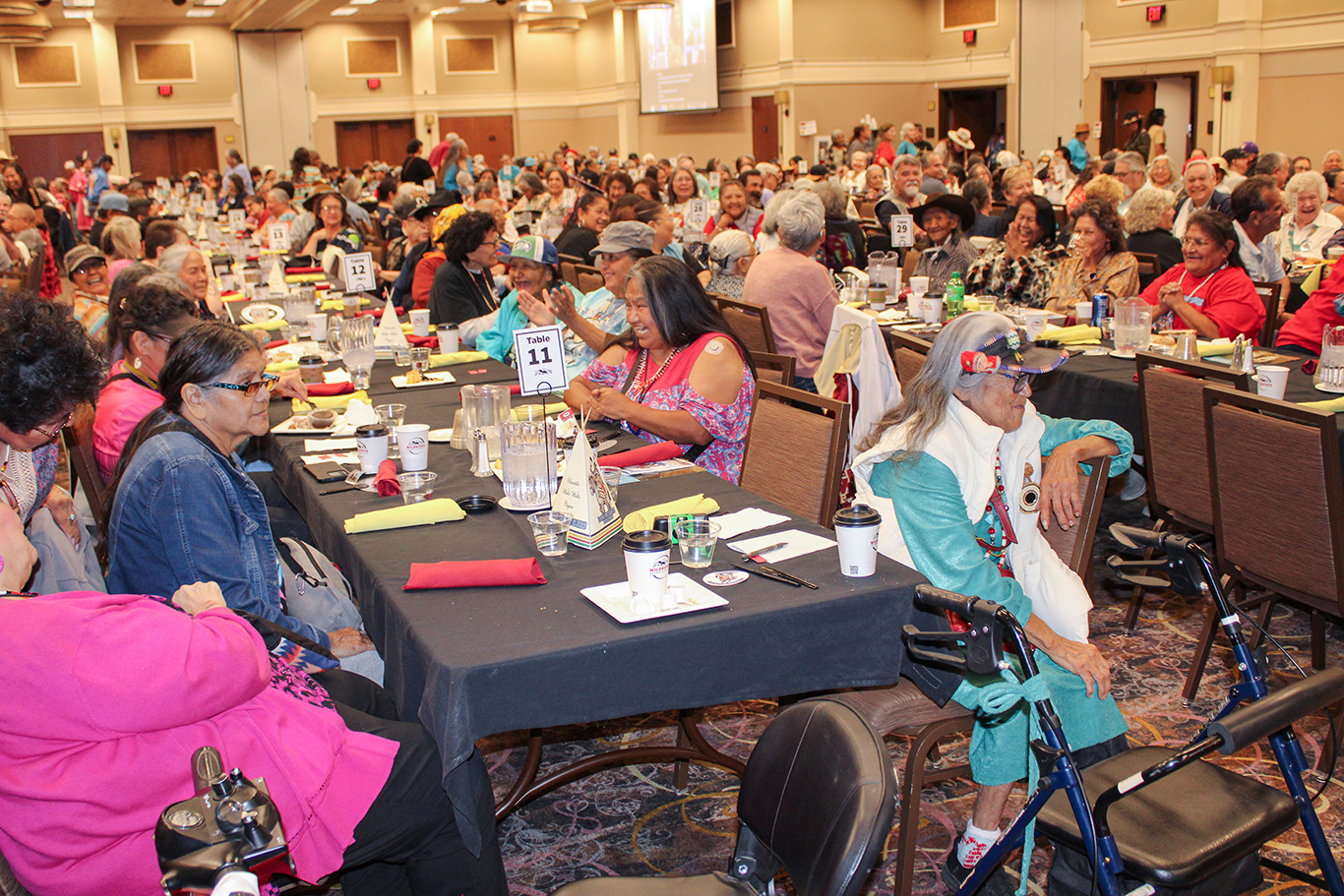
MISSION — Nearly 300 people filled the Mission Longhouse on April 12 as the Confederated Tribes of the Umatilla Indian Reservation (CTUIR) and neighboring tribal communities gathered for the 2026 Nixyawwii Root Feast, a spring tradition centered on honoring the foods that sustain them and reaffirming responsibility to the land.
The gathering focused on traditional foods and seasonal harvesting practices that have long shaped cultural life in the Columbia Plateau region. The roots, which include cous (x̣áwš) and bitterroot (pyax̣í), provide nourishment and reflect a deep connection to the land, gathered in accordance with customary practices and respect for nature.
“When the world was created, the Creator bestowed these gifts for us to care for and in return, they take care of us,” CTUIR member Trinnette Minthorn said. “These are our traditional foods, and we honor them with feasts.”
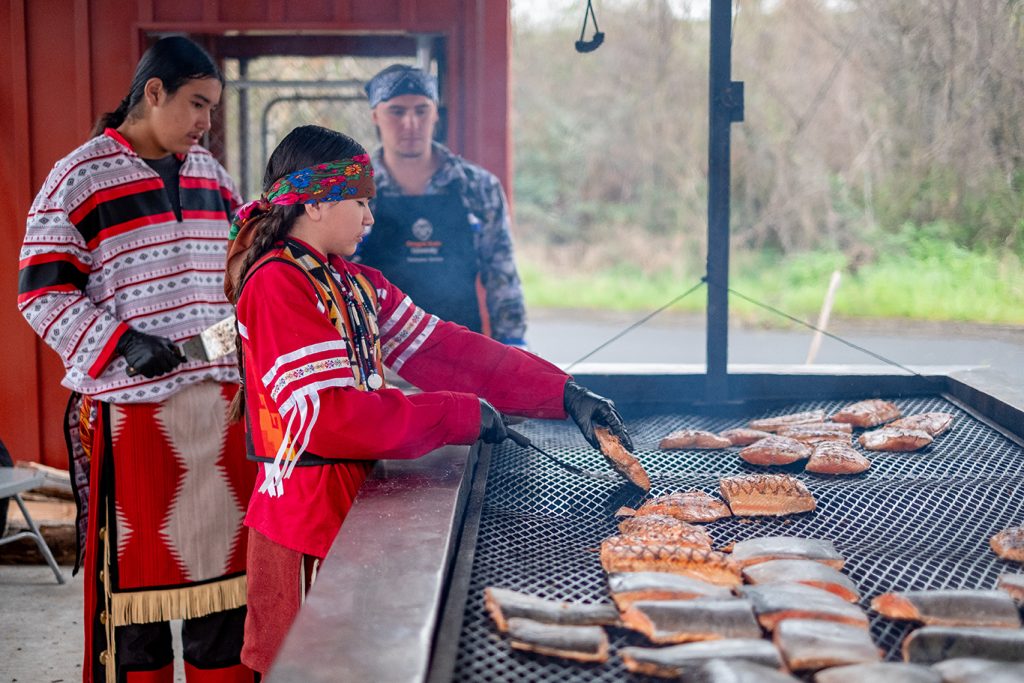
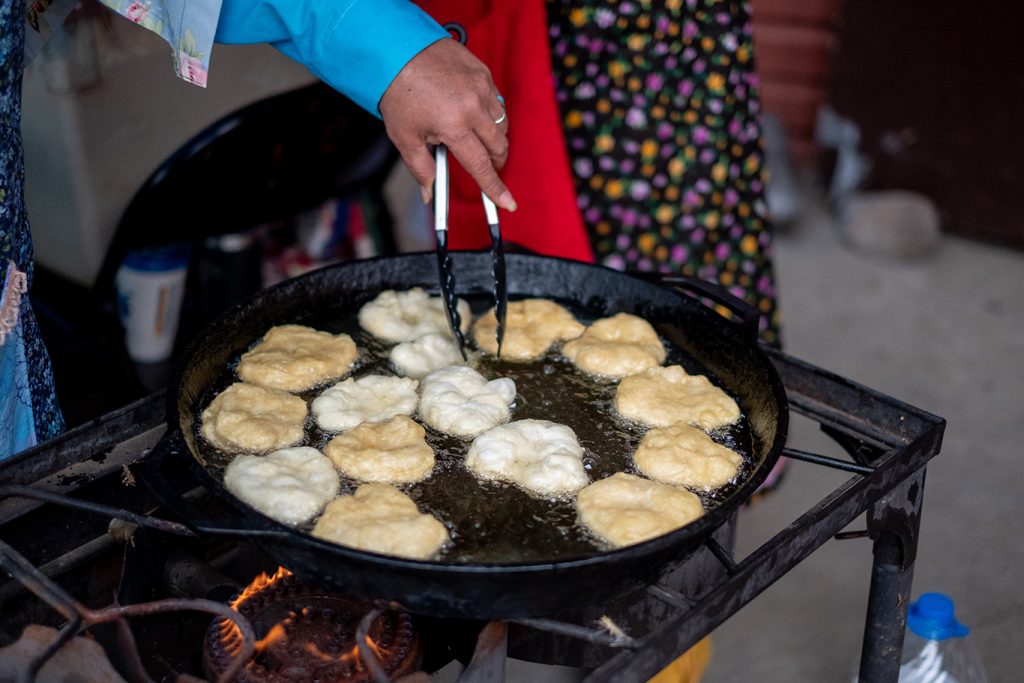
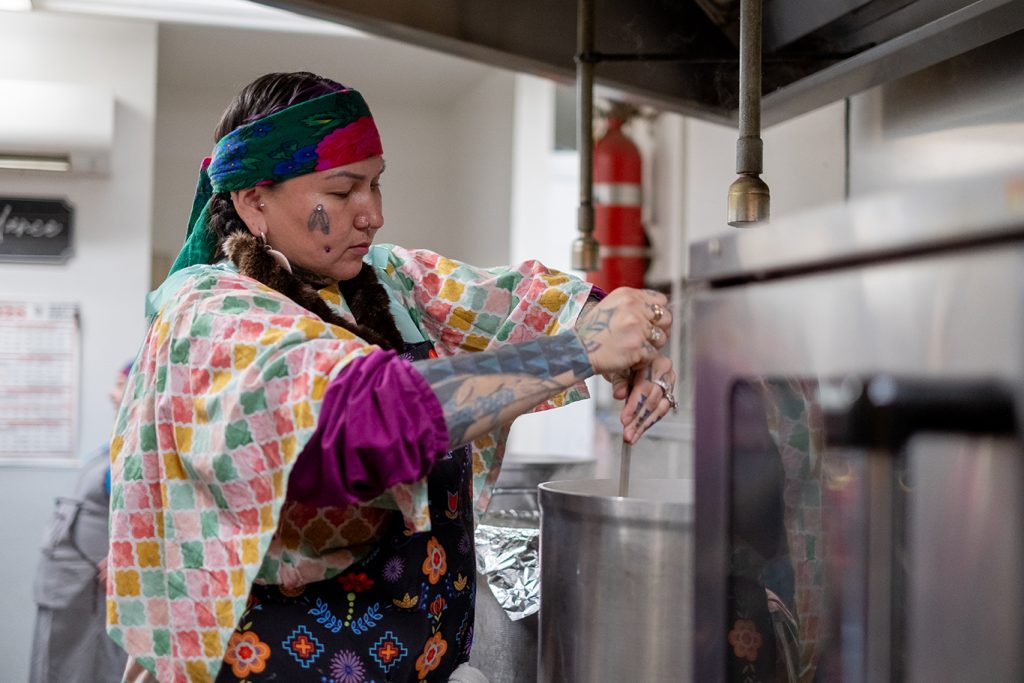
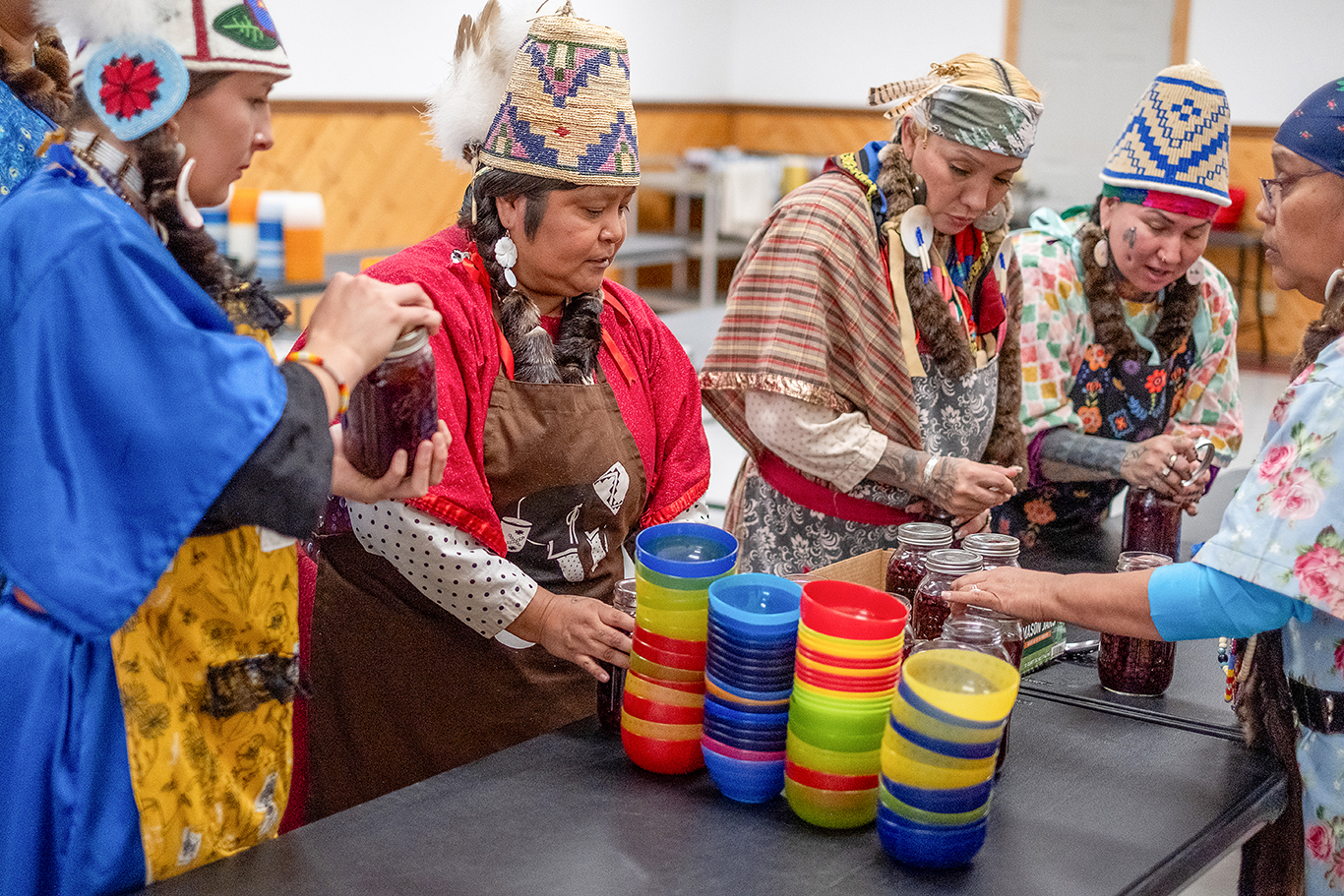
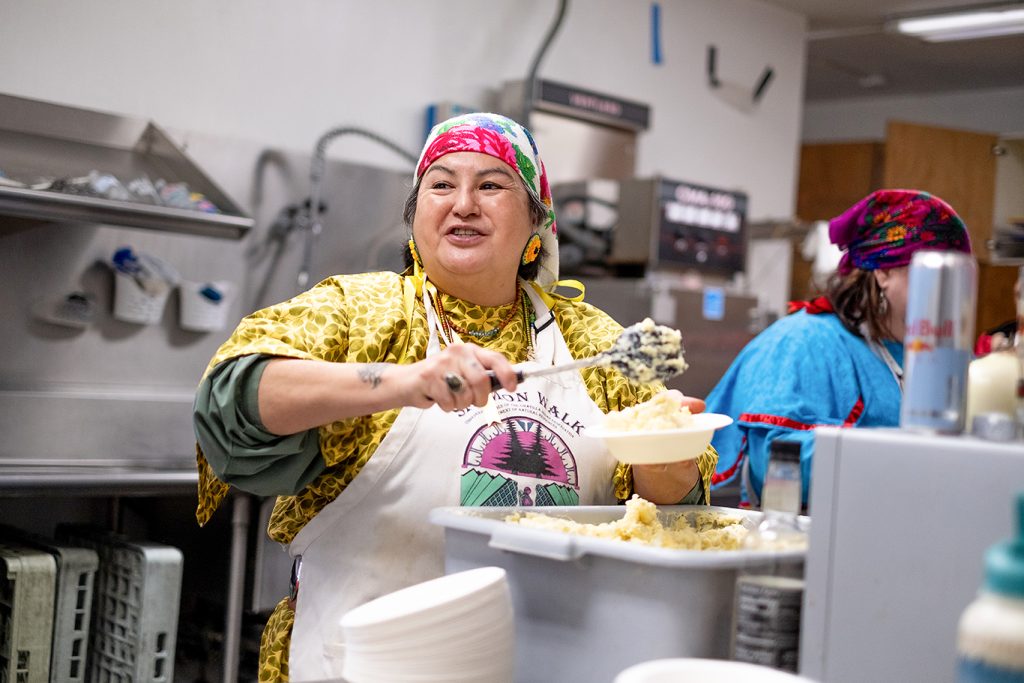
Inside the Longhouse, family and friends took part in the festivities and pitched in with the cooking. Women and children kept the kitchen buzzing as they cooked, prepped and organized. While outside, cooks worked over large frying pans and a tub of proofed dough to sizzle up fry bread, as men and boys nearby grilled fresh elk, salmon and eel.
At the heart of the gathering, participants joined a traditional Washat (or Seven Drum) religious service honoring the “sister” roots and offering thanks to the Creator and Mother Earth for the return of the First Foods – roots, salmon, berries and game.
In the days leading up to the celebration, from Wednesday to Sunday, some of the women and children lodged at the Mission Longhouse and went on digging excursions, harvesting roots in nearby fields from morning until late evening.
“We make a commitment to these foods, and if we take care of them the way we were taught, they will come back to us every year if we fulfill our promise. It’s just a part of who we are.” – CTUIR member Trish McMichael.
Minthorn was among the women who gathered at the Mission Longhouse and stayed there, working from day into night. During that time, she said, participants avoid outside commitments and remain focused on honoring the foods and their purpose of providing for the community.
“I’ve been gathering since I was a little girl,” she said. “I have been staying in the Longhouse during the feast period for about 15 years.”
It takes a collective effort with women and men working together to ensure everything runs smoothly, she added.
“Today’s the last day,” Minthorn said. “We’re all tired, but we’re all working with good hearts and good minds. For me, the root feast is one of the best weeks of my life.”
Another woman who stayed at the Longhouse, CTUIR member LeAnn Alexander, said the gathering was both joyful and labor-intensive. Alexander said participants worked together over several days, from digging on Wednesday and Thursday to peeling roots on Friday and Saturday in preparation for the feast.
“Being together, laughing, having fun while also working very hard,” she said. “It’s all hard work, not just physically, but from our tɨmná and it’s just a love for our community.”
The preparation split along traditional lines: women handled the sister foods, while men handled the brother foods, grilling fish and meat over a wooden fire. Nearby, CTUIR member Jeremy Wolf grilled meat. He said the gathering is a time to honor a promise to traditional foods.
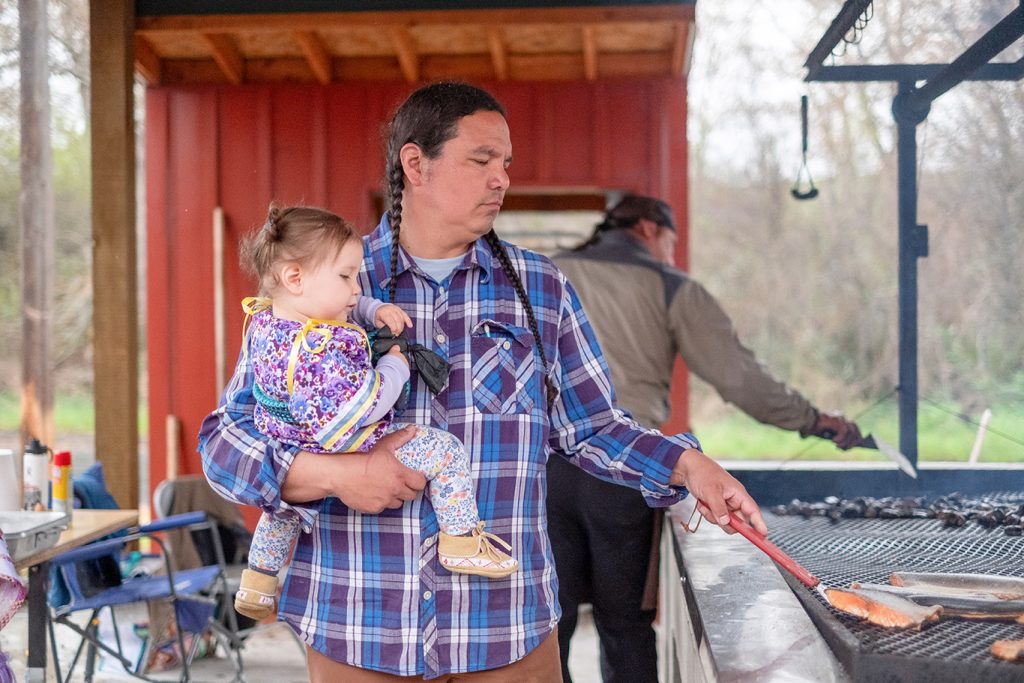
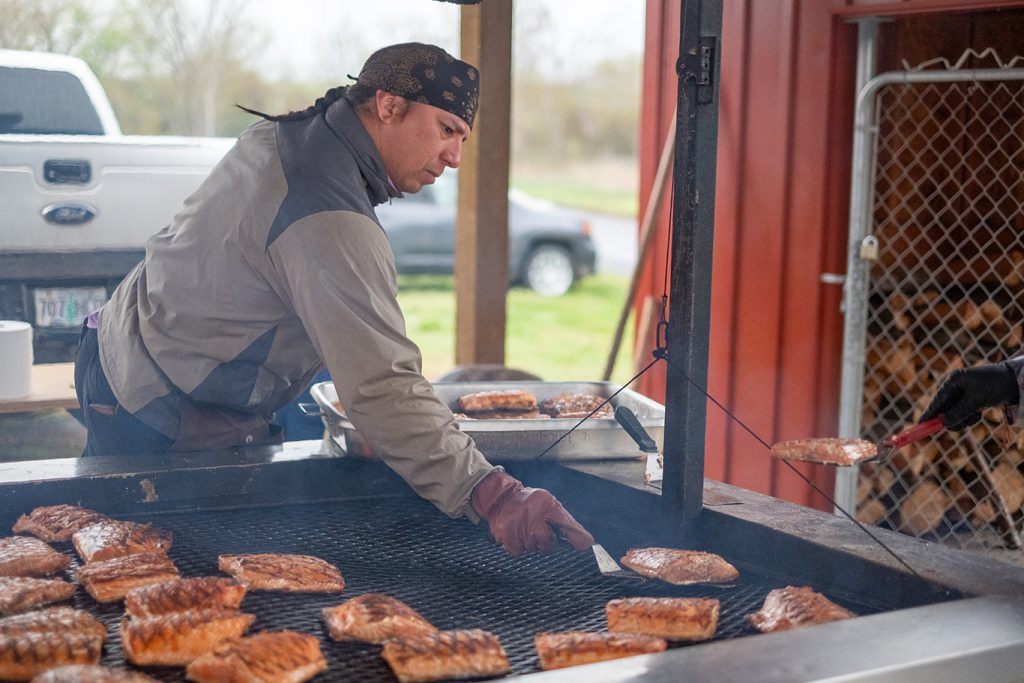
“They [First Foods] sacrifice themselves so we can be here,” Wolf said. “Our reciprocal promises are to take care of them, utilize them, look out for them and celebrate by gathering people together by seeing family and friends. It’s a wonderful celebration.”
Events like this bring generations together and teach one another, Wolf said.
The Longhouse resonated with the sounds of singing and good-natured banter as community members came together to honor their traditions and nourish both body and soul.
Minthorn said the gathering is also about welcoming others.
“We always make sure our relatives and our visitors come and eat good food, have good worship and celebrate with us the return of our foods,” she said. “We want them to leave with happy tummies and happy smiles.”
As one of the last feasts in the Pacific Northwest, Minthorn said the event can draw hundreds of visitors and feed 400 to 500 people. Although they are expecting about 350 people, organizers are preparing for as many as 500 to ensure there is enough food.
If attendance exceeds seating, they set up additional buffet-style service for those without a place at the tables. At times, they said, the feast has served nearly 500 people.
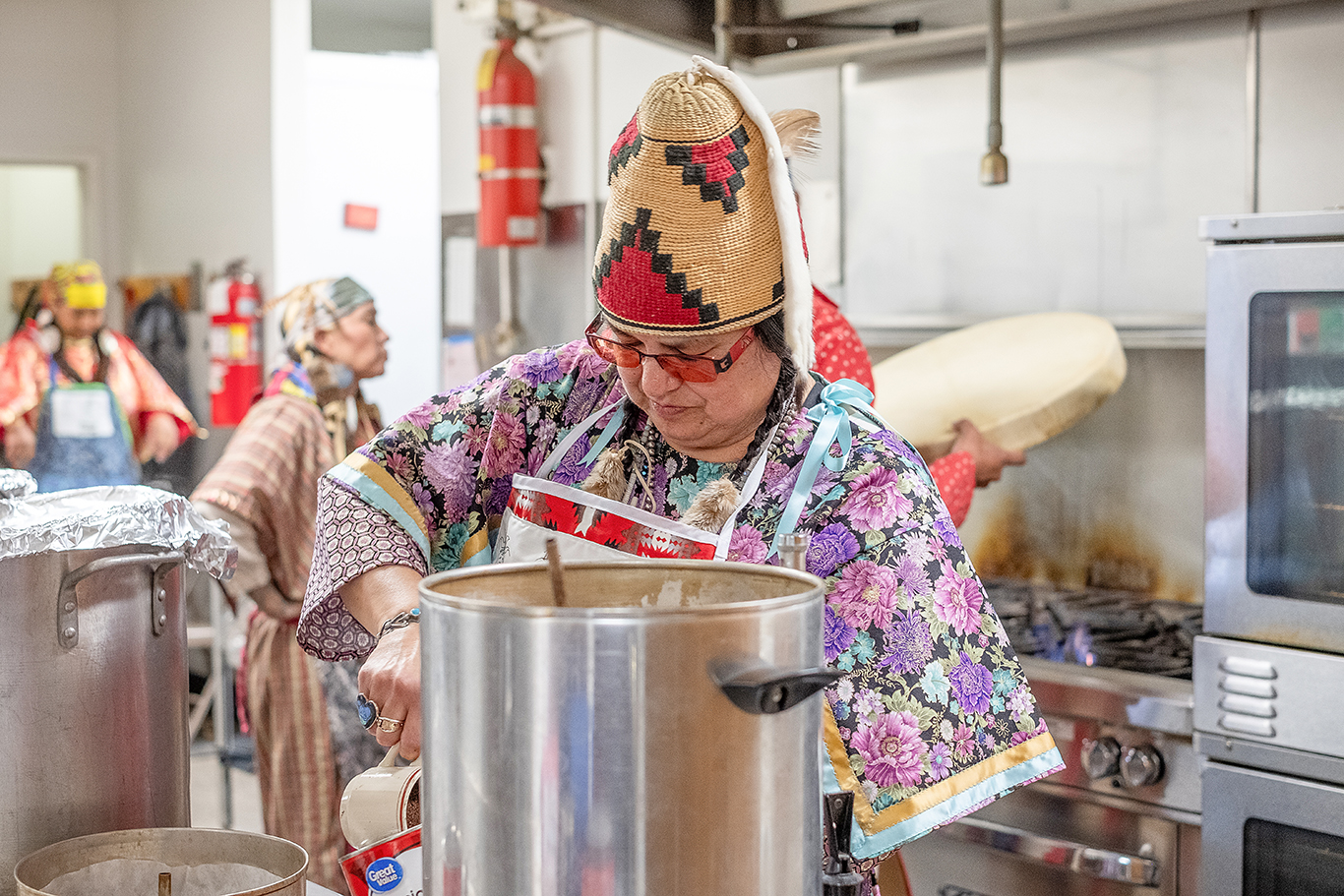
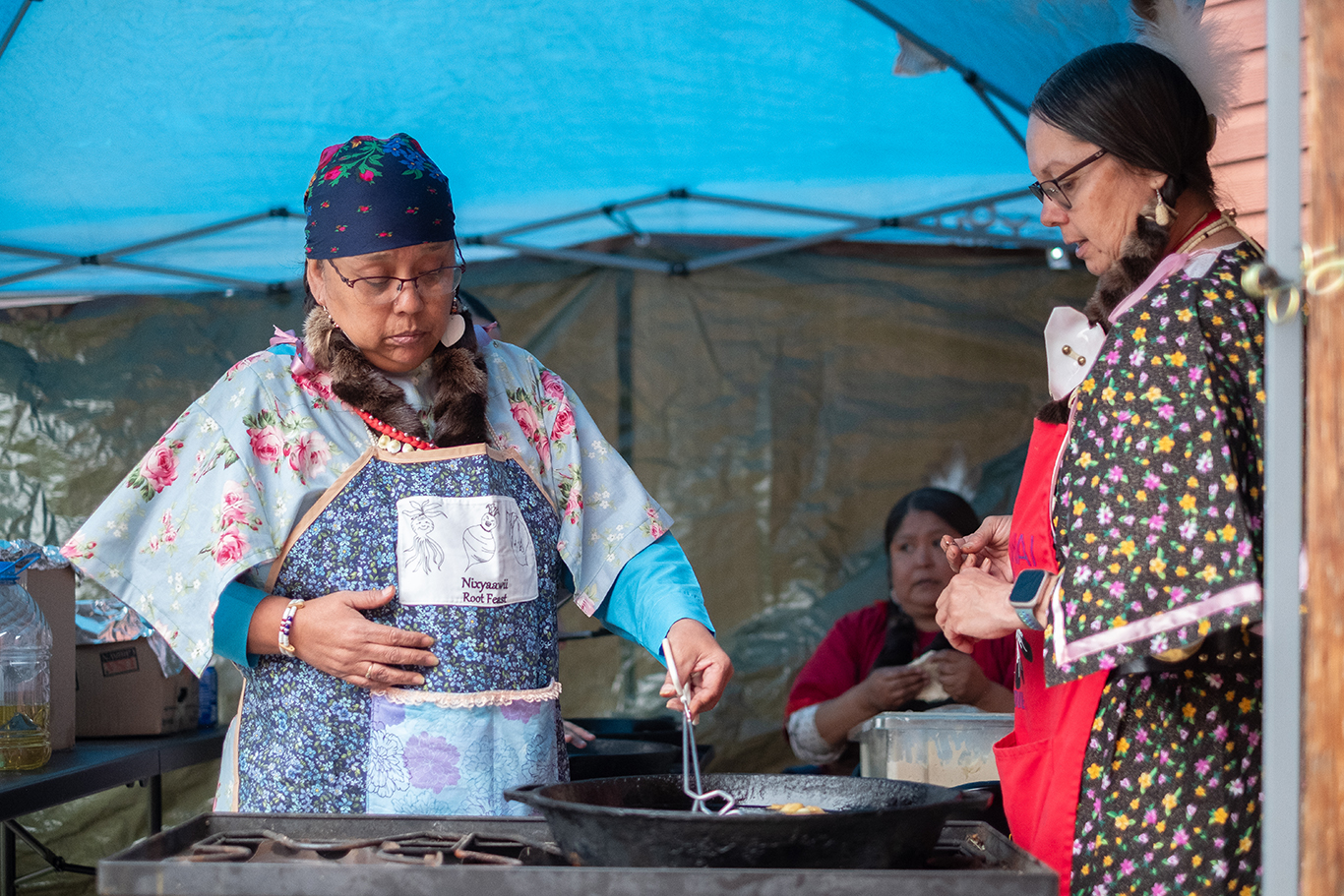
As the meal began, members served the First Foods, followed by songs and prayer, before everyone gathered to eat. Elders, youth and families came together across generations, sharing stories, laughter and knowledge.
“We make a commitment to these foods, and if we take care of them the way we were taught, they will come back to us every year if we fulfill our promise,” CTUIR member Trish McMichael said. “It’s just a part of who we are.”
McMichael said she was not raised in the Longhouse but has been gathering for about 25 years.
“I started coming when my children were little,” she said. “They wanted to go to church, and this is where we came.”
After a two-year absence while caring for her son following a traumatic brain injury, McMichael said returning carries deep meaning.
“This is my first root feast back in a couple of years,” she said. “You miss it. It’s like a calling. When you’re not involved, there’s a hole that isn’t being filled.”
For McMichael, the gathering is about community and passing on knowledge.
“It’s a time to be with my sisters, to gather and to teach the younger ones,” she said. “If we’re not here to teach them, they won’t be standing where I am when they’re 50.”
She said the root feast reflects a shared responsibility and time on the land reinforces self-sufficiency and connection to traditional practices.
“It’s a time to fulfill our promise to the foods that have been given to us by the Creator and to be with our fellow sisters,” McMichael said.
The gathering reflected a sense of community and an ongoing relationship between people, land and food. Throughout the day, that connection was expressed through song, dance, meals and conversation across generations. It became a celebration of gratitude and the sacred bond between people and the land—held in story, tradition and shared time.