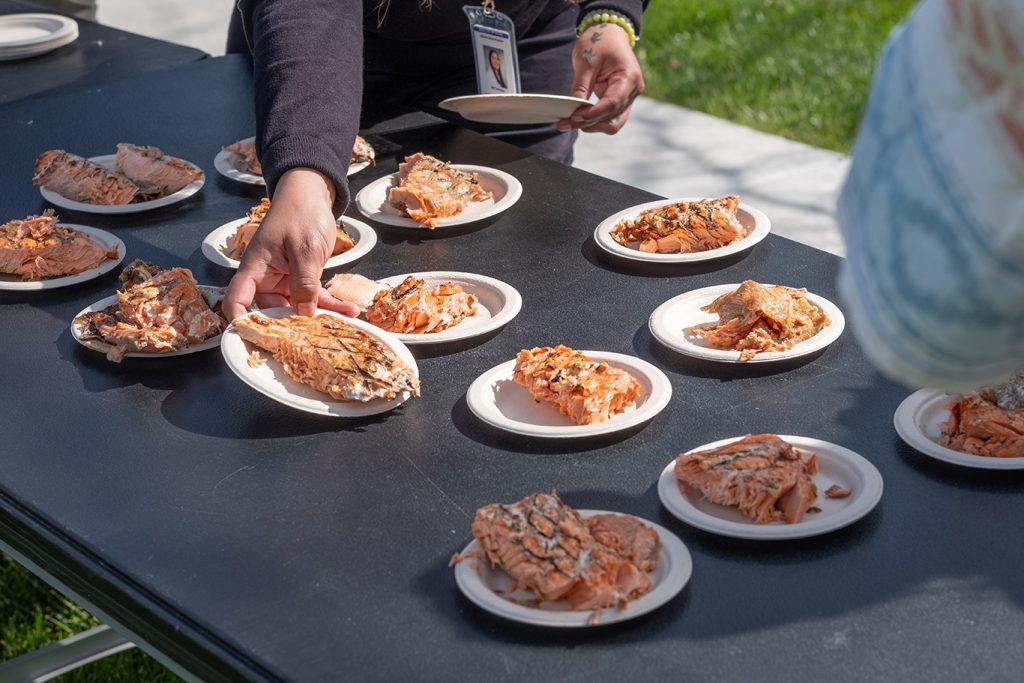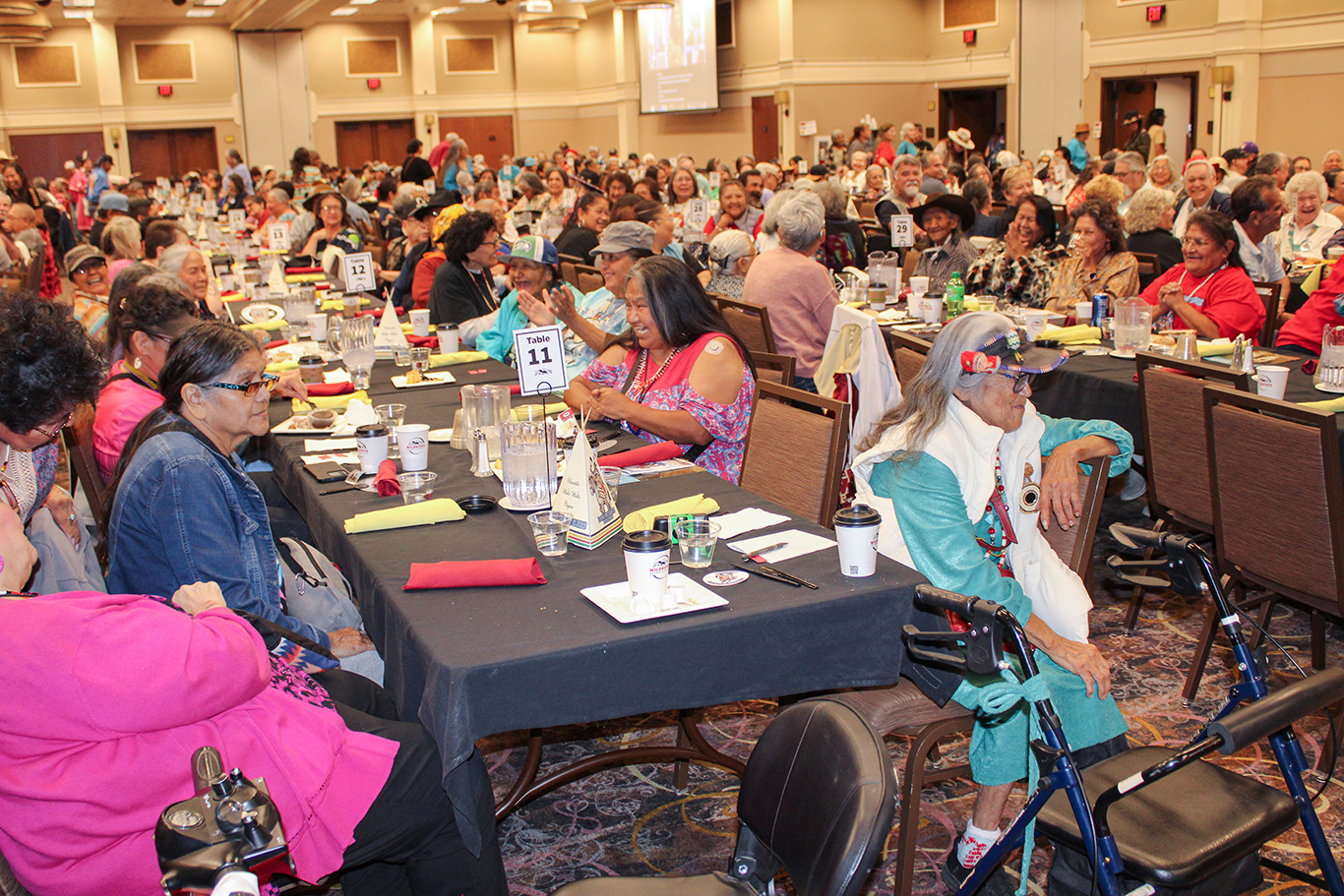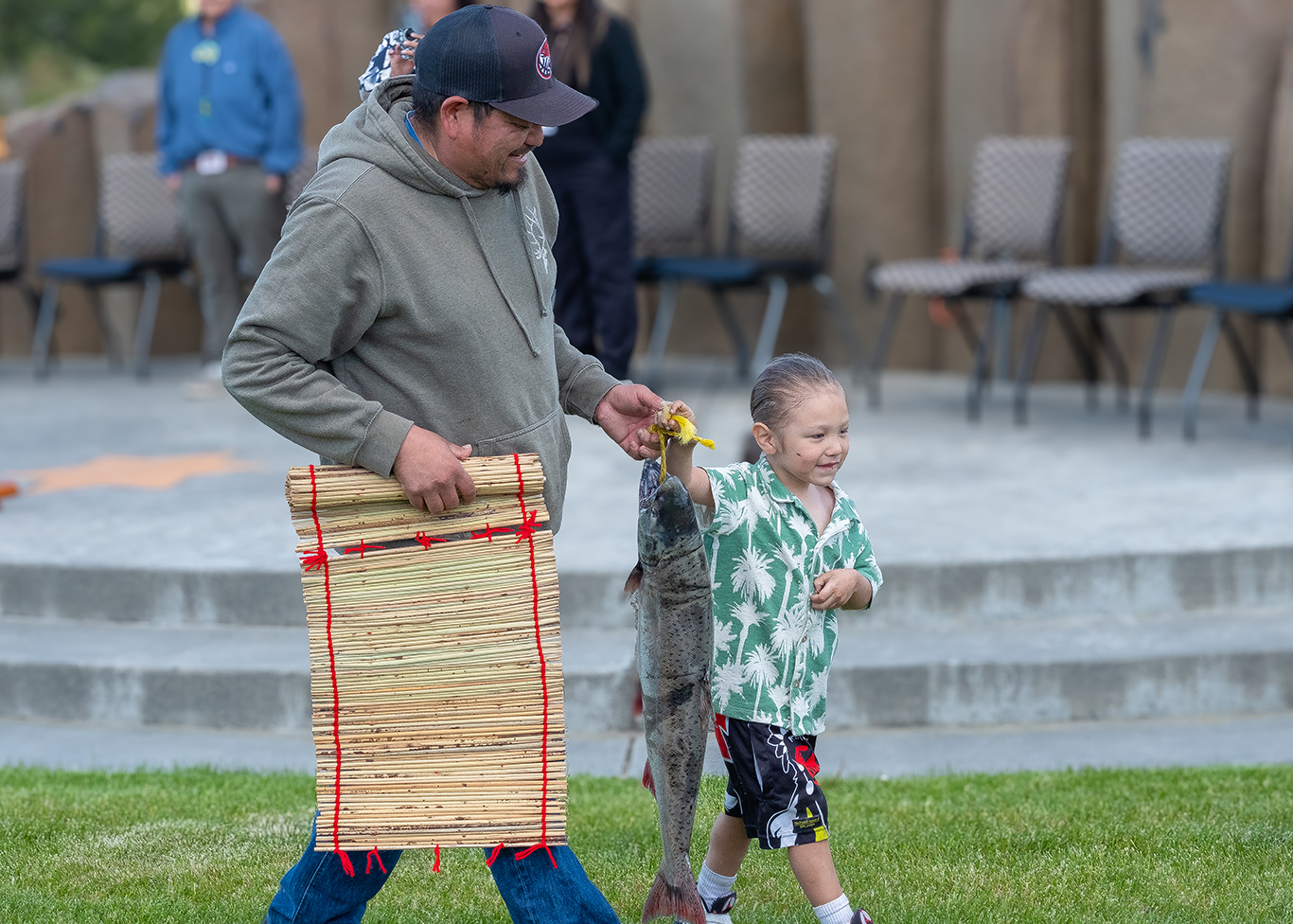
MISSION — The first spring Chinook salmon of 2026 arrived on April 27 at the Confederated Tribes of the Umatilla Indian Reservation (CTUIR) for the First Fish Ceremony on the Nixyáawii Governance Center (NGC) front lawn.
In an annual ceremony, the salmon (Waykaanash) is greeted with songs and prayers in celebration, recognizing the return of a key component of the First Foods.
“Without him, we wouldn’t be here. No fish, no people, none of our First Foods. If they weren’t here, we wouldn’t be here either,” Senior Youth Leadership Council Cultural Ambassador Abraham Shippentower said. “When we came into this world, we made a promise to take care of not only this land, but also our foods, just as they promised a long, long time ago to take care of us.”
Other speakers at the ceremony included Fish and Wildlife Committee (FWC) Chair Vice Chair Don Sampson and Board of Trustees members Corinne Sams, Toby Patrick, Secretary Monica Paradise and Treasurer Raymond Huesties.
“It’s a way for us to honor our reciprocal responsibility to our foods, and salmon was the first to stand up; it’s us giving thanks and praying for the continued return of our spring Chinook and all of the aquatic species,” Sams said.
Speakers at the ceremony acknowledged and thanked community members, the Department of Natural Resources, and the FWC for their work to bring salmon back upriver.
“To sit here today and hear everyone speak of the generations and all of the work that we’re putting in to ensure that our First Foods are coming back, this is a testament,” Paradise said. “I’m extremely grateful to the DNR, the Board of Trustees, FWC and the community for all coming together and honoring our First Foods and our Brother Salmon.”
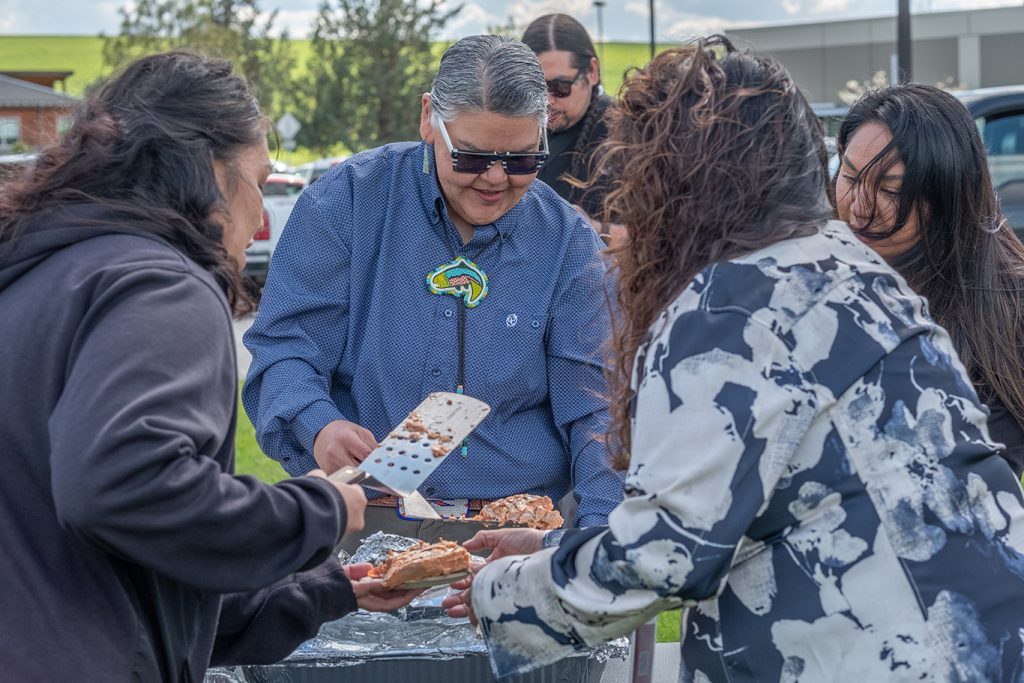
Speakers at the ceremony emphasized the challenges of restoring and sustaining salmon runs, including dams, predation and other barriers, and returned to a common theme of resilience in the fish’s journey home.
“Remember that struggle that your brother had to go through and make it back to you, because society’s going to stop it, and they did, with the dams,” Patrick said.
Patrick also noted community efforts to restore salmon runs, a point Don Sampson echoed, including work he discussed during a visit to Washington, D.C.
“We’ve been doing this work since time immemorial, managing these resources,” he said.
Sams said millions of dollars have gone toward restoration work and hatcheries aimed at rebuilding native stocks within the basin, helping tribal members continue to exercise their treaty rights. Those rights were reserved in perpetuity, but without Chinook salmon, exercising them becomes a challenge, she noted.
“I’m very grateful today for all of you to attend this ceremony, but mostly grateful for the CTUIR organization and participation,” Sams said. “It’s important to remember today that we honored our Brother Salmon. This isn’t for us, this is for future generations, but the work that you all do doesn’t go unrecognized.”
Sams said her time in D.C. was intended to amend the Mammal Protection Act, noting that it is resulting in sea lions consuming 50% of the Chinook population.
“So not only are our fish experiencing water temperature issues, hydro systems, humans and climate change, but now we have sea lions that are predators. So, this is a big accomplishment that our Brother Salmon can make it back to us,” she said.
Amendments to the Marine Mammal Protection Act include a request to expand territorial authority. Sams said the CTUIR currently has authority to remove sea lions in areas from Bonneville Dam to the Interstate 5/Interstate 205 bridge. The proposed expansion would extend that authority beyond the mouth of the Cowlitz River.
“There’s a huge issue with the Cowlitz. What we’re finding is our runs are running incongruent because of climate change. Previously, the small run would come in and some time would pass, then the sea lions would leave and our spring Chinook run would come in,” Sams said. “Well, now the runs are running together, so (the sea lions) don’t have to go anywhere, they just hang around and keep eating our fish. So we want to extend the territory where we could remove those animals.”
Currently, officials remove sea lions at Bonneville Dam by trapping and relocating them. Sams said some animals go to zoos or rescue facilities, others are translocated to California, and those that are diseased or in very poor health are euthanized.
Sams also said officials hope to incentivize technology to deter sea lions from interfering with salmon runs, citing efforts in Maine that he said have helped protect the lobster population by deterring killer whales that feed on them.
“Predation is only one challenge our salmon are facing,” she said. “We have the impacts of climate change, we have the impacts of the hydro system and now we have new impacts citing new energy with nuclear and data centers, and the amount of water that’s being taken, and the fish rely on that water. They rely on that habitat and that ecosystem in order to thrive and flourish, and they’re already at a detrimental decline.”