One year after Wesley Jones disappeared, questions remain unanswered
MISSION — It has been a year since anyone last saw Wesley Dixon Jones.
For his family and friends, Oct. 5, 2025, is a date that has never really passed.
“I wake up thinking about him,” Linda Jones, his sister, said. “When he first went missing, I lived almost across the (Umatilla) river from that area, not quite, but very close to it. When I heard he was missing, I’d get up every morning and walk around outside. I’d always expect to see him walking through the field toward the house. And I still do that. I drive out and look toward the river, always expecting him to just pop up, just out for a stroll.”
Jones, a member of the Confederated Tribes of the Umatilla Indian Reservation (CTUIR), was 71 when he disappeared. He is the father of four daughters and two sons and one of 14 children in his family. Those closest to him know him as “Buller.”
“When I think of my dad, he’s someone I looked up to and loved dearly,” Molly Jones, his daughter, said. “I miss him a lot.”
For a year, the questions have stayed with the people who know Jones: Where did he go? What happened to him? And where is he now?
They have searched, waited and held on to the possibility that someone has information that could help explain what happened and help bring him home to his family.
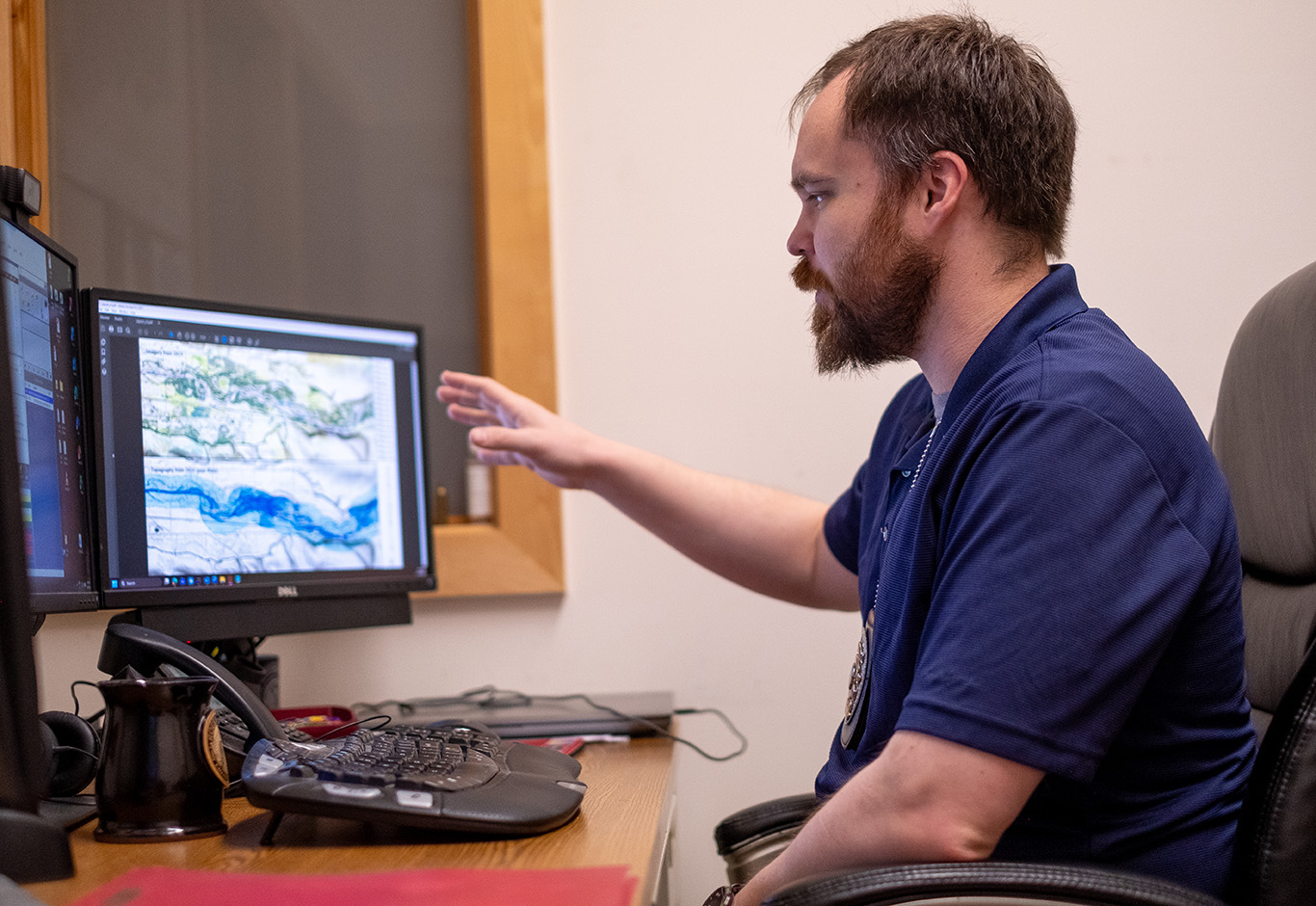
Umatilla Tribal Police Department (UTPD) Det. William Morris has spent much of the investigation pursuing those answers. He was assigned to the case two days after Jones went missing.
But one question stands above the rest, Morris said: Where is Wesley Jones?
Tracing the vehicle
Morris said surveillance video showed Jones on the afternoon of Oct. 5, riding along east Short Mile Road on the Umatilla Indian Reservation (UIR) at about 3:15 p.m. The footage showed Jones sitting in the passenger seat of his gray 2003 Ford Escape, his elbow resting outside the window as the vehicle traveled down the road.
When he was last seen, he was 5 feet, 8 inches tall and weighed about 140 pounds, with black hair and brown eyes. He was wearing a black-and-red Tigerscott jacket, a black shirt, black sweatpants and boots.
Roughly two hours later, footage shows his vehicle was seen traveling the same road without him inside.
For now, UTPD is not disclosing the identity of the person driving the vehicle, saying only that he was with a family member.
However, Molly told the CUJ the driver was her father’s partner at the time, Dana Harwood. Jones and Harwood had been together since 2006.
During an interview with the CUJ, Harwood confirmed she was in the car with Jones that day and was the last person to see him. She also said that Matilda, Jones’ daughter, joined her later to search for him.
Morris said investigators believe the camera timestamps could have been off by roughly 30 to 40 minutes. But even with that possible discrepancy, he estimated that about 40 to 45 minutes passed between the footage showing Jones traveling in the vehicle on Short Mile and the next footage showing Harwood alone.
Morris also estimated the vehicle remained in the area for another two to three hours before leaving without Jones.
The timeline, Morris said, involved two separate time estimates. The two- to three-hour period refers to how long the vehicle remained in the area after Jones was no longer seen inside it. The separate 30- to 40-minute estimate refers to the possible difference between the times displayed on the cameras and the actual time.
Despite the vehicle’s movements, Jones’ vehicle was later found on his property with a flat tire. While reviewing the footage, Morris noted the vehicle appeared to have been traveling on a low or flat tire.
“His [Jones’] vehicle was searched for any evidence or information that would lead to his whereabouts, including blood,” Morris said. “However, it would not be reasonable to collect DNA or fingerprints if we believed those fingerprints or DNA belonged to Wesley Jones or anyone else known to operate the vehicle, as the presence of their DNA or fingerprints would not create any suspicion or develop any relevant leads.”
Investigators found no blood evidence in the vehicle, Morris added.
As the days passed, Molly said she received conflicting information about where her father might be. She said Harwood told her Jones had been hospitalized and died after his heart failed.
Molly said she checked local hospitals and found no record of her father. For Molly, the conflicting accounts added to the uncertainty surrounding her father’s disappearance.
Harwood said she remembered returning home and believed they may have had a flat tire, though she was not certain. She then added that Jones told her he was going to walk over to “look at the view.”
“I said, ‘Well, don’t be too late. I’m going in the house to start dinner.’ And he said, ‘OK,” Harwood said.
Video footage shows Harwood driving back along Short Mile Road without Jones visible in the passenger seat. The footage provided a different account of the couple’s movements than Harwood’s recollection.
During that time, cameras captured the vehicle traveling to several locations, including at least one dead-end road, where Harwood turned around and continued. Morris said the driving pattern appeared consistent with someone looking for Jones, though he stressed that he could not say that with certainty.
Later that evening, Morris said, the driver returned to the vehicle with another member of Jones’ family. They traveled through the area again and cameras captured their movements before they eventually reported Jones missing after they were unable to locate him.
Molly said investigators later took Harwood along a road, hoping the route might help her remember where Jones had been dropped off. But Harwood struggled to recall the location, Molly said.
Later, Molly said, Harwood told investigators that she was experiencing dementia and that her mental health was declining.
When the CUJ asked Harwood about her health, she did not mention dementia or any cognitive condition. She spoke about broken bones she had suffered in the past and repeated some of her statements during the interview.
UTPD declined to discuss the person’s health or other private information.
Molly said she’s frustrated with what she sees as unanswered questions surrounding the investigation.
“I wanted more,” she said. “I want more justice. I want more accountability on the last people who seen my father.”
The search along the river
In the days after Jones disappeared, investigators searched portions of the UIR with help from the Umatilla County Sheriff’s Office Search and Rescue Team.
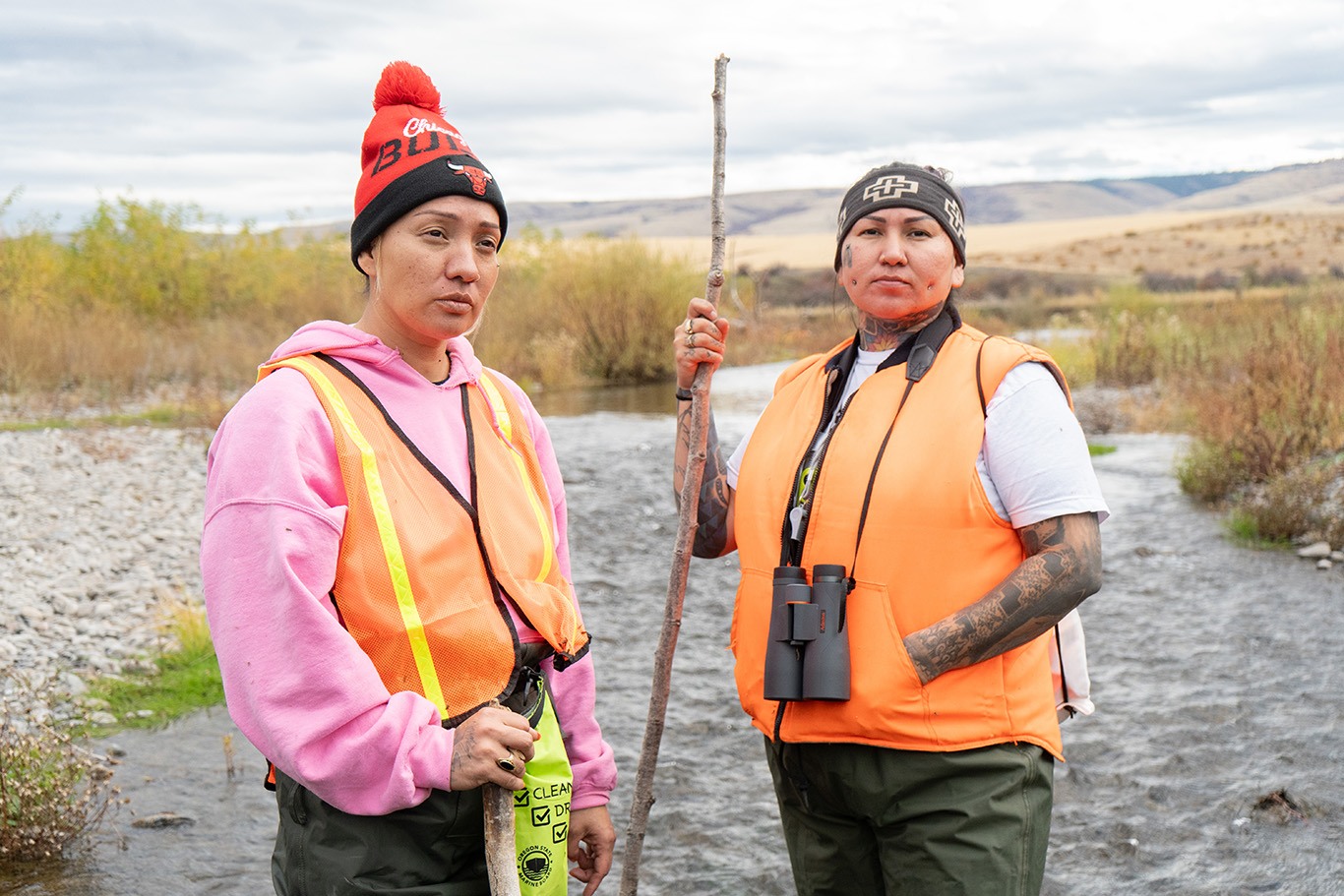
The effort included two canine searches, three aerial drone searches over portions of the Umatilla River and foot searches through the surrounding terrain and rivers.
Some property owners in the area allowed investigators to search around their land with dogs.
Jones’ family conducted its own searches. Although UTPD did not participate in the family-led searches, Jones’ family kept Morris informed of their efforts.
Investigators focused their searches on an area between the bridge over the Umatilla River on Highway 331 and the railroad tracks near Sheoships Lane.
Along the eastern portion of the river, a rugged stretch known locally as the Maze winds through difficult terrain along the railroad track. Locals use the area for hunting and fishing, including Jones, who was known to fish there.
“This is apparently a place where he liked to go fishing along this bank,” Morris said. “We were told he may have been dropped off here to fish and intended to walk home.”
The terrain offers few easy paths to the river. A steep, rocky slope and dense bushes and trees make the descent difficult. Anyone trying to reach the river would first have to walk several yards along the train tracks and surrounding canyons before finding a path down to the water.
Animal bones — remnants of wildlife killed by cougars, bears and hunters — lie scattered on the rocky hillsides along the river and on the approach to the Maze. Mattresses, blankets and other discarded items are scattered across the area.
Morris said investigators developed information that led to extensive follow-up searches. Search and Rescue teams initially concentrated on the area where Jones was believed to have been last seen.
“We were told that by the point when search and rescue got involved, Wesley Jones was on foot near the home, going fishing with a fishing pole,” Morris said.
Jones’ property on Parr Lane sits about 2 miles west of the Maze. Two trail dogs picked up his scent near each other and one dog alerted on the water. For that reason, searchers focused on the immediate vicinity where Jones was last seen.
“We were told that by the point when search and rescue got involved, Wesley Jones was on foot near the home, going fishing with a fishing pole,” Morris said.
Jones’ property on Parr Lane sits about 2 miles west of the Maze. Two trail dogs picked up his scent near each other and one dog alerted on the water. For that reason, searchers focused on the immediate vicinity where Jones was last seen.
“If you trace Parr Lane straight up north and you hit the river, that’s about the area where that scent was detected in the water,” Morris said.
Because of the river’s flow, search and rescue personnel believed Jones may have been in the water somewhere upstream. Morris said searchers also considered the possibility that Jones could have been some distance downstream and conducted searches in that direction.
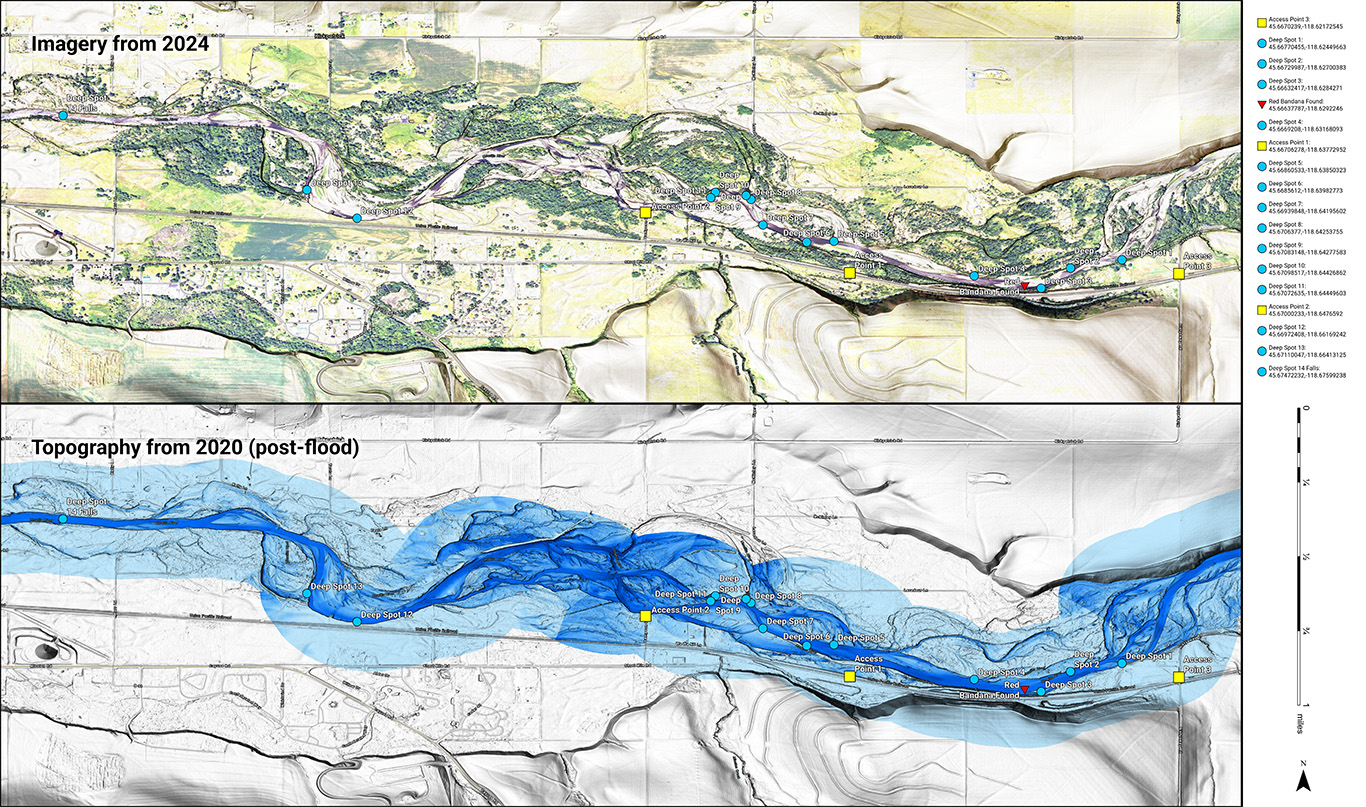
“The main belief at the time that was developed from search and rescue was that the scent was in the water,” Morris said. “There was a trail point just a little bit north of that, on the north side of the river, where the trail went cold.”
Morris said investigators considered several possibilities, including that Jones was dropped off near the river and walked south toward it, or that he walked north across the river and was picked up there.
The possibility that Jones had entered the river helped define the scope of the search.
Instead, the scent and search and rescue’s assessment that Jones may have entered the river upstream kept investigators focused along the water — east toward and beyond the Maze.
But investigators still question why he left home that day, Morris said. Whether he planned to go for a drive, go fishing or do something else remains unclear.
When addressing the fishing theory, Morris said authorities found no fishing equipment in the areas they searched away from Jones’ home.
The surveillance footage also raised questions for Molly. If Jones had gone fishing, she said, she would have expected to see his favorite fishing pole strapped to the top of the car. Taking it with him was part of his routine, she said, making it difficult for her to believe he would have gone fishing without it.
Another possibility was that Jones slipped on a rock, fell and struck his head before entering the stream. At the time, however, the water was low enough for rocks to remain visible beneath the surface. The current was also believed to be too weak to carry him a significant distance.
But the search offered no definitive answer. What remained was the question that had followed investigators from the beginning: How did Jones get there and where did he go from there?
“As the cause of his disappearance remains unknown, we have not ruled out possibilities, including whether his disappearance was accidental or non-accidental,” Morris said. “Foul play will be a consideration until information leads us towards or away from that conclusion.”
Fog of Memories
In the months before Jones disappeared, Molly said he was dealing with two health-related concerns: a serious heart condition and substance abuse.
Molly said Jones and Harwood met through their shared struggles with methamphetamine use, which she said was a major concern for her and the family. She said both had struggled with substance abuse before they became partners.
Jones and Harwood met in 2006, Molly noted.
Molly said she repeatedly tried to help her father when his substance abuse put him in dangerous situations.
“I would get so worried about my dad,” she said. “I’d already gone multiple times into trap houses where he was to, like, kick down their doors and find my dad.”
Molly said she had developed an instinct for when something was wrong with her father. Even when Jones left his cellphone behind, she said she could usually find him when she became concerned.
“I just had, like, an antenna. Like, I had an intuition,” she said. “My dad didn’t have a phone, but I’d find him.”
That history made his disappearance particularly difficult for her to understand.
“For me not to be able to find him, it bothers me so much because no matter where he was, when something was going on with him, it’s like I would know and I’d find him,” Molly said.
Since the investigation, Harwood has been placed in a care facility.
“He was the love of my life,” Harwood said.
Harwood said she and Jones spent much of their time together outdoors. They also shared quieter hobbies.
“We did a lot of stuff together,” Harwood said. “I did a lot of beadwork and crocheting and he did a lot of fishing.”
But when the CUJ asked about video showing the two of them going for a ride, Harwood said she could not recall where they had gone or what they had been doing.
“I don’t recall going anywhere. We could have been going to get groceries. We could have been — I don’t know what it was we were doing,” Harwood said. “I just remember when we came back, I think — I’m not sure — I think we may have had a flat tire, but I’m not positive.”
“People just don’t disappear, you know,” Harwood said. “They just don’t disappear normally. And we looked for him and looked for him.”
One year later
Linda said the family had lost two brothers in the past six years, a loss that continued to weigh on them.
“They’ve died. One died of a heart condition, then my other brother died of his cancer, and now this one.”
The seasons have passed. The river rose in the spring and receded toward the end of summer. Still, there are no answers about what happened to Jones that day.
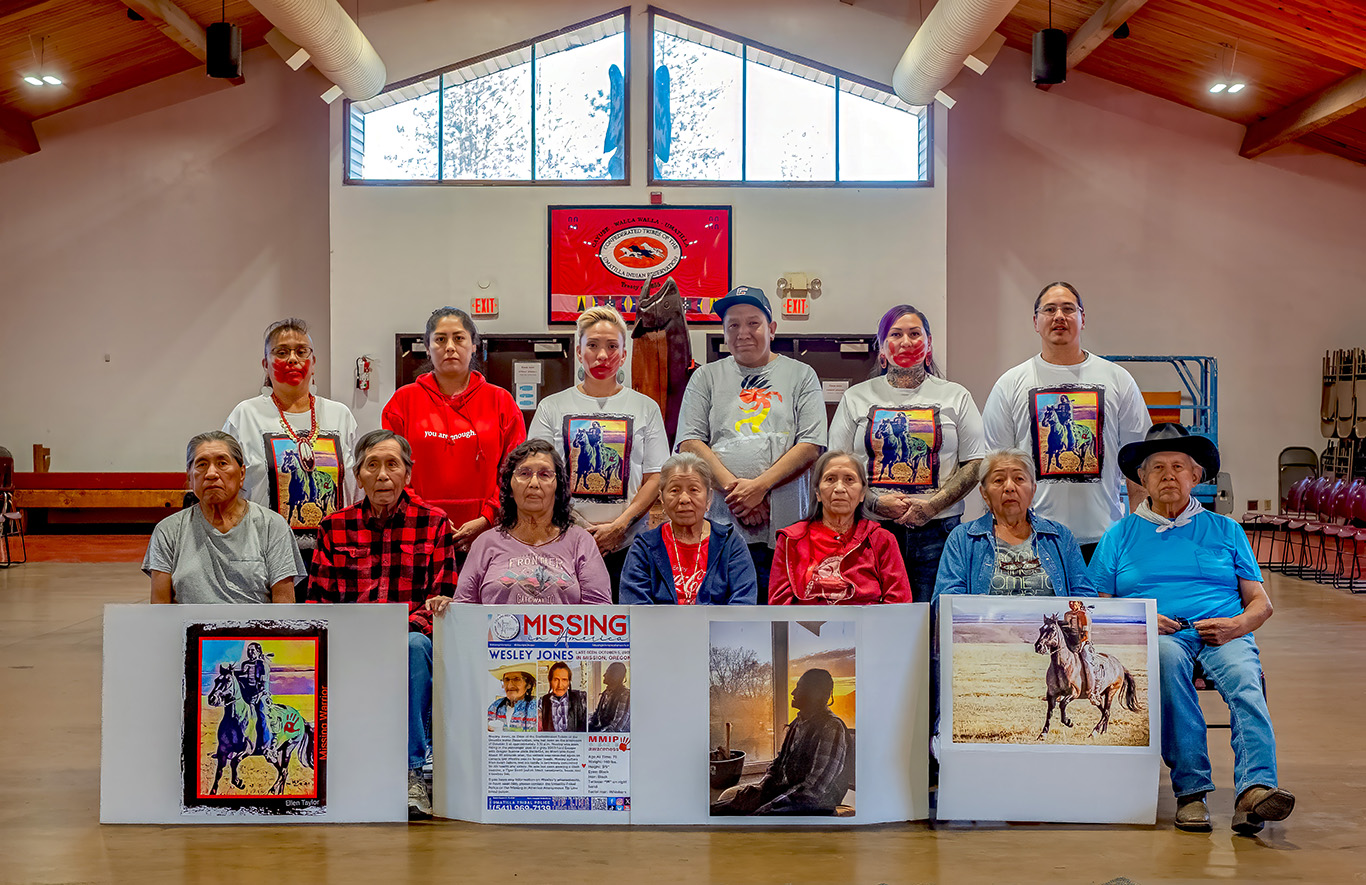
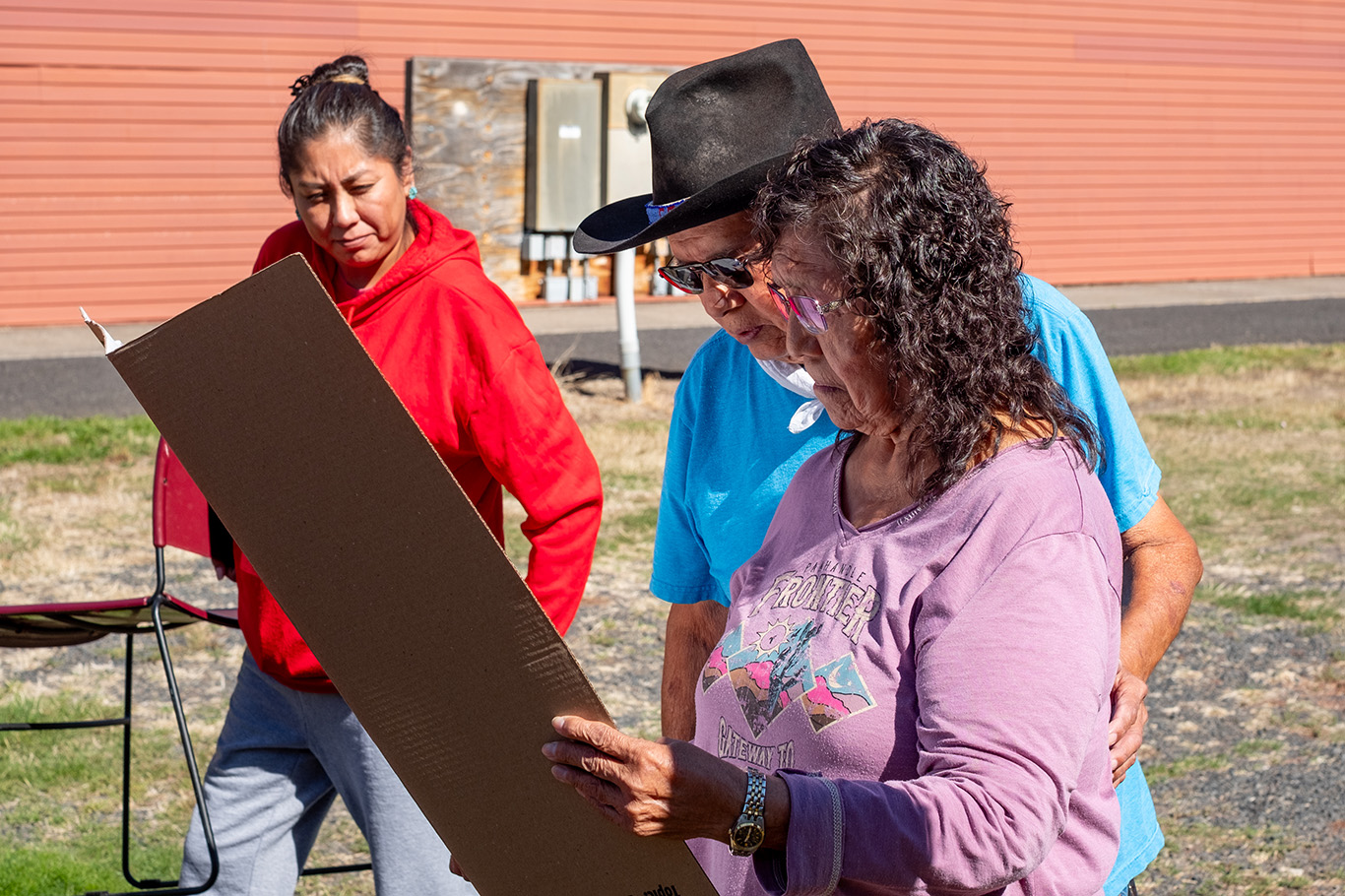
On Sept. 28, Jones’ family gathered at the Mission Longhouse for a family portrait. Elders sat in front while younger generations stood behind them, holding posters of him. Molly and her sister, Twila Jones, stood among them, red handprints painted across their faces — a symbol associated with the Missing and Murdered Indigenous People movement.
After the portrait, several family members remained outside, gathered around a photograph of Jones.
For Molly, his disappearance is about more than one family. He is an elder and a longtime member of the community — a brother, uncle, father and grandfather — with connections that stretched throughout the tribe.
She said that sense of connection is part of why the family continues to call on the community to come together, search for him and share whatever information might help bring him home.
Molly recalled what Jones used to say about his childhood name, Káyaynu. Linda added that Jones’ Indian name is Káyaynu Shnù’titámani.
“I’d go, ‘What does it mean, Dad?’ He goes, ‘I don’t know.’ He goes, ‘I just think it means I’m a brother to many,’” she said.
Molly said that idea reflected the way her father lives.
“That’s kind of how he carried himself: to be a good brother to many people. He was very loving, very kind,” she said. “And that’s why we say he’s very loving, very kind, very generous, very understanding.”
A year has passed since Jones vanished.
The river has continued to move. The seasons have changed. But for Jones’ family, the search has not ended.
They are still looking for their brother, their father, their grandfather — their brother to many.
Please call the Confederated Tribes of the Umatilla Indian Reservation Tribal Police at 541-278-0550 with any information on Jones’ disappearance.