MISSION — A previous passive opposition to nuclear development within the Confederated Tribes of the Umatilla Indian Reservation’s (CTUIR) ceded lands has been updated to a proactive strategic engagement. On Aug. 17, the Board of Trustees (BOT) approved Resolution 2026-047, the CTUIR Nuclear Policy.
The policy comes as a demand for carbon-free energy is renewing interest in nuclear energy at state and federal levels. The current challenges, detailed in the policy’s introduction, include multiple cases of nuclear development on CTUIR ancestral homelands without meaningful consultation due to the previous position of passive opposition without strategic engagement.
The policy’s approval establishes a framework as state and federal agencies push for a carbon-free energy structure, detailing components for the CTUIR to refer to when developments are proposed on ceded lands or traditional use areas.
The CTUIR began adopting policies that stated its positions on nuclear energy in 2007 with the Hanford Policy, providing guidance on how to address issues pertaining to natural resource management, long-term stewardship, risk assessment, transportation, cultural resources and capacity development at the Hanford Nuclear Reservation (Hanford), which is on ancestral land in southeastern Washington.
Since the adoption of the Hanford policy, the BOT has approved the Energy Policy (2009), an updated Comprehensive Plan (2010), the Columbia River Intertribal Fish Commission Energy Vision (2022) and the First Foods Policy (2025).
Interest in nuclear energy was evident in 2025 when Oregon and Washington legislators introduced bills. In Oregon, House Bill 2410 A aimed to allow the state’s Energy Facility Siting Council to issue a site certificate for a small modular nuclear reactor energy facility in Umatilla County. While the bill, sponsored by Reps. Bobby Levy and Ed Diehl and Sen. David Brock Smith, did not succeed, the need for a nuclear policy was validated for the CTUIR.
In 2026, Levy sponsored House Bill 4046-2, which sought a comprehensive review of reactor types, their costs and waste management. The bill required the Oregon Department of Energy (DOE) to engage with tribal governments and consult with state agencies and federal organizations to carry out the study.
In Washington, Reps. Stephanie Barnard, Chris Stearns, Travis Couture, Skyler Rude and Michael Keaton introduced House Bill 1249, which would create the Commercial Liftoff for Energy from Advanced Nuclear Advisory Commission (Nuclear Advisory Commission).
According to the bill analysis, the Nuclear Advisory Commission’s purpose is to catalyze more rapid and coordinated action across the value chain for nuclear energy development. The bill is currently in its committee phase in that state’s House of Representatives.
The CTUIR found itself needing a comprehensive policy beyond those adopted to protect treaty resources within the Columbia River Basin, including Oregon, as well as the health and well-being of tribal members. The newly approved policy does not change the existing Hanford Policy or the CTUIR’s opposition to nuclear development but identifies and strengthens the CTUIR’s capacity to respond to proposed nuclear developments when needed.
The CTUIR created an interdepartmental tribal staff workgroup called the Energy Strategy Team (EST) to draft the nuclear policy with feedback from tribal staff, committees and commissions, maintaining a strong opposition to any nuclear development that threatens First Foods preservation, cultural resources, tribal-land access and treaty-reserved rights.
“With this Nuclear Policy, the CTUIR asserts its tribal sovereignty to protect First Foods and cultural resources while seeking strategic engagement as appropriate,” the policy states in its Guiding Principles. “CTUIR recognizes that passive opposition to nuclear energy is insufficient to protect Treaty-reserved rights.”
The policy’s stance on strategic engagement is based on treaty protection, focusing on First Foods; tribal energy sovereignty; tribal self-determination; active engagement; being proactive over reactive; and economic influence.
The policy also mandates early notice and clear communication regarding nuclear projects, engaging with all levels of government with the intent to protect treaty rights and environmental health, negotiating agreements regarding spent fuel treatment and transportation and developing tribal enterprises while investing in workforce capacity for nuclear policy and management.
The policy positions
The policy has eight core positions, the first regarding development and siting. The position is to oppose all nuclear weapons activities and nuclear-waste forming processes within or affecting tribal land. It also supports alternatives to nuclear energy that don’t harm natural and cultural resources by way of emitting greenhouse gases.
Consultation and outreach are also key policy tenets, requiring meaningful government-to-government consultation early for nuclear projects, as well as ensuring compliance with national and international regulations.
It is the CTUIR’s position to invest in tribal workforce and technical expertise for policy, regulation and remediation, as well as supporting tribal enterprises in fields related to nuclear cleanup as long as they do not threaten First Foods or treaty rights, according to the policy.
The policy also demands strict safeguards regarding nuclear fuel sourcing and monitoring, as well as asserting senior water rights and opposing nuclear projects that pose a threat to tribal waters and hydrologic systems.
The policy requires avoidance or minimization of the impacts of nuclear development and mandates mitigation trust funds for those developments’ long-term impacts. The policy also supports research, legislation and facility closures that ensure environmentally beneficial cleanup and disposal.
Other sections address project closure and risk management.
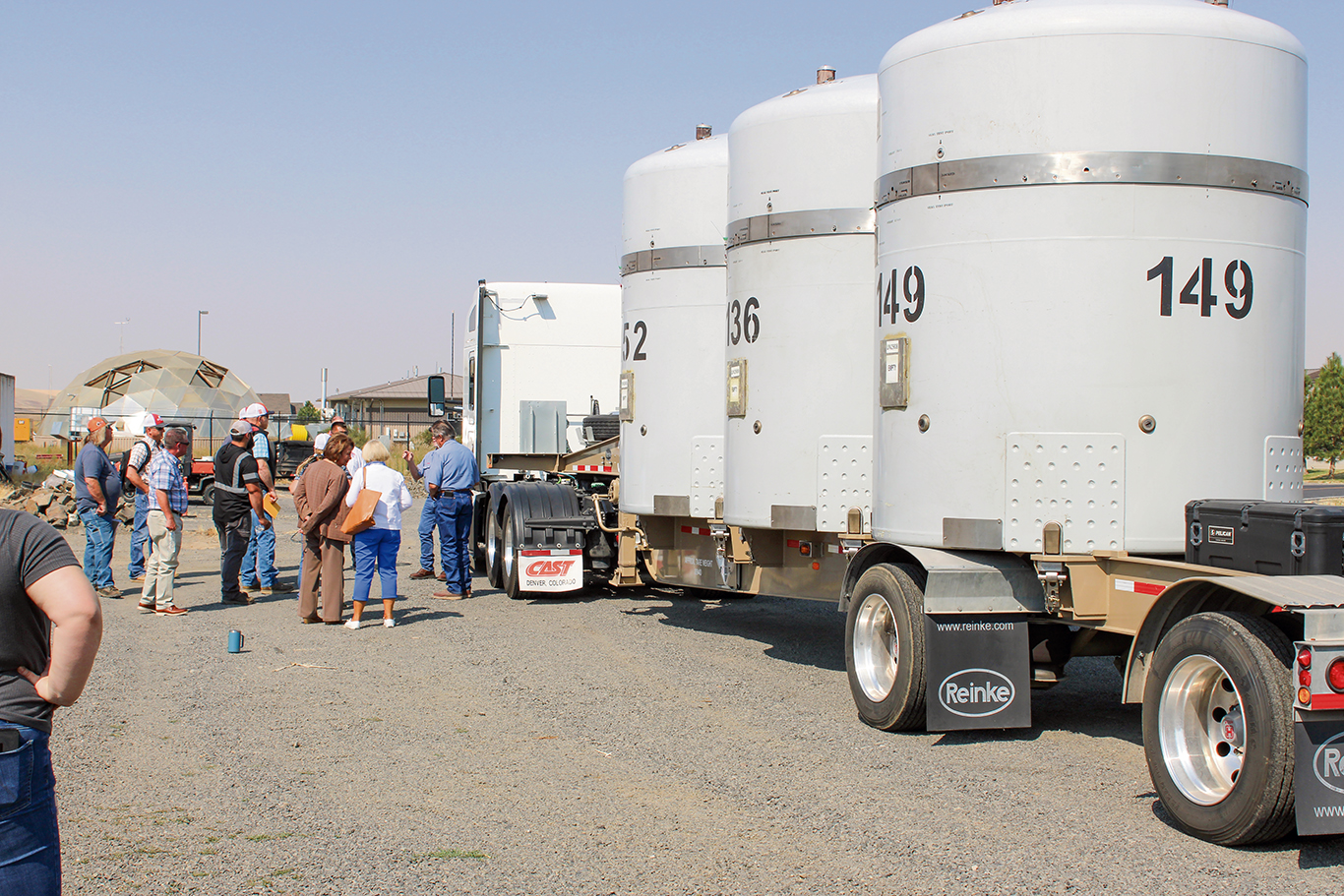
The Hanford Road Show
In November, Sens. Ron Wyden and Jeff Merkley of Oregon penned a letter to Timothy Walsh, the assistant secretary in the Office of Environmental Management for the U.S. DOE, objecting to a federal proposal to move liquid radioactive waste from Hanford through northeastern Oregon, noting that the risk the nuclear materials pose to the rural and tribal communities and their natural resources cannot be ignored.
The proposed route for the nuclear waste runs from Hanford to New Mexico, where the Waste Isolation Pilot Plant (WIPP) is located.
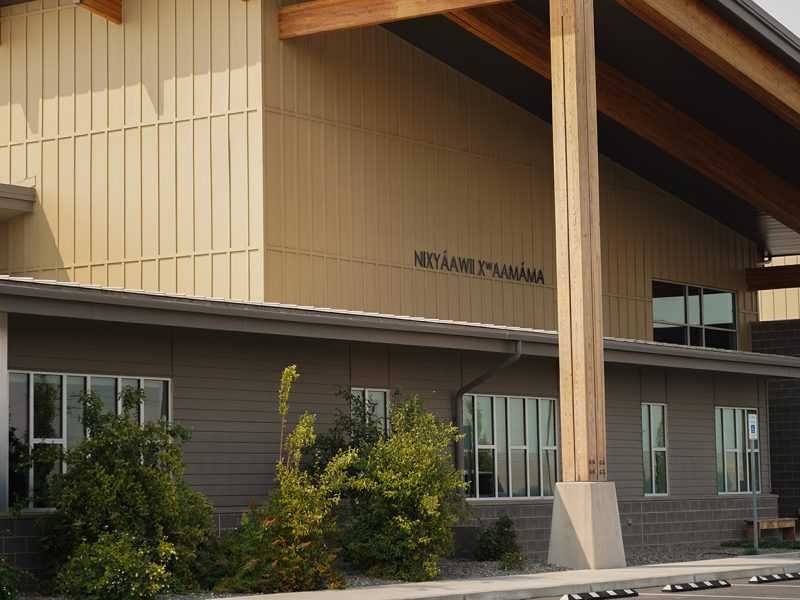
On Aug. 12, WIPP representatives, the Washington Department of Ecology, the DOE and other state and federal agencies brought the Hanford Road Show to the Nixyáawii Governance Center to give the BOT a rundown for the process of disposing and transporting Transuranic Waste (TRU) from Hanford to New Mexico.
TRU is not liquid radioactive waste. According to the Environmental Protection Agency (EPA), it is produced during nuclear fuel assembly, nuclear weapons research and production and during the reprocessing of spent nuclear fuel. The EPA says TRU generally consists of protective clothing, tools and equipment used in these processes.
The nuclear policy’s waste and risk management section is three-fold. It prohibits nuclear by-product storage, transportation or production within tribal lands without consent from the BOT based on informed and transparent risk assessments. The policy also points to appropriate agencies to commit necessary funding and technical support for the long term, including storage, cleanup and reprocessing of spent fuel.
The third aspect is to acknowledge the WIPP as a sufficient nuclear repository for holding nuclear waste.
From 2000-2012, Umatilla Tribal Fire Department (UTFD) Chief James Hall reported 572 shipments of TRU made their way from Hanford to WIPP through the Umatilla Indian Reservation (UIR), a portion of the 11,112 total shipments from 12 DOE sites.
“CTUIR and UTFD recognize the importance of the Hanford cleanup mission and the safe transportation of TRU waste to WIPP. Our concern is to ensure that preparedness precedes the resumption of shipments,” Hall said.
Hall added that as shipments travel through the UIR and along one of the most challenging sections of Interstate-84 through the Blue Mountains, it is necessary for firefighters, paramedics and law enforcement to have the training, equipment, advance notification and familiarization with the TRUPACT-II to respond adequately to emergencies.
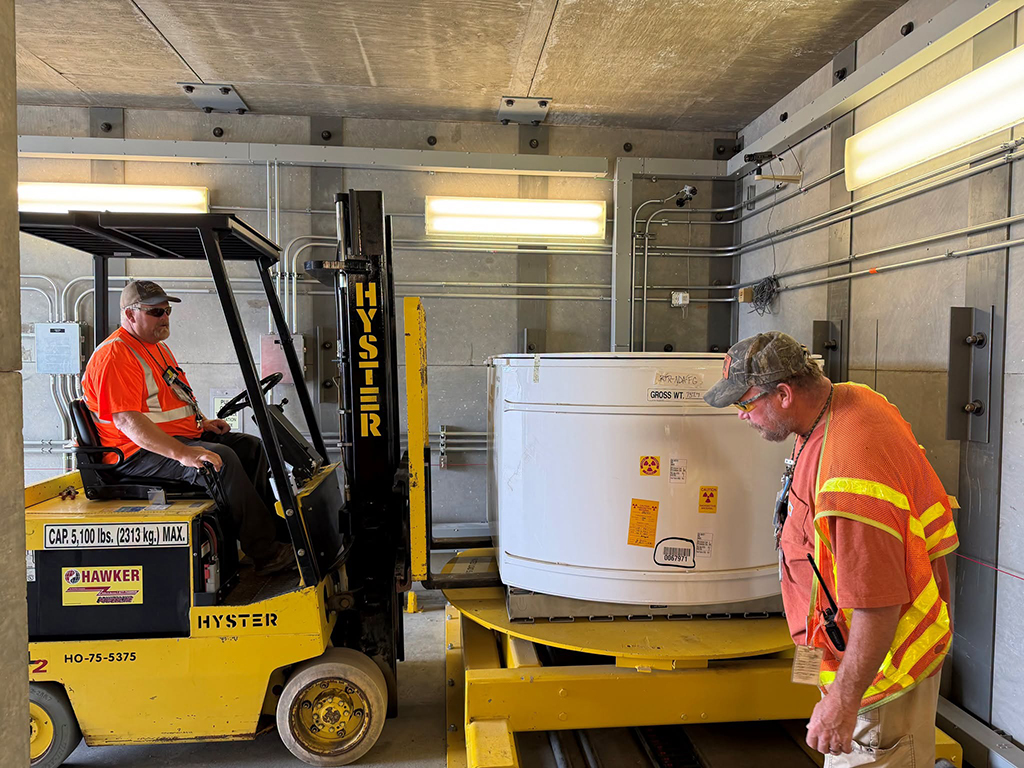
The TRUPACT-II is essentially the package TRU is shipped in and is certified by the U.S. Nuclear Regulatory Commission to withstand hypothetical accident conditions without loss of containment.
Training programs and exercises for first responders would include Modular Emergency Response Radiological Transportation Training, WIPP Transportation Exercise and radiological training for hospital personnel, all aimed at responding to and evaluating emergencies involving radiological materials and caring for patients who may be contaminated.
“ The first time responders see a CAST (Transportation truck) should not be along I-84, and that’s where the resumption of Road Show and all of these continued working relationships with Department of Energy, specifically WIPP, is important,” Hall said.
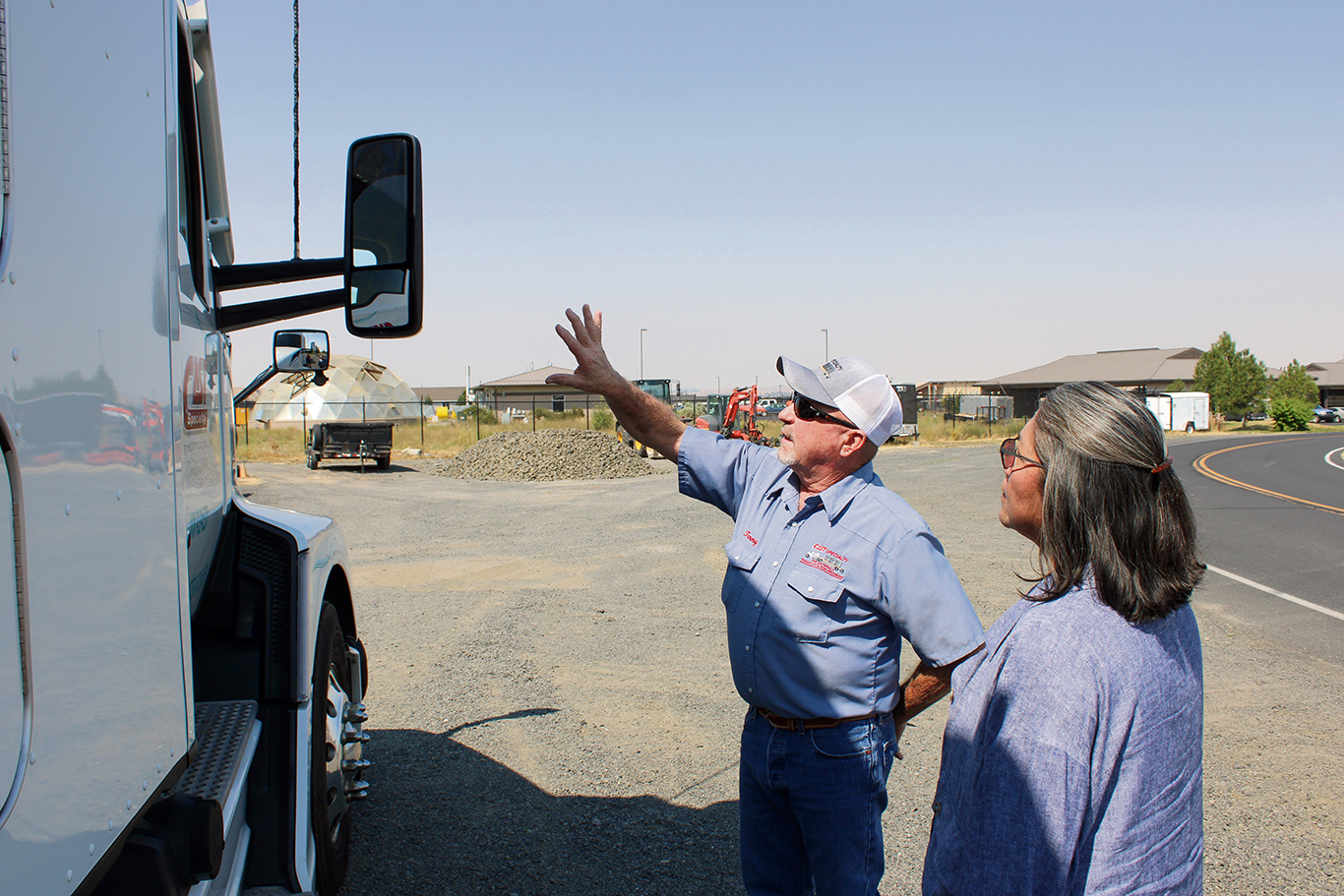
During the Road Show, the BOT learned of CAST Transportation’s driver requirements and the inspection requirements for the TRU’s transportation.
The Oregon DEO estimates that shipments will resume in 2027-2028, starting with smaller shipments of one per week and slowly increasing. WIPP Internal Affairs Manager James Mason said eventually they could reach around 10 shipments a week that could go on for several years.
Mason said shipments would reach their maximum pace once a rhythm is established through the timing of the transportation, an average is established for the speed of the trucks and drivers are more aware of where inspections are taking place, including when or where detours have to be taken or longer stops made due to construction or road closures.